The mountain you are planning for stands in Deqing County, Huzhou prefecture, Zhejiang Province, China, about 60 km north of Hangzhou and 200 to 240 km from Shanghai. Its core scenic area runs to about 20 km².
Check you have the right one. Moganshan Road is the M50 art district in Putuo District, Shanghai, roughly 200 km away, and it is a city street, not a mountain.
This is the hub page for what to do in Moganshan. The table below groups the attractions by theme and links to the detail pages.
Everything, by theme
| Theme | What it is | Where | Detail |
|---|---|---|---|
| Heritage | About 250 stone villas, 1896 on, plus political sites | Hill station, Wuling | Walking tour |
| Forest | Moso bamboo, over 92 percent cover, a working crop | Whole mountain | Bamboo forest |
| Named sights | Sword Pond, Luhuadang, Dakeng, Xuguang, Bai and Yun | Core scenic area | Scenic area |
| Walking | Paths between sights and villages | Scenic area, villages | Hiking |
| Cycling, water | Reservoir, kayaks, bikes | Laoling, Dazaowu | Where to stay |
| Tea | Poured at every guesthouse | Wherever you are sitting | Tea |
| Cool air | 24.1 °C in July and August | Whole mountain | Seasons |
What kind of day this is
Moganshan is slow. That is the product. Decide now whether you want it.
There is no theme park in the scenic area and no ride to queue for. Nothing happens at four o’clock. What there is:
- old stone villas you can walk among
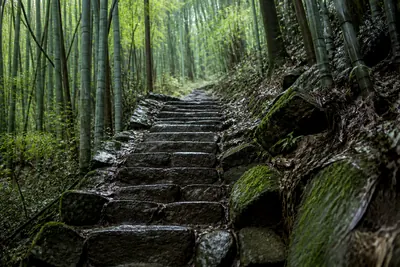
- a bamboo forest covering most of the mountain
- a handful of named sights, one a pond with a legend
- cool air in July
- a lot of sitting down with a view
People who enjoy this place walk in the morning, eat a long lunch, rest, then walk again before dark. People who arrive with a list of attractions usually finish it by lunchtime on day one.
Children are worth thinking about before you book. The scenic area is walking and looking, with nothing built for them. Kaiyuan Senbo, a family waterpark resort, operates in the area and is the one exception.
The villas and the heritage walk
Everything else here grew around this.
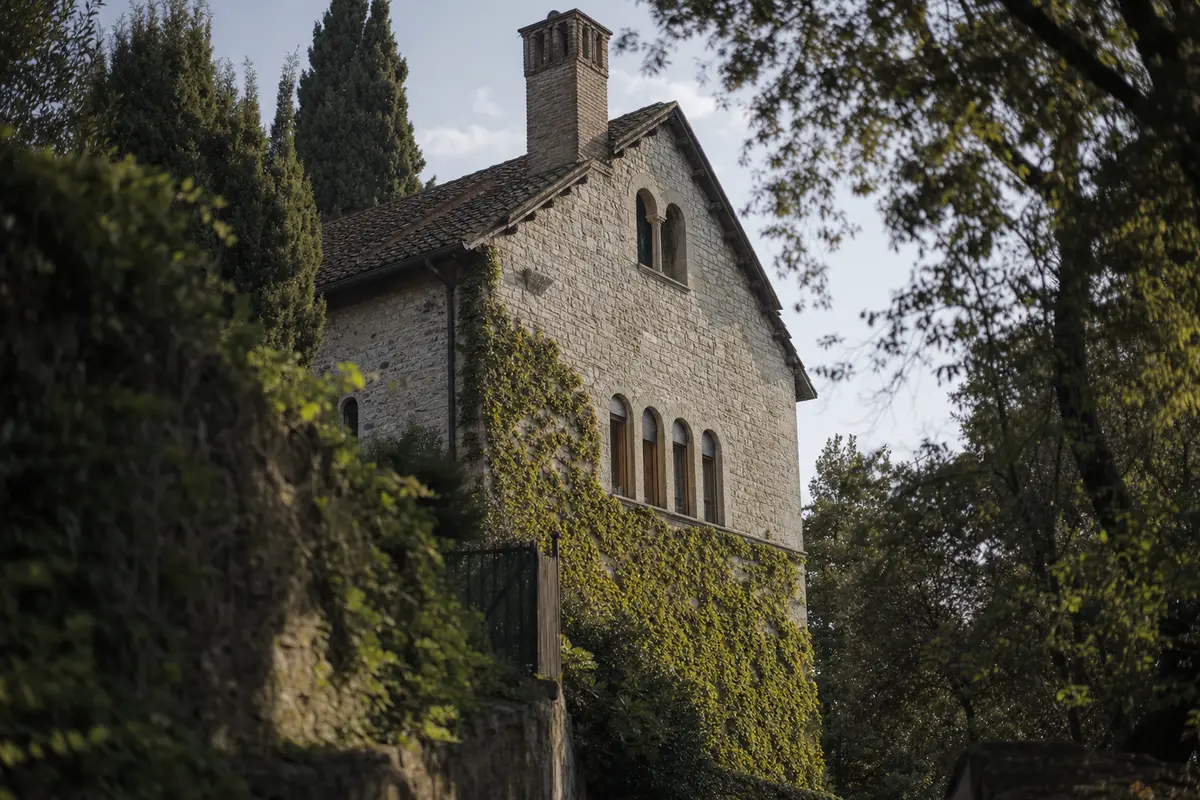
American Protestant missionaries founded a summer hill station here in the 1890s, escaping the heat in Shanghai. The first Western villas date to 1896 to 1898, and by 1910 about 300 foreigners held summer homes here, mostly American and British. Around 250 villas survive, in local stone, in a mix of European and Chinese-eclectic styles that Chinese sources call an “architecture of all nations.”
The first tennis court went in during 1901, and by 1909 the Moganshan open championship was a fixture in Sino-foreign society. People came to do very little, slowly, for a whole summer, which is roughly the offer today.
Several villas carry political history.
| Figure | Villa | What happened |
|---|---|---|
| Chiang Kai-shek | Songyue Lodge, Wuling | Honeymoon with Soong Mei-ling, December 1927. Back as President, 1948 |
| Zhou Enlai | Baiyun Shanguan | Secret 1937 talks with Chiang, behind the Second United Front |
| Mao Zedong | A 1934 villa built by banker Jiang Yizhe | Stayed in 1954 |
Walking among them costs nothing, and it is the best two hours here. Most are lived in or run as guesthouses, so you are seeing the outside only.
Villa counts, sporting history and political dates, BeyondBorder Group Ltd primary research, 1 to 5 August 2026.
Hayley Keon, “A Peaceful Place: Raising Imperial Children at China’s Moganshan Hill Station,” Journal of Imperial and Commonwealth History, published online 9 January 2026.
The villa walking tour has the route.
The bamboo forest
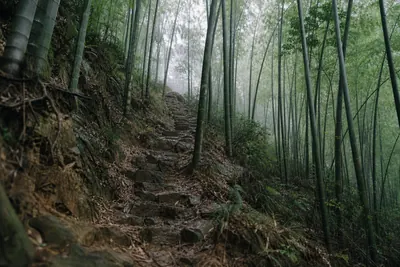
Over 92 percent forest cover, nearly all moso bamboo. It is a working crop, and nobody planted it for the view. Farmers cut the poles and dig the shoots, so it looks worked.
You do not go to one spot to see it. It is the ground between everything else. On a windy day the whole slope creaks above your head, which is the part people remember, so stand still for two minutes before you walk on. The bamboo forest page covers it month by month.
The named sights
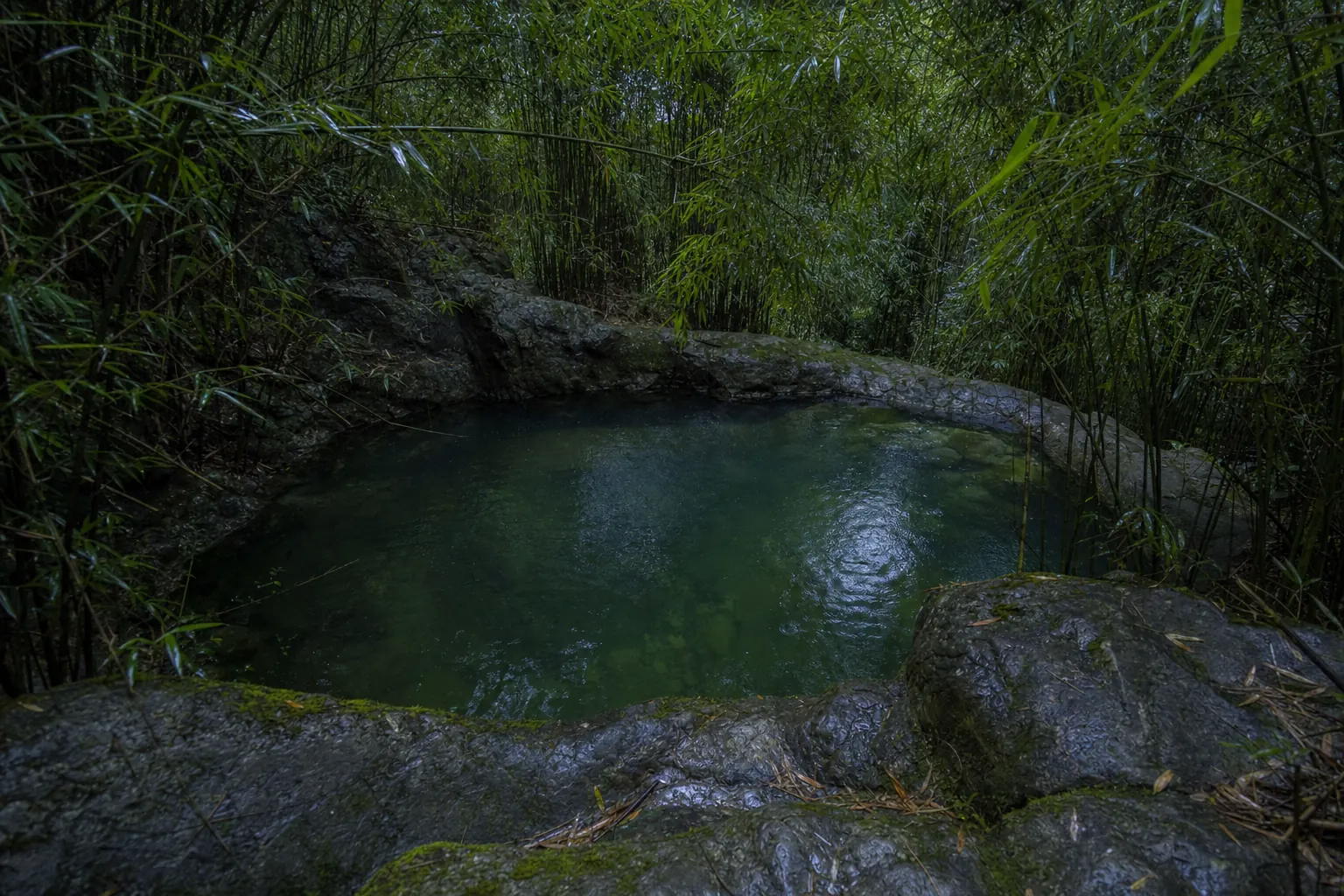
Start with Sword Pond (Jianchi), which carries the mountain’s name story. Moganshan is said to come from Mo Ye (莫邪) and Gan Jiang (干将), a swordsmith couple of the Spring and Autumn period who forged blades for the King of Wu. The pond is where they were quenched. That is legend, not documented history. No archaeological evidence supports it and no date attaches beyond the period. It is still a good walk, and it explains the swords in local branding.
The rest of the official list runs like this:
| Sight | What it is |
|---|---|
| Sword Pond (Jianchi) | Site of the sword legend, source of the mountain’s name |
| Luhuadang Park | A park inside the core area, reached on the stone paths |
| Dakeng | A named point on the official list, out on the paths |
| Xuguang sunrise platform | A viewpoint whose name means first light |
| Chiang Kai-shek’s villa | Songyue Lodge, Wuling, as above. Seen from outside |
| Bai and Yun Art Museum | A small museum in the core area |
The scenic area page takes them one by one.
You cannot drive your own vehicle into the scenic area. You transfer at Yucun, Fatou or Houwu, and all three run 08:00 to 18:00. Those hours are the problem with a platform named for first light.
Ticket prices conflict between sources too. One gives RMB 120 online and RMB 130 at the gate, half price in winter. Another gives RMB 50 off-season and RMB 80 at peak. Treat RMB 50 to 130 as the range and confirm it at booking.
Walking, which is most of the day
This is what you will actually spend the day doing.
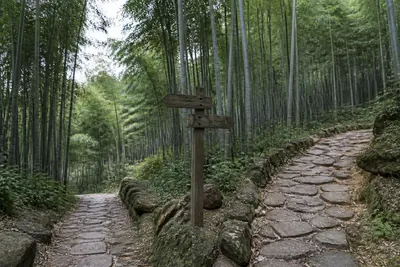
Paths link the named sights, the villa quarter and the villages, through bamboo most of the way. Nothing is alpine. The summit is 719 to 720 m and the villages sit well below it, so expect stairs and quiet roads. The hiking guide has routes and distances.
Cycling and the water
| Where | What is there |
|---|---|
| Laoling, south side | The reservoir. Kayaking on it, cycling around it. One of the earliest farmstay clusters |
| Dazaowu, the most remote village | Rice paddies and the Dadouwu reservoir |
| The core scenic area | Barred to private vehicles, so the riding happens on the valley roads |
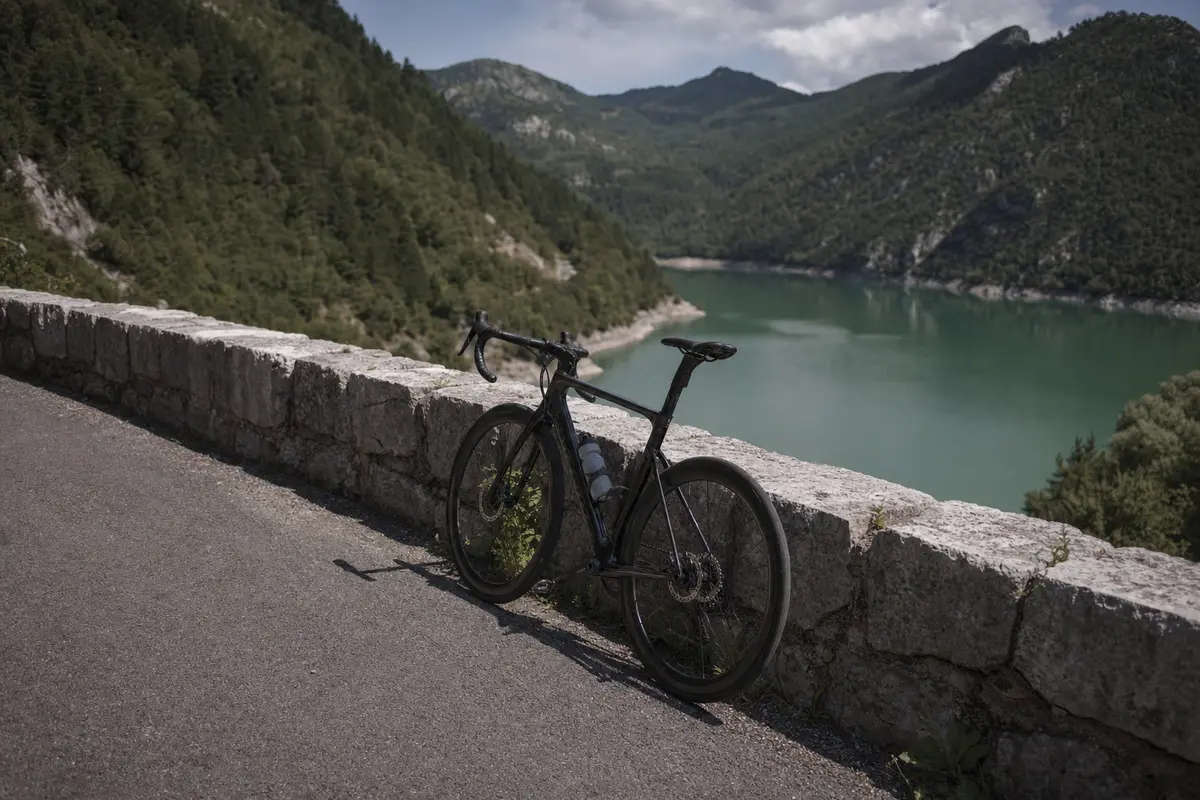
Which village you sleep in decides whether any of that is easy. Where to stay sets out which is which. Kayaks and bikes are arranged through the guesthouses down there rather than from a rental shop, so ask when you book.
Tea
Tea is part of how the region presents itself, and guesthouses pour it freely. Ask at yours, and you will usually be given a local leaf and the story that goes with it.
This is not a mountain with a visitor tea farm and a tasting room at the end of it. The tea page covers what is grown around here and how it reaches your cup.
The summer escape itself
The last item is the one the mountain was built on.
The oldest reason to come here is that it is cooler than the city.
July and August average 24.1 °C, about 6 to 7 °C below Shanghai and Hangzhou. That gap is why missionaries built the place and why Chinese families book it now. Moganshan is traditionally counted as one of China’s four great summer resorts, alongside Beidaihe, Lushan and Jigongshan.
Once the temperature is the attraction, the planning changes. You stop trying to fill a day and sit outside in August without sweating.
Outside write-ups say much the same. The New York Times listed Moganshan in “45 Places to Go in 2012,” at position 18 on a numbered list, and Tatler Asia calls it “the Hamptons of China.”
July to August mean temperature and the summer differential, BeyondBorder Group Ltd primary research, 1 to 5 August 2026.
“45 Places to Go in 2012,” The New York Times, 2012. A numbered list, not a ranking.
When you go changes what you can do
Crowding here is not steady, and it changes what a day is worth.
| When | What to expect |
|---|---|
| Midweek, Mondays especially | Notably quiet. The best version of the mountain |
| Weekends | Where the volume sits |
| May Day and National Day | High-end occupancy hit 94 percent in May 2024. Yucun footfall ran 30 to 40 percent above normal at National Day 2025 |
In those weeks the main Moganshan things to do, the villa walk and the bamboo paths, queue at the photogenic points. The seasons guide has the calendar.
Holiday occupancy and footfall figures, BeyondBorder Group Ltd primary research, 1 to 5 August 2026.
How long you need
| You have | What fits | Verdict |
|---|---|---|
| Half a day | The villa walk, or Sword Pond and nearby paths | Not both properly |
| One day | Villa walk, one bamboo route, a long lunch | Fine from Hangzhou. Tight from Shanghai |
| One night | The same, unhurried, plus dinner and an early walk | The most common trip |
| Two nights | Adds Laoling, the water, a second village | The one we would pick |
| Three nights | Only if doing very little is the plan | You run out of sights before time |
The single day is the question we get most. From Hangzhou it works, at about 1.5 hours each way. From Shanghai it is close to three hours each way, which leaves a short day up here. Getting here has the timings.
Evenings are quiet by default
Chinese reporting on the guesthouse economy records no evening economy in these villages.
- No night market, little late-night food. Guesthouses serve dinner, then the village closes.
- Book dinner with the room. Visitors used to Chinese city travel complain about this, fairly.
- If nightlife matters, sleep in Hangzhou and come here for the day.
Temperatures, villa counts, occupancy data and transfer hours were current on 5 August 2026. Ticket prices vary and should be confirmed at booking.
Last checked 8 August 2026 by Liyan Ye. Prices, timetables and entry rules on this mountain move without notice, so confirm anything you are booking around.
Photographs on this site are representative illustrations, not documentary images of the specific building, property or service described.