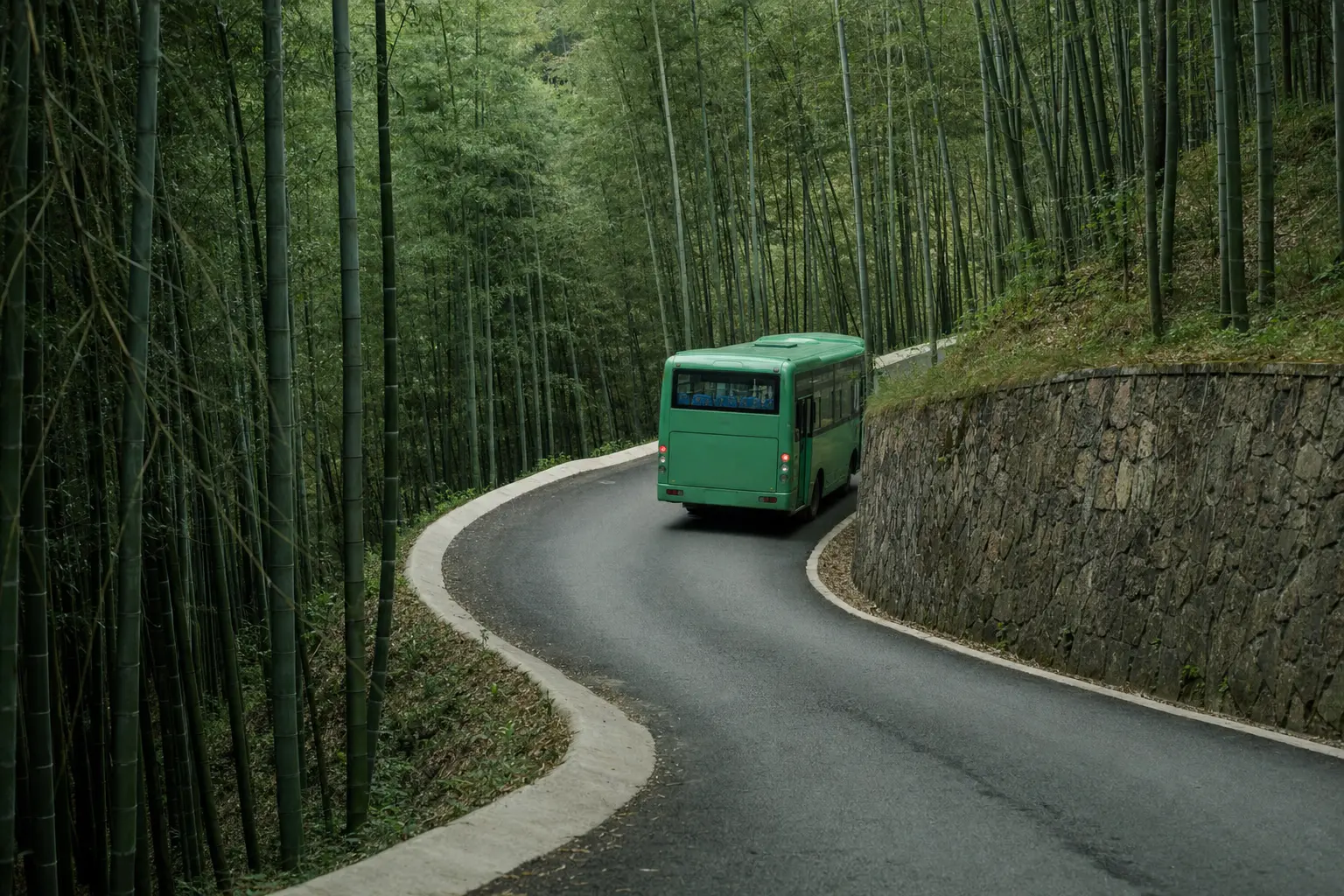
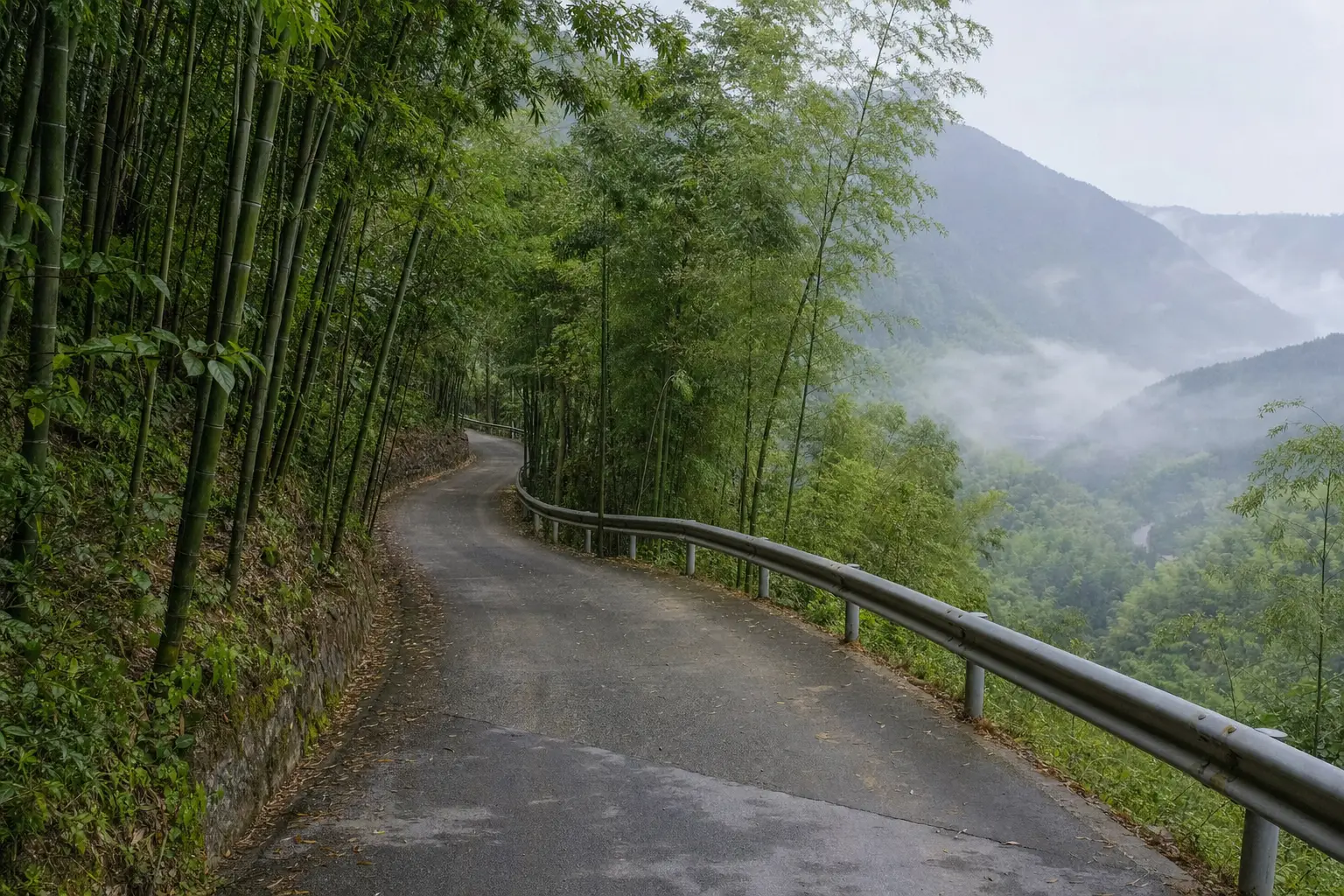
Moganshan is a mountain in Deqing County, in Huzhou prefecture, Zhejiang Province. It stands about 60 km north of Hangzhou and somewhere between 200 and 240 km from Shanghai, depending on which road you take. The main peak, Tashan, is 719 to 720 meters high. Bamboo covers more than 92 percent of the slopes.
Getting there is not hard. It is just not a single trip. Almost everyone makes three separate moves, and most English-language pages online describe only the first one.
The three steps, in order
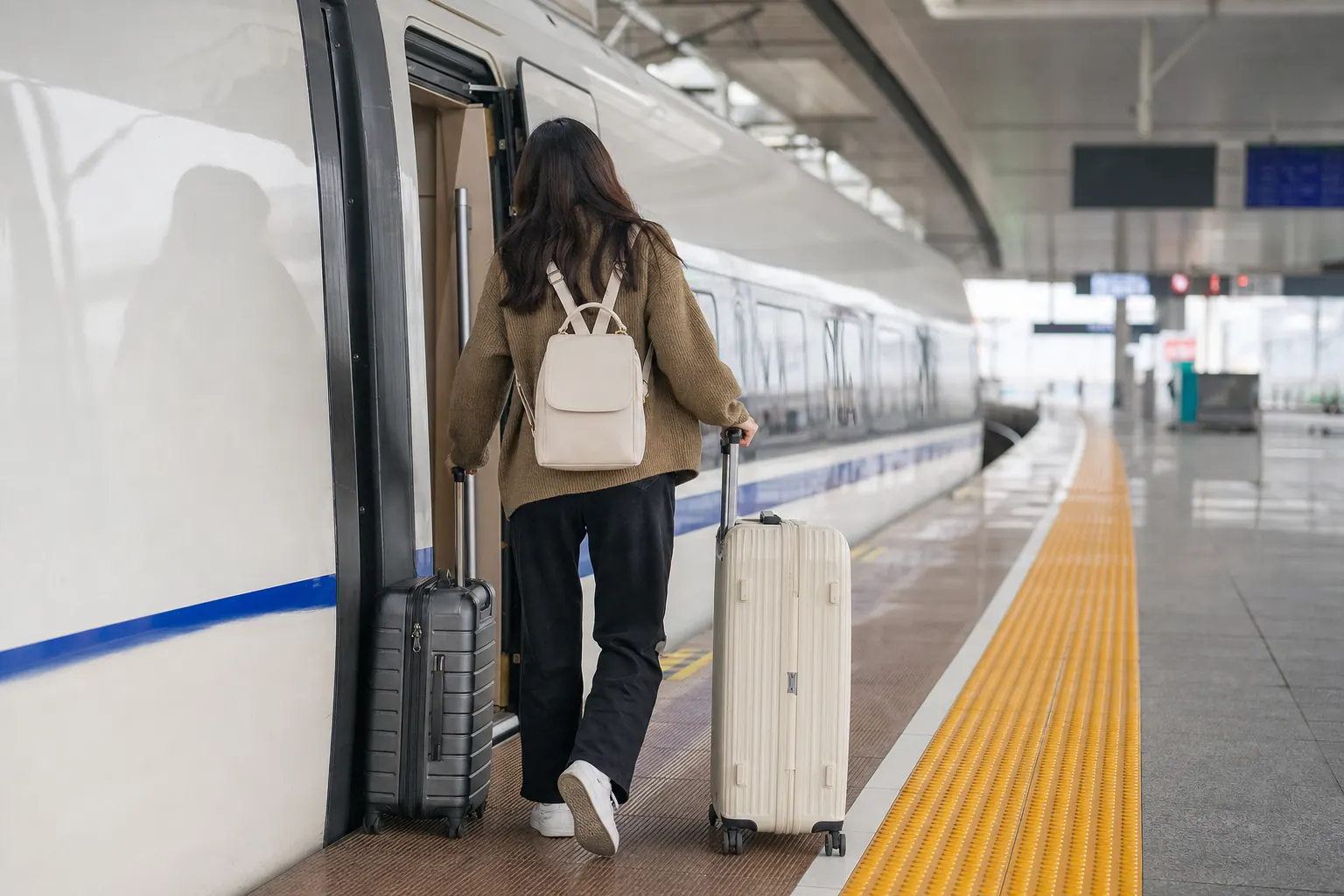
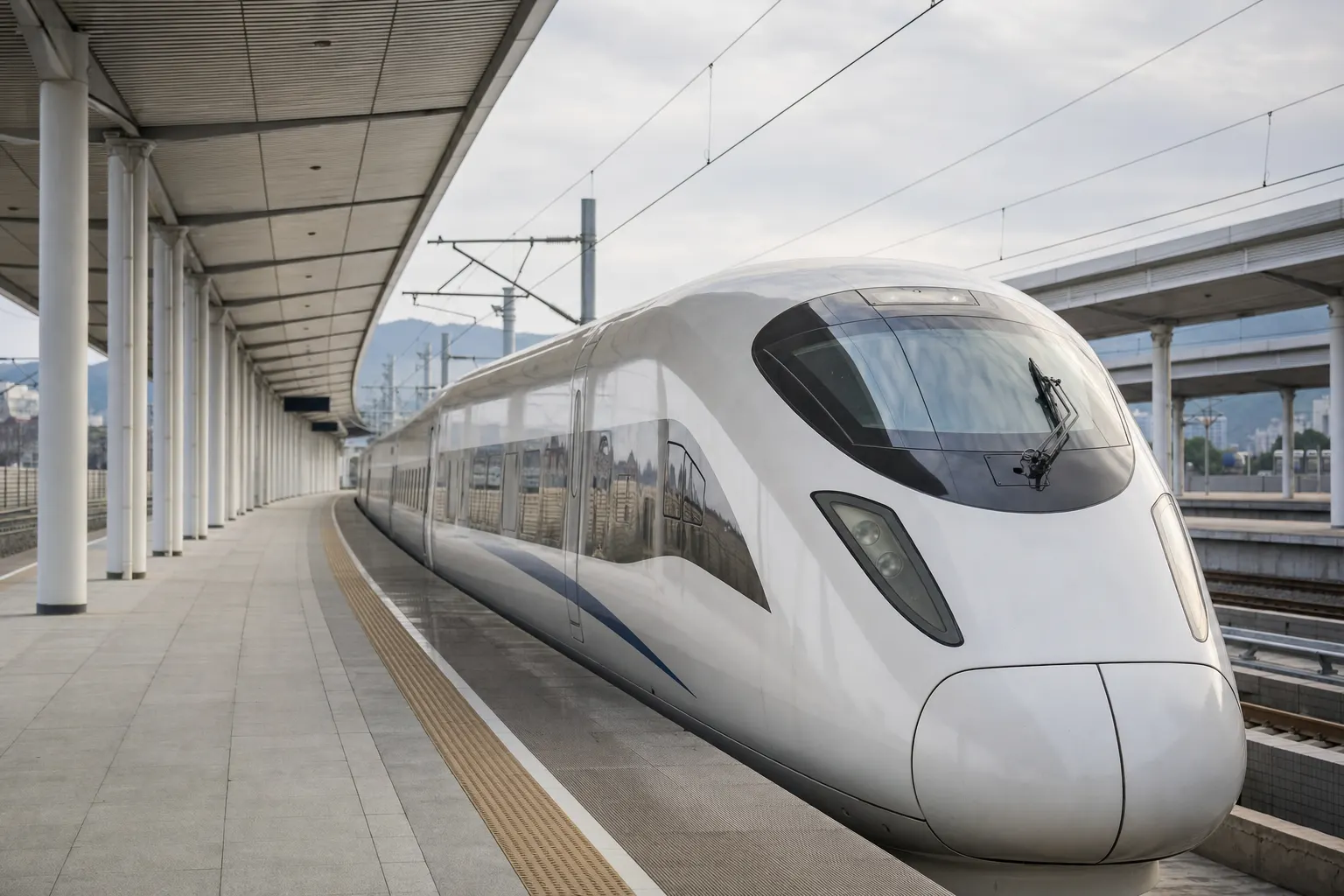
- Get to Deqing station. High-speed trains run there from Shanghai Hongqiao and from Hangzhou East.
- Cross the last stretch by road. A tourist shuttle bus or a taxi carries you from the station up to Moganshan town. Allow 30 to 40 minutes.
- Change vehicles again at the scenic area. Private cars cannot drive inside the core scenic area. You switch to scenic-area transport at one of three transfer centers.
Step three is the one that catches people out. It is rarely published in English, and most visitors learn about it at the barrier, with their luggage in the trunk.
First, a warning about the name
Two other places carry the name Moganshan. Neither of them is the mountain.
Moganshan Road (莫干山路) is a street in Putuo District, Shanghai. It is the M50 art district, roughly 200 km away from the mountain. Search results mix the two constantly, and so do ride-hailing apps.
Moganshan railway station, on the Shangqiu to Hefei to Hangzhou line, does not serve the mountain either. It serves Deqing and Wukang town. Booking that station because the name matches is a common and expensive mistake.
The station you want is Deqing (德清). Write it down in pinyin and in Chinese characters, and show it to the ticket clerk or the driver.
Step one: the train to Deqing
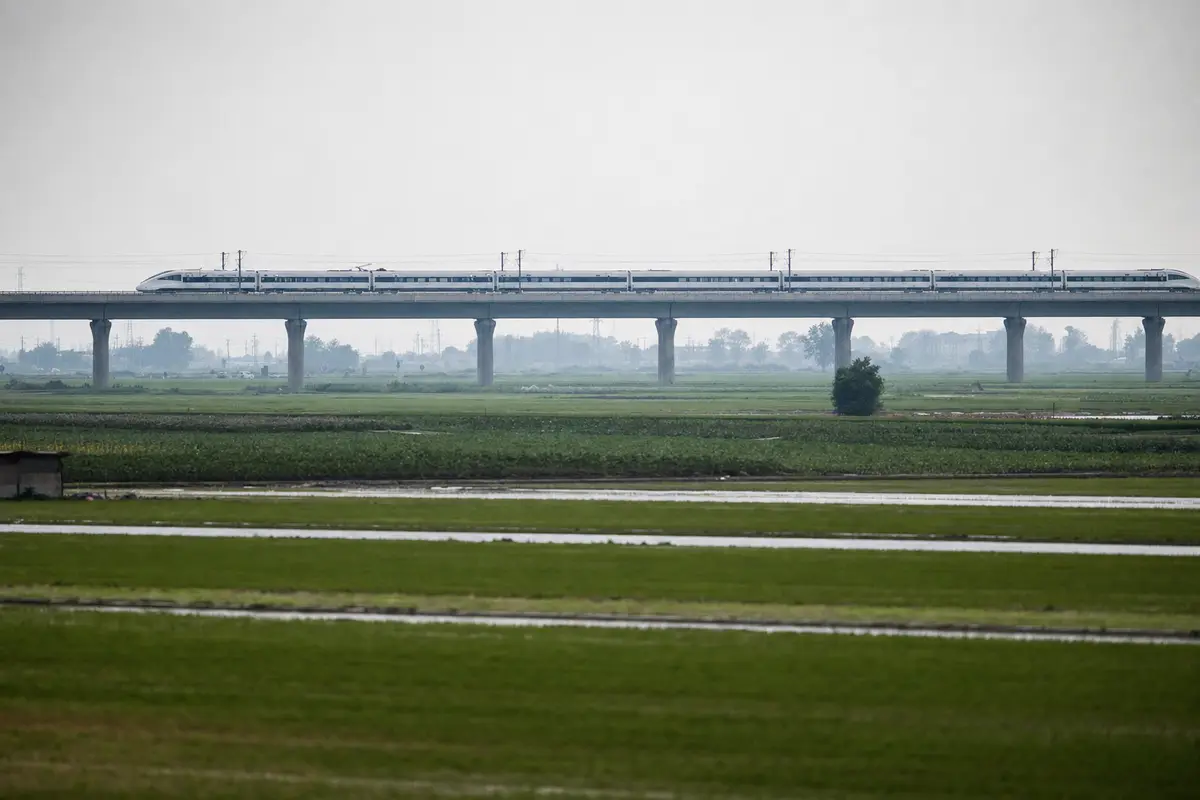
Deqing sits on the Nanjing to Hangzhou high-speed line, which has been running since 2013. That is why the Hangzhou approach has always been quick, and why it does not depend on any recent construction.
| Route | Journey time | Direct services a day | Second-class fare |
|---|---|---|---|
| Shanghai Hongqiao to Deqing | 63 to 80 min | 13 | about RMB 61 to 110 |
| Hangzhou East to Deqing | 13 to 17 min | 16 | about RMB 16 to 67 |
Three real Hongqiao services, as a sense check: G1419 leaves at 17:39 and arrives 18:42, so 63 minutes. G687 runs 12:12 to 13:21. D377 runs 08:11 to 09:19. Timetables change every few months, so treat these as examples rather than a schedule and check the live Shanghai to Deqing times for the day you are travelling.
Coming from Hangzhou, the equivalent is the live Hangzhou East to Deqing times, where the choice is which of the sixteen daily services lands you in front of a shuttle rather than in the gap between two.
The northern approach improved in late 2024, when the Shanghai to Suzhou to Huzhou high-speed line opened on 26 December and cut the fastest Hongqiao to Huzhou run to 55 minutes.
Train times, service counts and fares, BeyondBorder Group Ltd primary research, 1 to 5 August 2026.
Huzhou station does exist, and some travelers end up booked there. It is farther from Moganshan than Deqing is. Unless you have a specific reason, Deqing is the better arrival point.
Full timings, fare bands and booking notes are on the Shanghai to Moganshan by train page. For everything about the arrival end, including the taxi rank and the coach center next door, see the Deqing station guide.
Step two: the road transfer
Deqing station is not at the foot of the mountain. You have two ways to cover the gap.
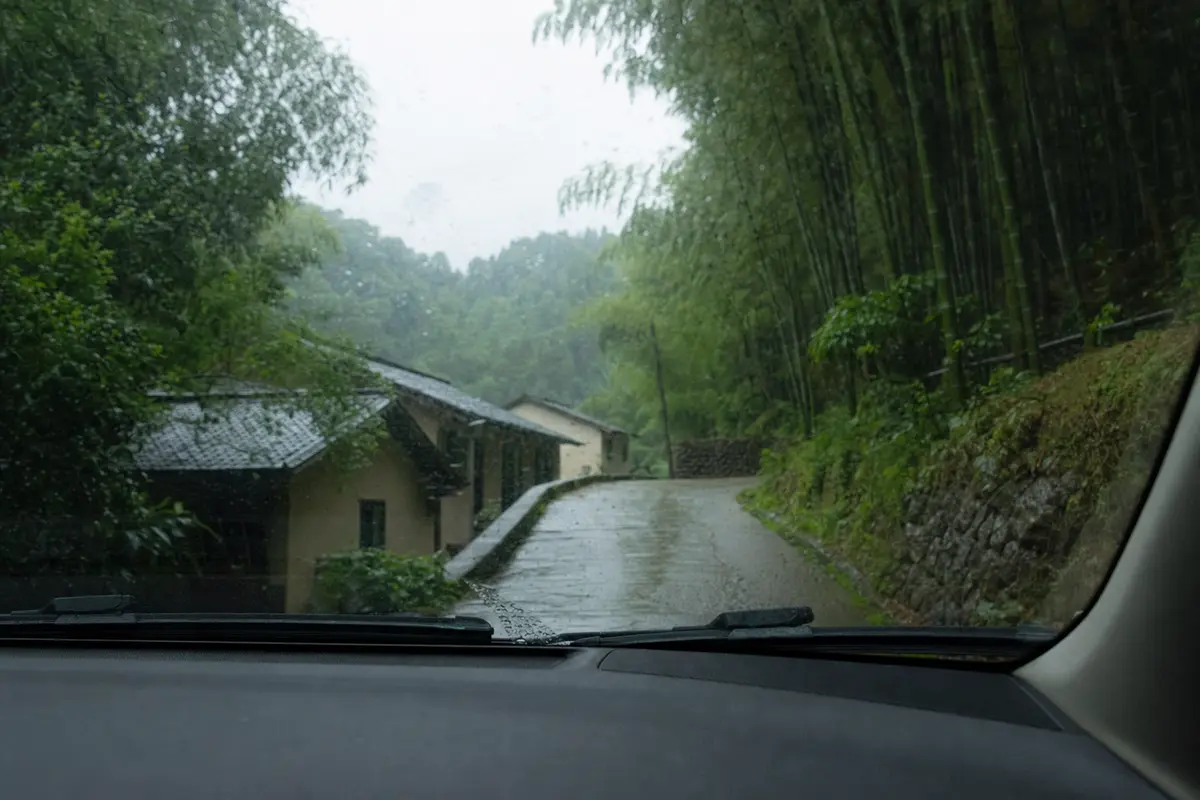
The Y1 tourist shuttle. It runs from the Deqing coach center, right beside the station, to the Moganshan tourist distribution center. Locals call it the Republican-era tram, after its styling.
| Y1 shuttle | |
|---|---|
| Journey time | about 30 to 40 minutes |
| Fare | RMB 10 |
| Departures | 07:30, 08:40, 09:40, 10:40, 13:00, 15:00, 16:00 |
| Return runs | 08:40 through 17:00 |
| Where it ends | Moganshan town, not inside the scenic area |
Seven departures a day is not many. There is a long gap between 10:40 and 13:00, and if your train gets in at 11:30 you will sit and wait. The 17:00 last return also shapes any day trip, which is covered on the Moganshan day trip page.
A taxi or a van. Roughly RMB 100 and about 30 minutes to the town. It costs a lot more than the bus, but it leaves when you arrive instead of when the timetable says. Most guesthouses will arrange a car if you ask in advance.
Step three: the rule inside the scenic area
This is the part almost nobody writes about in English.
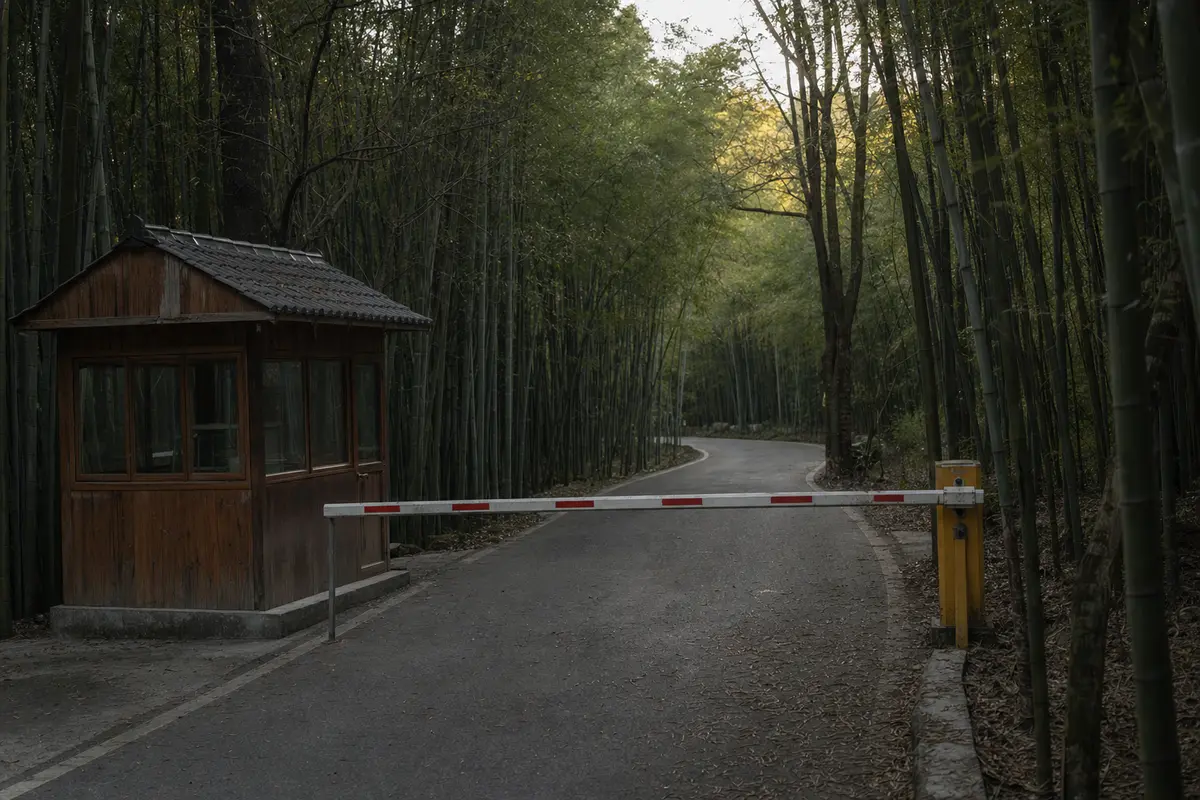
Private vehicles cannot drive inside the core scenic area. Visitors leave their car or taxi at a transfer center and continue on scenic-area transport. There are three of them: Yucun, Fatou and Houwu. They operate from 08:00 to 18:00.
Scenic-area vehicle restriction and transfer center hours, BeyondBorder Group Ltd primary research, 1 to 5 August 2026.
Two practical results follow. If you drive up from Shanghai, your car stops at a transfer center and your bags come with you. And if you arrive after 18:00, the transfer system is closed for the day.
The rule covers the core scenic area, which is about 20 km². Guesthouse villages sit at various points around the mountain, so ask your property directly which side of the line it is on and how they want you to arrive. More on moving around once you are there is on the getting around Moganshan page.
Every origin compared
These are door-to-door estimates. They include the walk to the station, the wait, the transfer and the last climb. They are not timetable numbers, and a Friday afternoon in July will run longer than any of them.
| From | Door to door (estimate) | Route |
|---|---|---|
| Central Hangzhou by car | 1h20 to 1h45 | 60 to 63 km, about 1.5 hours driving |
| Hangzhou Xiaoshan airport by car | 1h45 to 2h15 | direct road transfer |
| Central Shanghai by car | 2h30 to 3h15 | 200 to 240 km, 2 to 3 hours driving |
| Hangzhou Xiaoshan airport by rail | 2h30 to 3h00 | to Hangzhou East, then train, then road |
| Shanghai Hongqiao by rail | 2h45 to 3h30 | train to Deqing, then road |
| Shanghai Pudong by rail | 4h00 to 4h45 | cross to Hongqiao first, then as above |
The Pudong number is the one to look at twice. Crossing Shanghai from Pudong to Hongqiao takes 50 to 70 minutes by car, or a maglev-plus-metro combination that is faster but involves your suitcases and two changes. Landing at Pudong in the afternoon and reaching a guesthouse the same evening is possible, but it makes for a long day.
Route-by-route detail lives on the Shanghai to Moganshan and Hangzhou to Moganshan pages.
Driving, and the coach option
Driving is the simplest option if you already have a car and a Chinese license. From Hangzhou it is about 60 to 63 km and roughly an hour and a half. From Shanghai, 200 to 240 km and two to three hours in normal traffic. Remember step three: the car does not go all the way.
Direct coaches run from Shanghai to Deqing. They take about 2h40 at best and up to four hours, from around RMB 69. That is cheap, and it is slow. Take the train unless the fare difference genuinely matters to you. From Hangzhou Xiaoshan airport there is also an airport coach that runs to Deqing bus station.
Which route suits you
If you are coming from Hangzhou, this is close to a local trip. The train takes a quarter of an hour, and a taxi door to door takes under two hours.
If you are coming from Shanghai, budget three hours and stop pretending it is a half-day outing. Two nights works far better than one, which is why the where to stay page starts with the length of the trip rather than the properties.
If you are choosing when to go, the mountain runs 6 to 7 °C cooler than Shanghai and Hangzhou in summer, which was the original reason anyone came here. See the weather and seasons page before you fix your dates.
Fares, train times and shuttle departures last checked 5 August 2026. Timetables and ticket prices change without much notice, so confirm before you travel.
Last checked 9 August 2026 by Cyril Drouin. Prices, timetables and entry rules on this mountain move without notice, so confirm anything you are booking around.
Photographs on this site are representative illustrations, not documentary images of the specific building, property or service described.