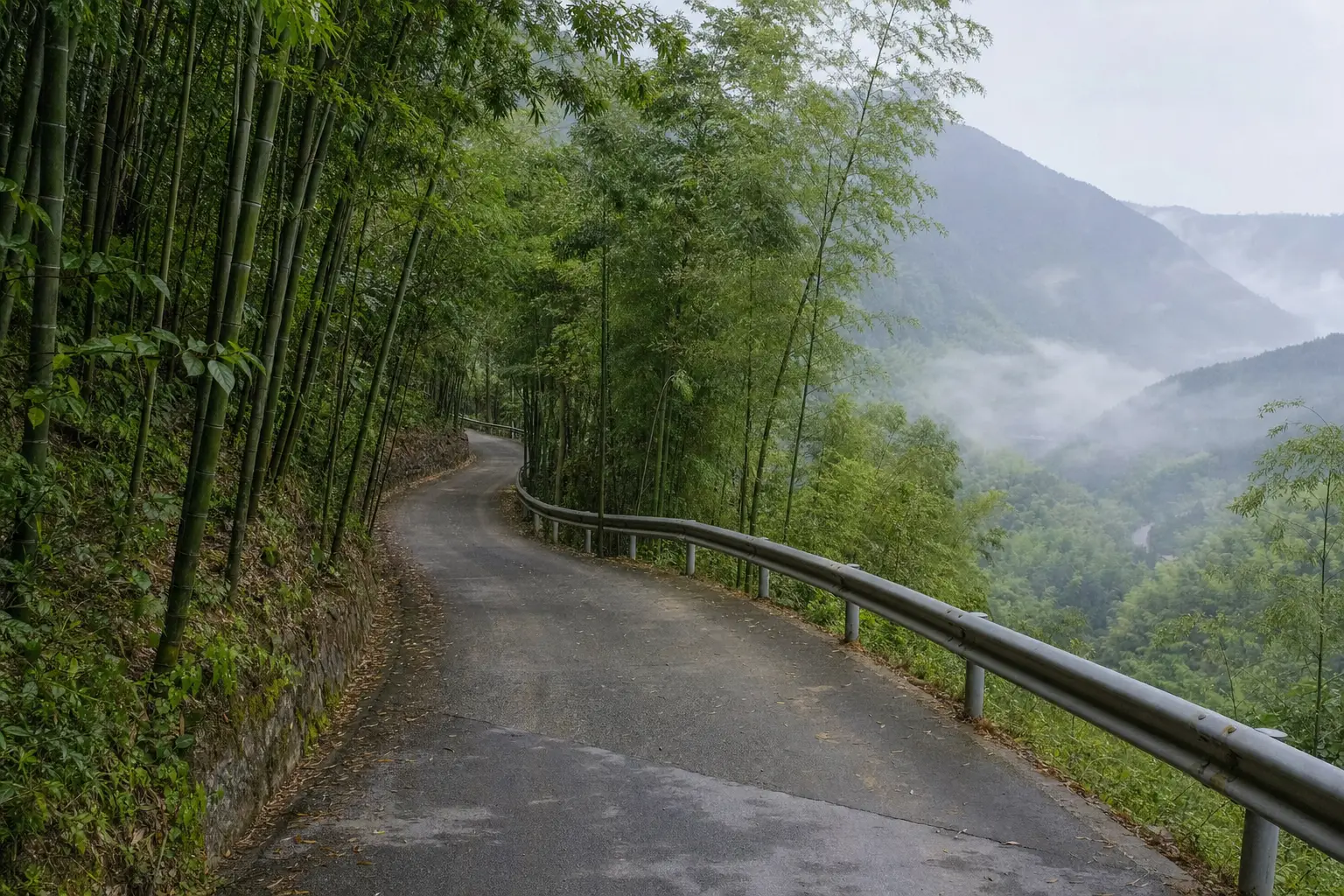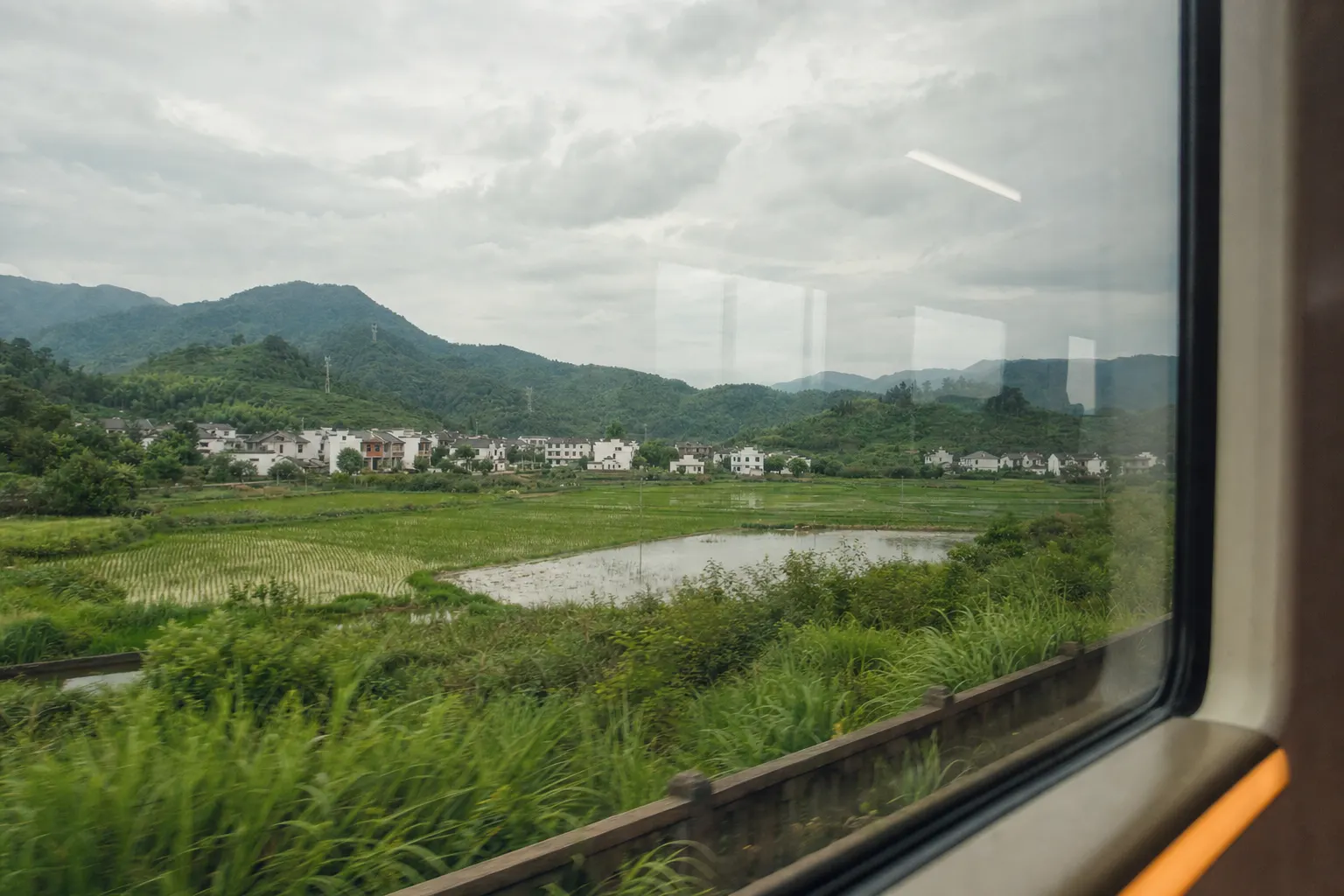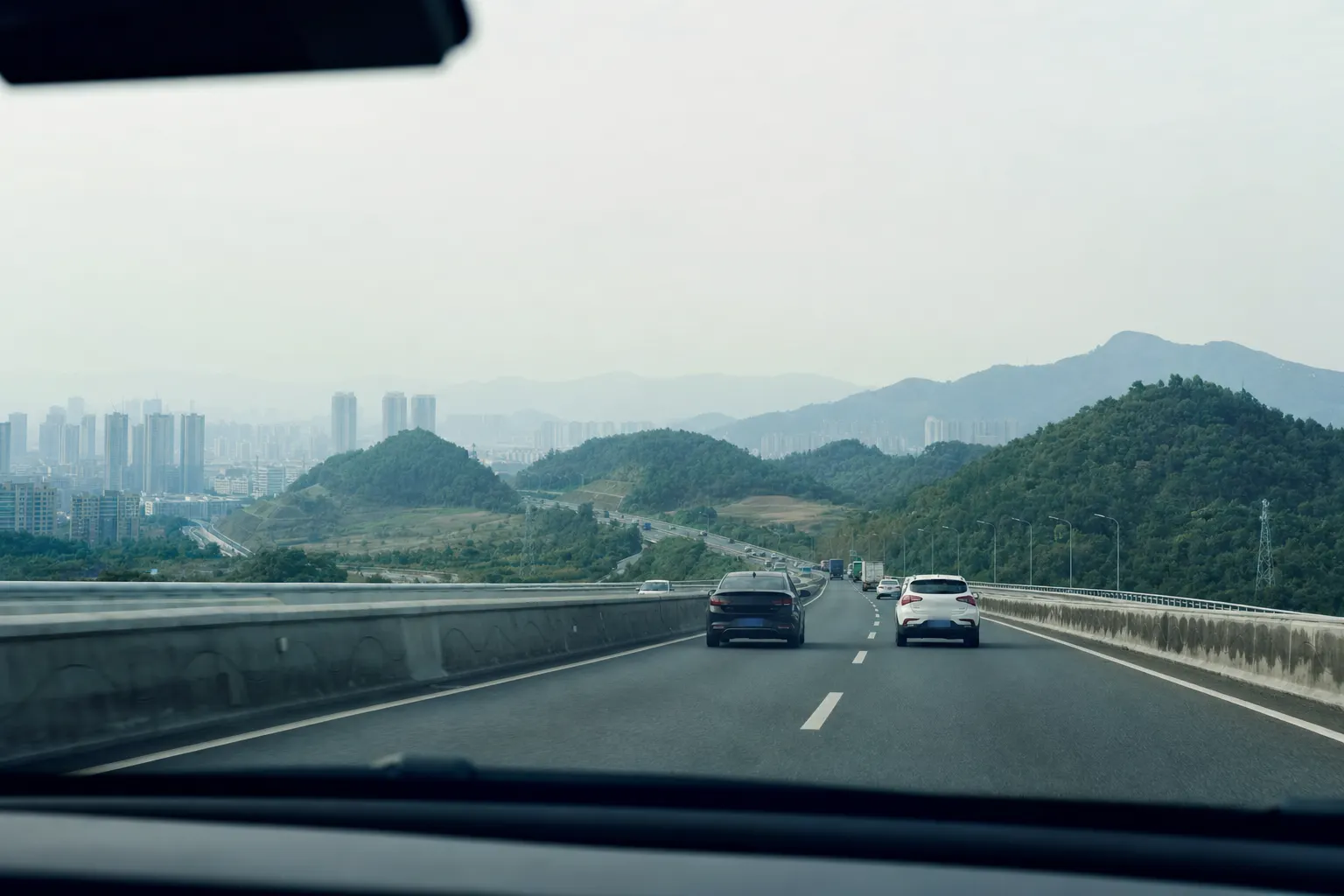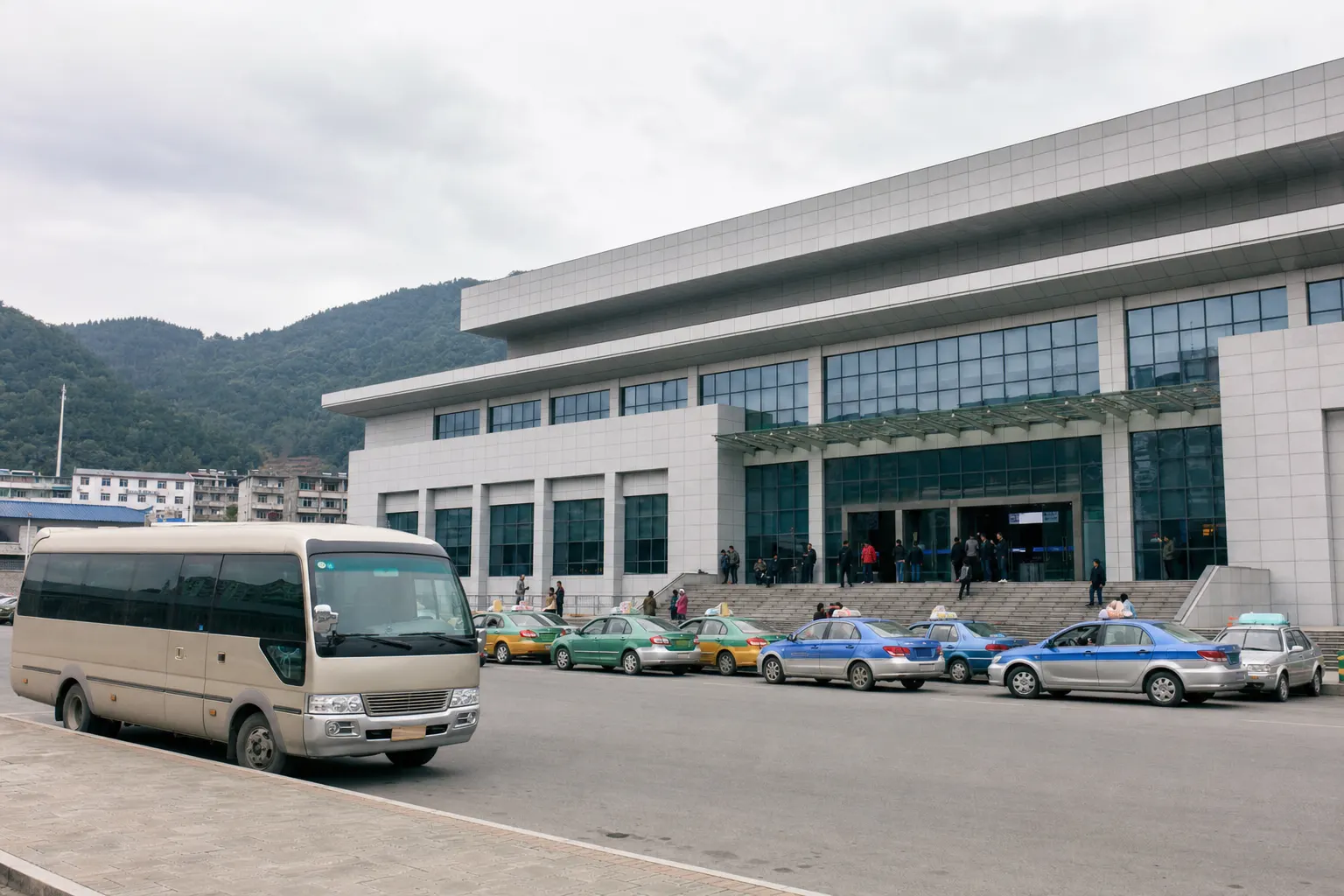
Here is the rule that catches nearly every visitor. Private vehicles cannot drive inside the scenic area. Your taxi, your rental car or your friend’s car stops at a transfer center, and you carry on from there on scenic-area transport.
The area in question is the core of Moganshan, about 20 km² of it, on a mountain in Deqing County, in Huzhou prefecture, Zhejiang Province, roughly 60 km north of Hangzhou. The main peak, Tashan, stands 719 to 720 meters high.
There are three of them: Yucun, Fatou and Houwu. All three run 08:00 to 18:00.
Almost no English-language page mentions this. Most people learn it at the barrier.
The three transfer centers
| Transfer center | What it is | Hours |
|---|---|---|
| Yucun (庾村) | Main gateway at the foot of the mountain. Square, market, restaurants, the “1932” culture park. | 08:00 to 18:00 |
| Fatou | The third official transfer point, on its own road approach. | 08:00 to 18:00 |
| Houwu (后坞) | Quiet western village, about 30 minutes from Yucun. | 08:00 to 18:00 |
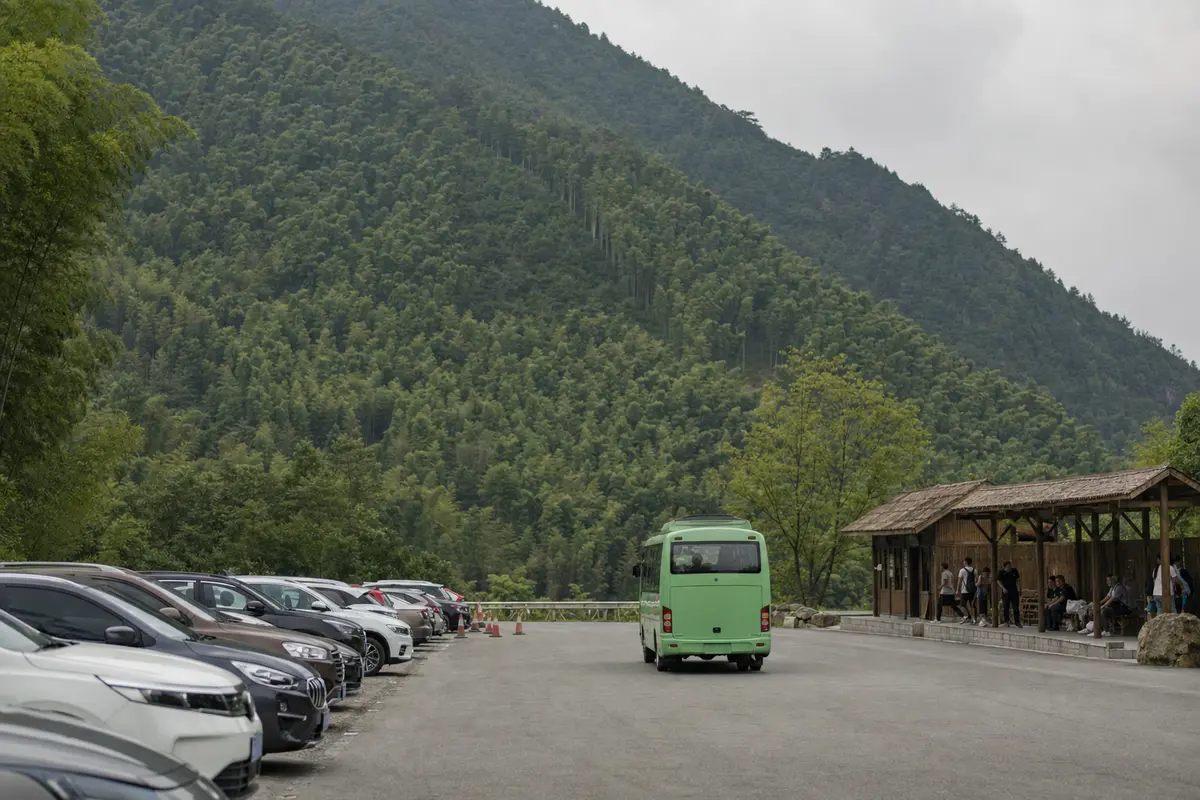
Scenic-area vehicle restriction and transfer center hours, BeyondBorder Group Ltd primary research, 1 to 5 August 2026.
Two things follow from those hours. Arrive after 18:00 and the system has shut for the day. Set off before 08:00 and it has not started.
If you do land after 18:00, what happens next depends on where you are sleeping. A guesthouse outside the boundary can still be reached by taxi. A guesthouse inside it cannot, so message the property before you board your train, and be ready to spend the night in Wukang, the county seat about 20 km away, and go up in the morning.
The restriction covers the core scenic area. Guesthouse villages sit at various points around the slopes, and some are outside the line altogether. So the question worth asking is not where the transfer center is. It is which side of the boundary your bed is on. Ask the property. They field that question every week.
Do you actually need a car?
For most visitors, no.
A car earns its keep if you are staying in an outlying village, traveling with small children, or trying to see several villages in two days. It stops earning anything at the scenic area boundary.
If your plan is a guesthouse, some walking, a couple of sights and a lot of sitting still, skip it. Take the train to Deqing, cover the last stretch by shuttle or taxi, and let the property handle the rest. The Deqing station guide covers that leg, and how to get to Moganshan covers the whole chain.
Moving between the villages
Moganshan is not one settlement. It is a mountain with villages around it, each a different distance from the gateway.
| Village | Chinese | What it is |
|---|---|---|
| Yucun | 庾村 | Main hub at the foot. Market, restaurants, the main scenic-area gateway. |
| Xiantan | 仙潭村 | Northern foot. About 135 guesthouses in a village of under 2,000 people. |
| Laoling | 劳岭村 | South. Reservoir, kayaking, cycling. |
| Sanjiuwu | 三九坞 | Where naked Home Village opened in 2007. |
| Houwu | 后坞 | Quiet western village, about 30 minutes from Yucun. |
| Dazaowu | 大造坞 | Most remote. Rice paddies, Dadouwu reservoir. |
| Wukang | 武康 | Deqing county seat, about 20 km away. Rail and services. |
Yucun is the practical center of gravity, and if you move between villages you will probably pass through it. The villages guide sets out what each one is like to stay in.
Village-to-village travel happens by road. Outside the restricted core that means a car, a taxi or a guesthouse pickup. Houwu to Yucun runs about 30 minutes, which is roughly the outside edge; villages on the same flank sit closer together.
Walking
Walking works well inside the scenic area and badly between villages.
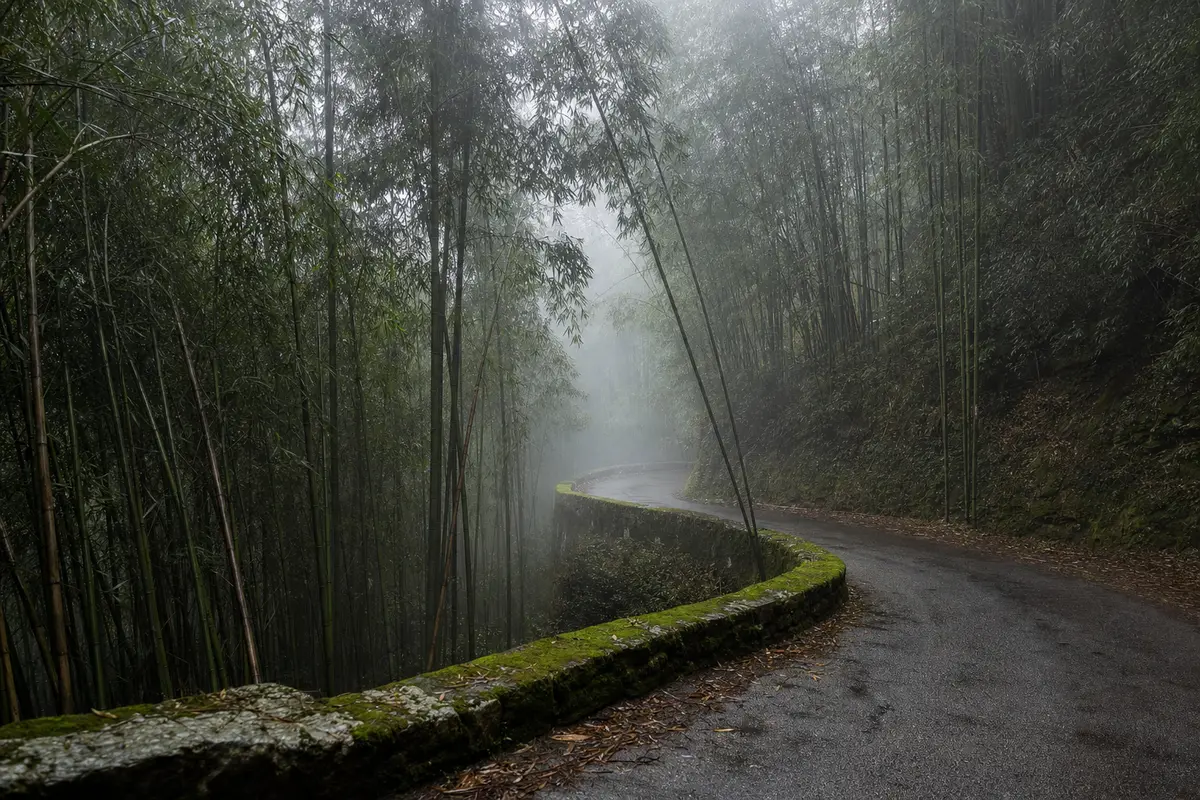
Inside the core the named sights are close together and linked by paths: Sword Pond (Jianchi), Luhuadang Park, Dakeng, the Xuguang sunrise platform, Chiang Kai-shek’s villa, the Bai and Yun Art Museum. Spending a day on foot among them is what most visitors do.
Between villages is another matter. These are separate settlements on different flanks of a mountain, joined by roads that climb. Walking to dinner in the next village is not a plan.
Forest covers more than 92 percent of the mountain, mostly moso bamboo grown as a crop. That gives you shade, not flat ground.
Taxis and the shuttle bus
Both work. Both stop at the same boundary.
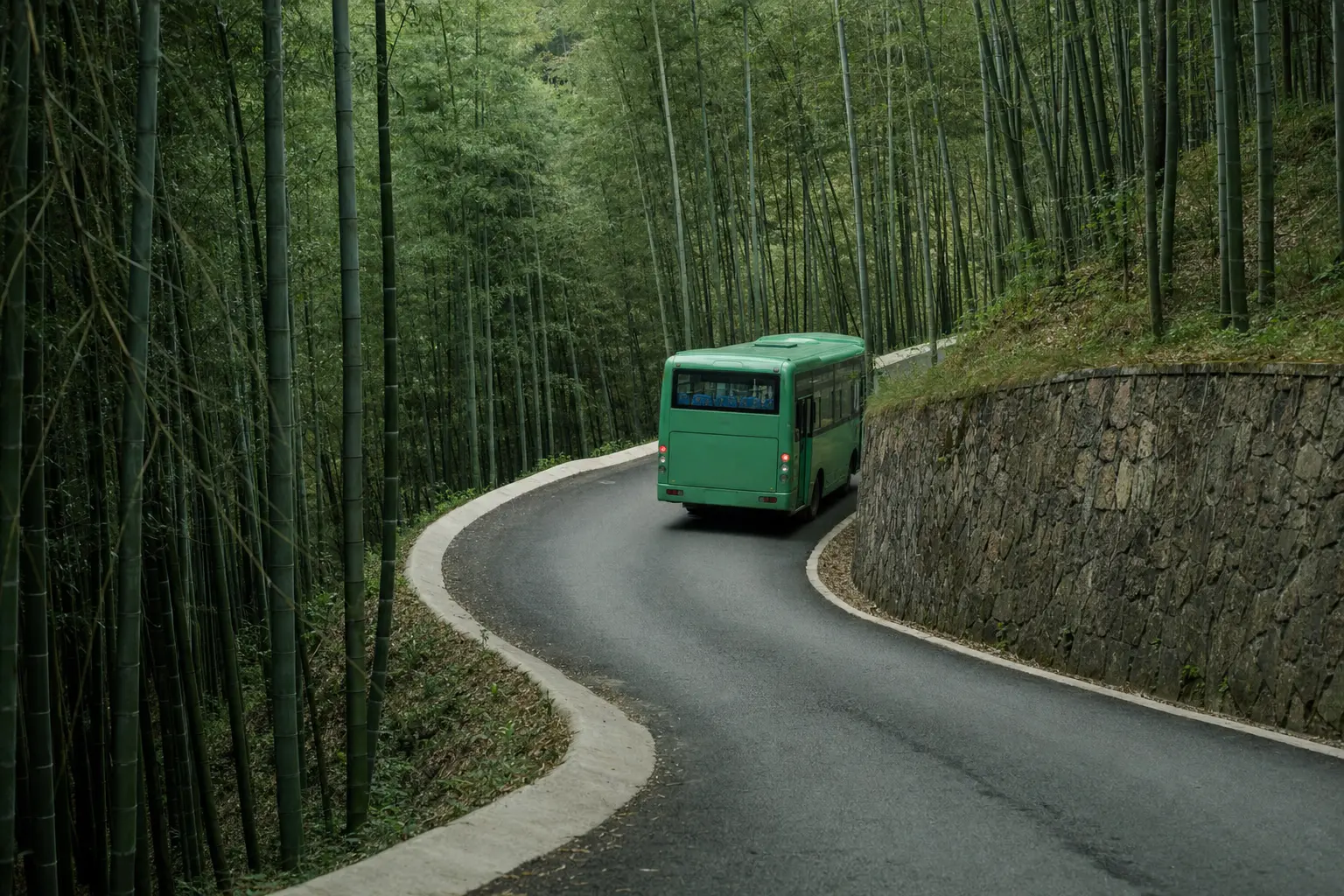
A taxi or van from Deqing station to Moganshan town costs about RMB 100 and takes about 30 minutes. The Y1 tourist shuttle bus covers the same ground for RMB 10 in 30 to 40 minutes.
| Y1 shuttle | Detail |
|---|---|
| Route | Deqing Coach Center to the Moganshan tourist distribution center |
| Fare | RMB 10 |
| Journey | 30 to 40 minutes |
| Departures | 07:30, 08:40, 09:40, 10:40, 13:00, 15:00, 16:00 |
| Return runs | 08:40 to 17:00 |
Seven departures is the entire service. The gap between 10:40 and 13:00 is real, and so is the 16:00 finish. Those two numbers matter more than the fare.
One warning about apps. Moganshan Road (莫干山路) is the M50 art district in Shanghai, roughly 200 km from the mountain, and the names collide constantly. Check what your ride-hailing app actually selected before you confirm.
Guesthouse pickups
Ask. That is the whole strategy.
The mountain has around 1,000 minsu (民宿), the Chinese term for a small owner-run guesthouse. In a village like Xiantan roughly 90 percent are locally run, so practice varies from door to door.
Message the property before you book your train. Give them your arrival time and ask two things: which transfer center serves you, and whether someone can meet you there.
Cycling
Laoling, on the south side, has a reservoir, kayaking and cycling, and it was one of the earliest farmstay clusters. Riding here is something people come to do, not a way to move luggage between villages.
Bikes are arranged through the guesthouses down at Laoling rather than from a rental shop, so ask when you book, and expect quiet valley roads rather than marked routes.
Luggage, honestly
For an international visitor arriving with suitcases, this is the single biggest friction point on the whole trip.
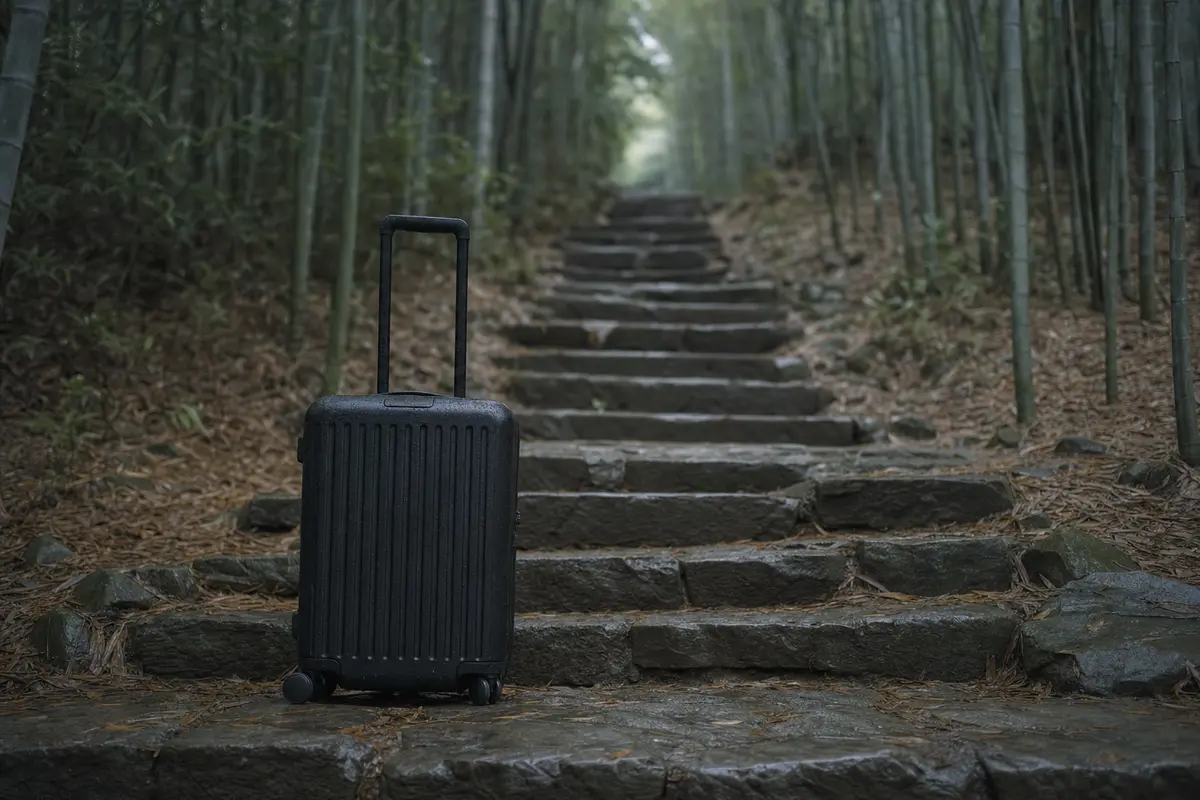
Picture the chain. Pudong to Hongqiao. Hongqiao to Deqing, 63 to 80 minutes. Deqing to Moganshan town, another 30 to 40. Then a transfer center, where the bags come off one vehicle and go onto another. Then the last stretch to the property, which may involve steps.
That is four handling points with two cases, and at least one of them is outdoors. Your bags move with you the whole way. The transfer centers run no left-luggage service, so plan to carry everything you bring.
A few things genuinely help:
- Arrive between 09:00 and 16:00, so the transfer center is open and the shuttle is still running.
- Tell the property how many bags you have and how big they are, before you arrive.
- If you are coming back through Shanghai or Hangzhou anyway, leave the large case there.
- Book two nights rather than one. The transfer costs the same either way, and on a one-night trip it dominates.
Where to stay starts with that trade-off rather than with the properties.
Shuttle times, fares and transfer center hours last checked 5 August 2026. Hours and timetables change without notice, so confirm the ones your plan depends on before you travel.
Last checked 8 August 2026 by Cyril Drouin. Prices, timetables and entry rules on this mountain move without notice, so confirm anything you are booking around.
Photographs on this site are representative illustrations, not documentary images of the specific building, property or service described.