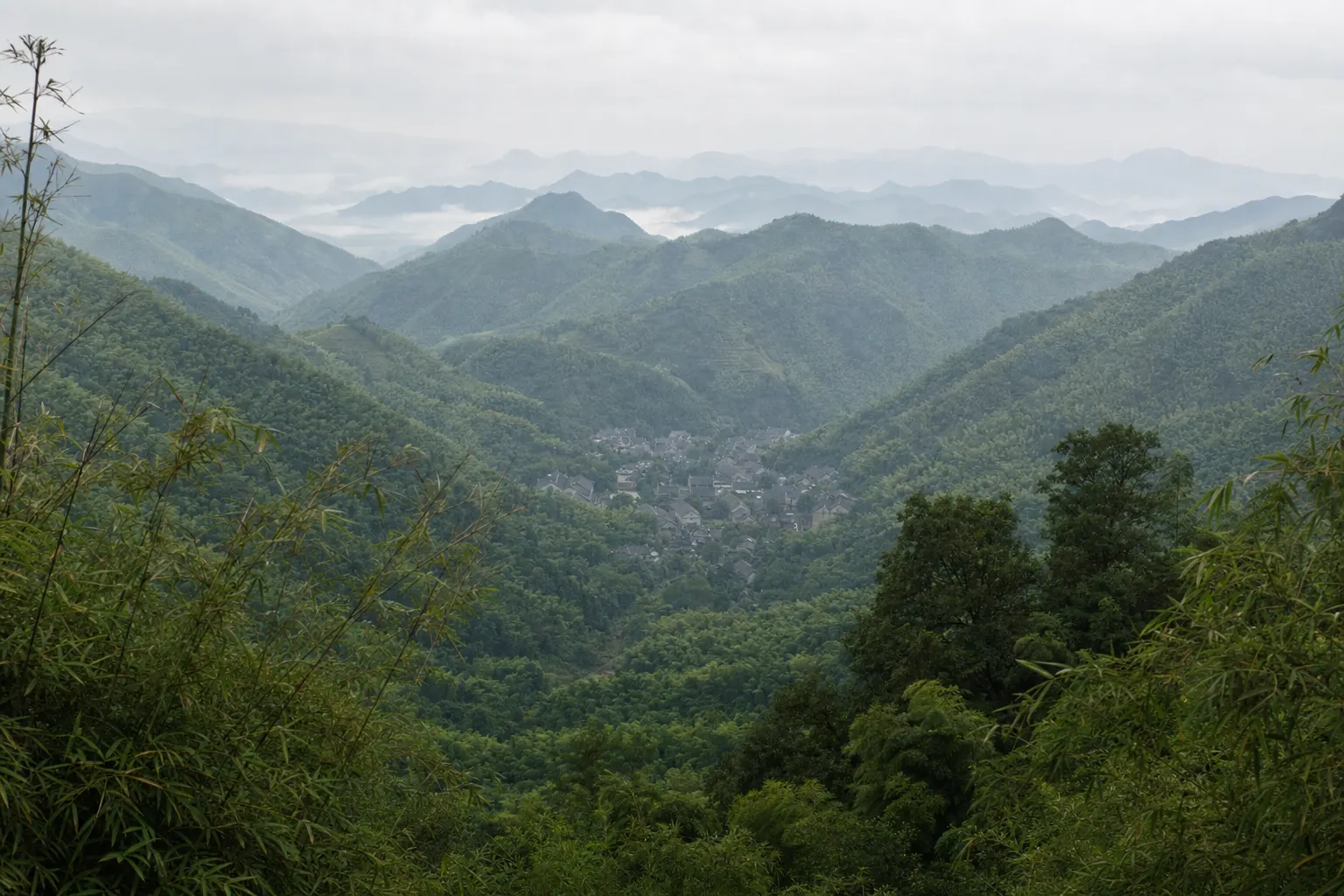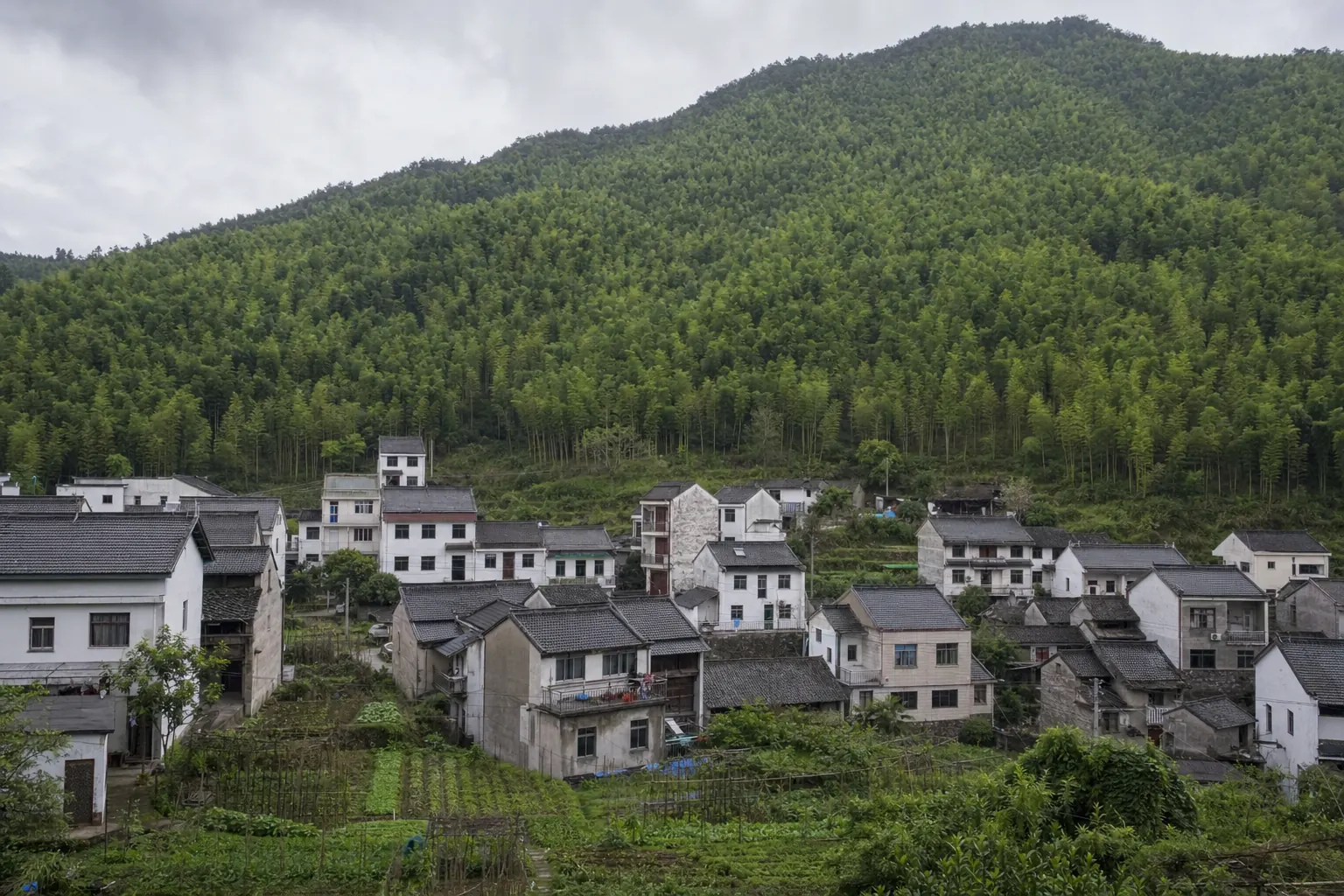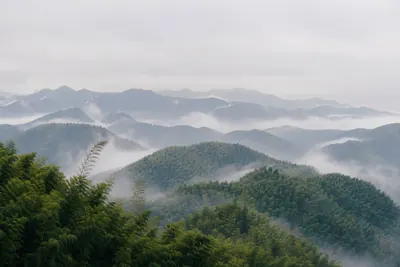
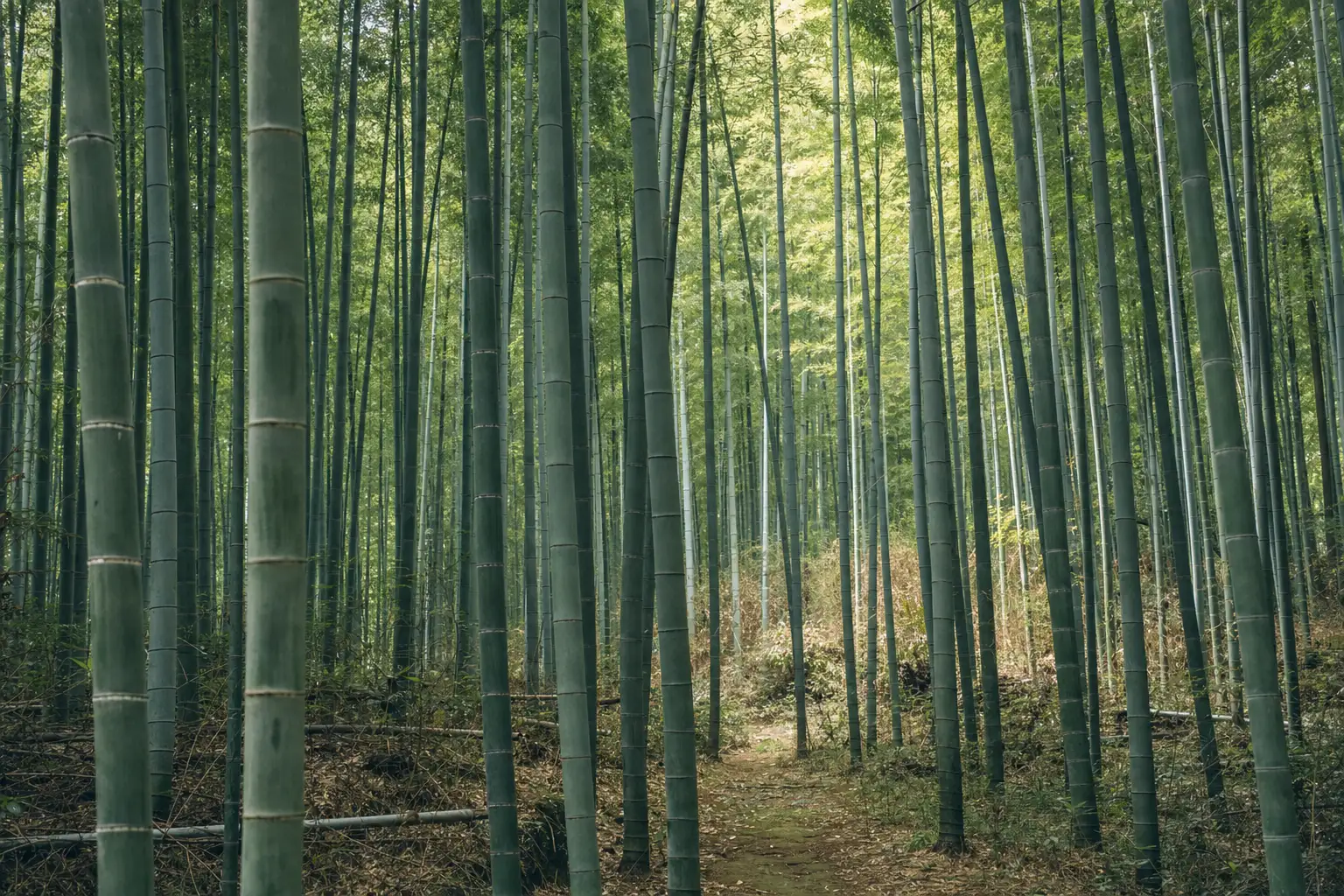
Moganshan is a mountain in Deqing County, part of Huzhou prefecture, in Zhejiang Province, China. It sits about 60 km north of Hangzhou and 200 to 240 km from Shanghai. Forest covers more than 92 percent of it, and nearly all of that forest is moso bamboo.
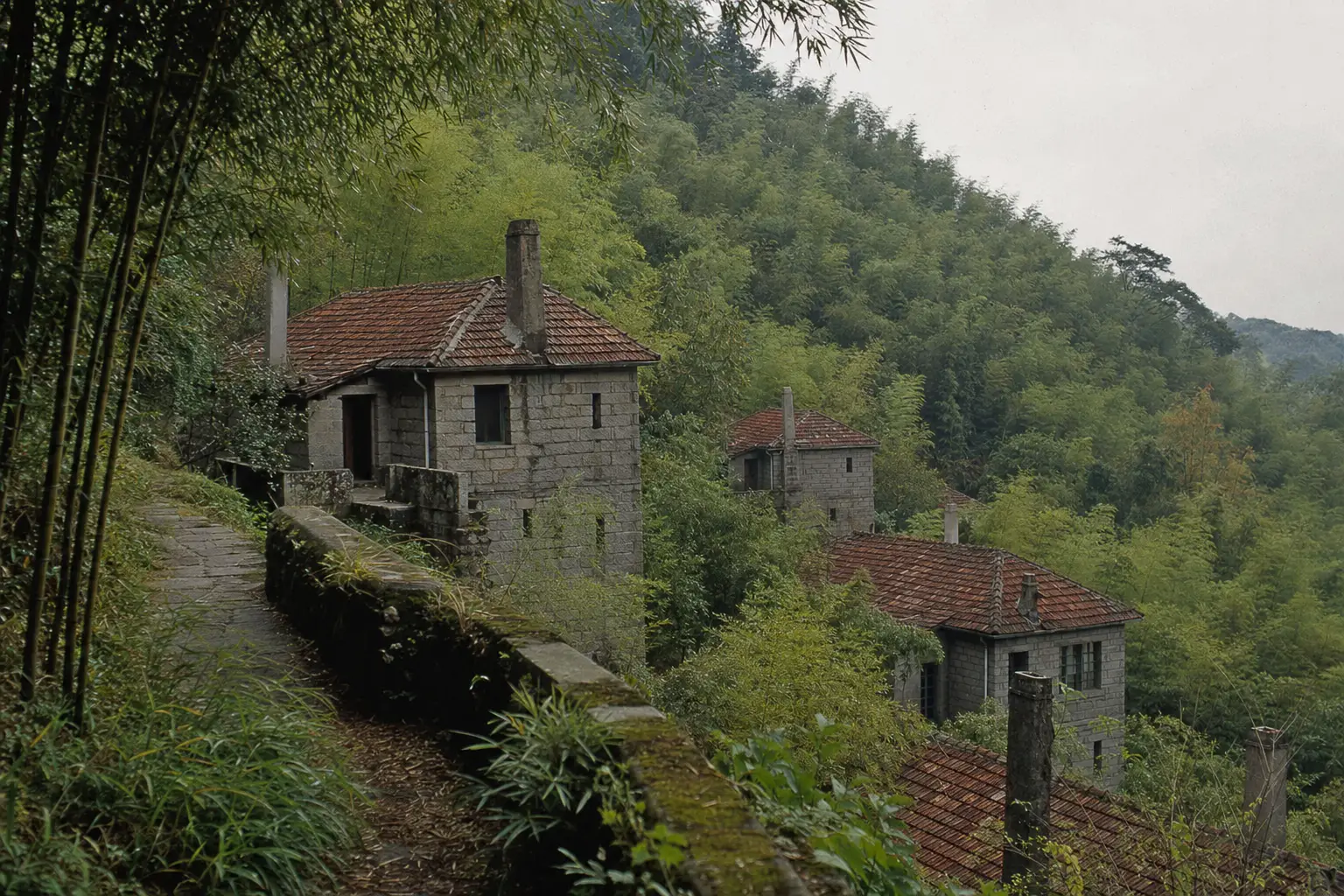
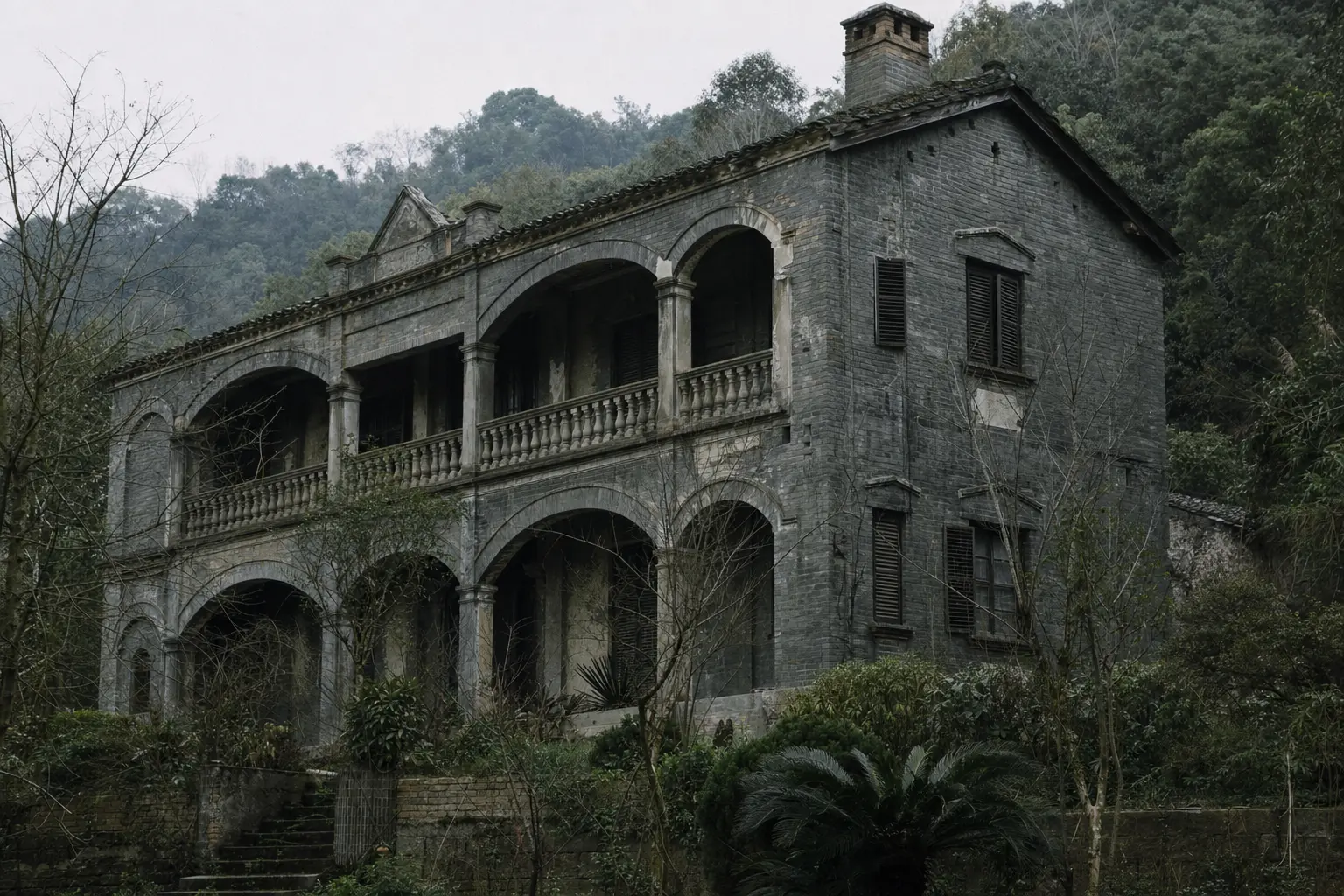
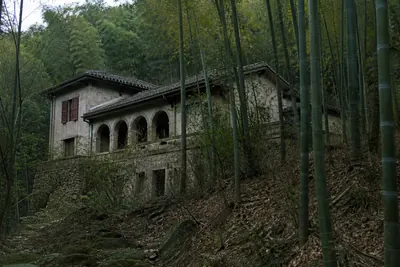
That number does most of the explaining. This is not a bamboo garden with a walkway through the middle. It is a bamboo mountain, with villages, roads, walking paths and about 250 old stone villas set inside it. The core scenic area alone runs to about 20 km².
If you have landed here looking for Moganshan Road, that is the M50 art district in Shanghai, roughly 200 km away. Different place. The what and where Moganshan is page sorts out the name.
What moso bamboo is
Moso (毛竹, maozhu) is the big timber bamboo of eastern China. Stems thick enough to fill your hand, growing straight and close together, with the leaves carried high overhead.
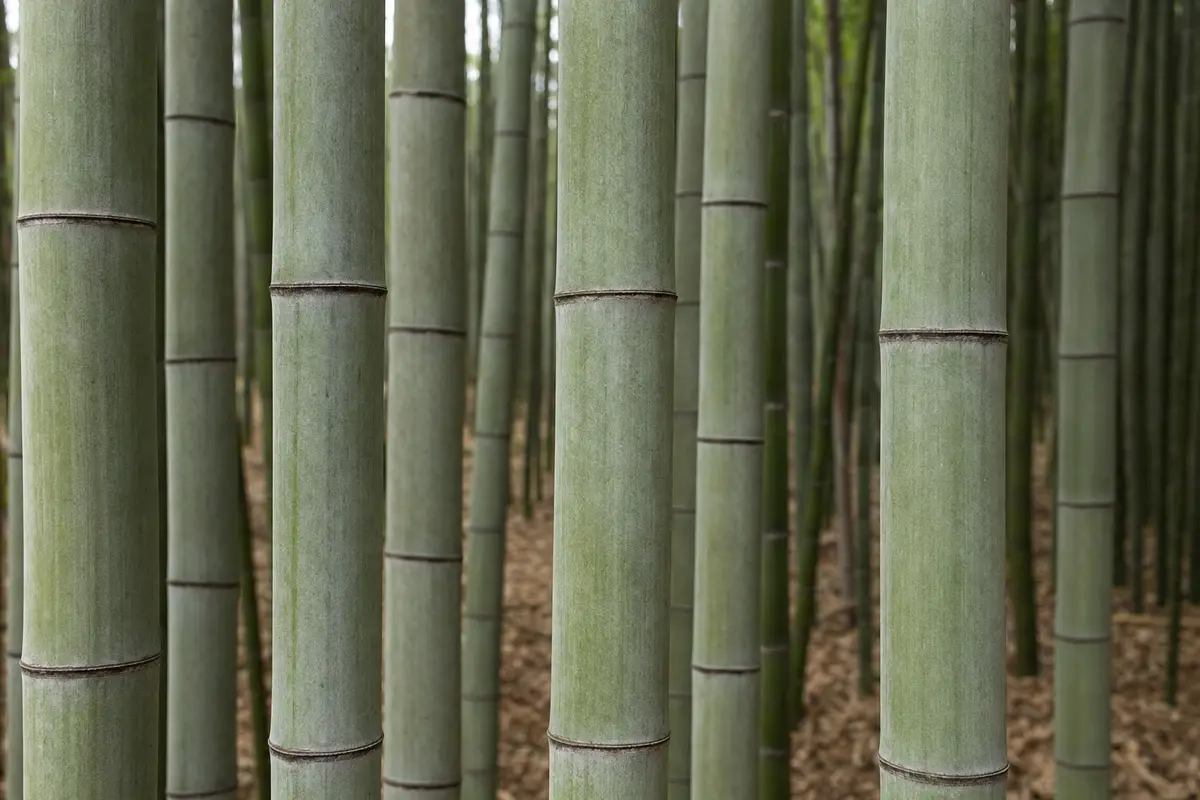
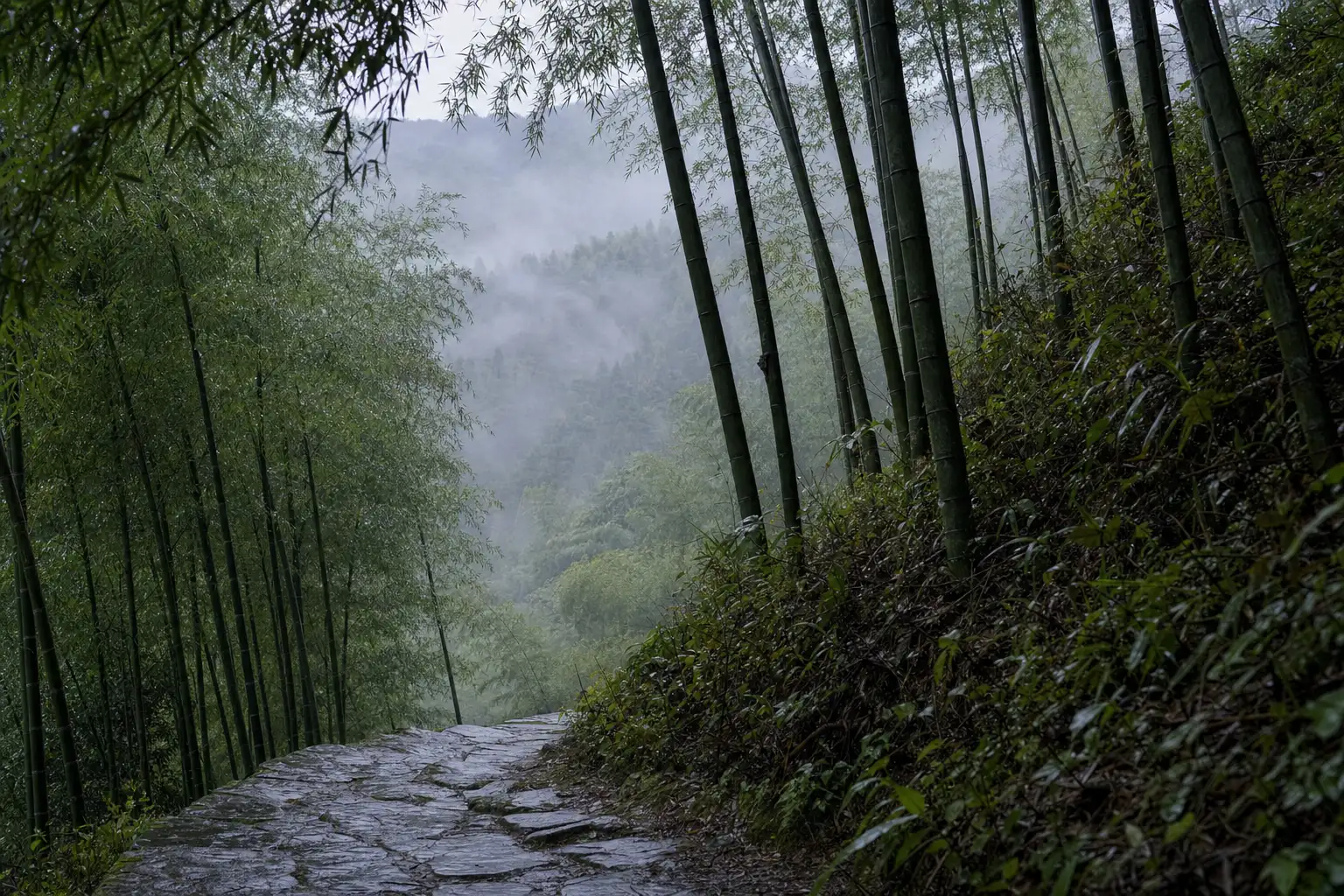
The result is a strange kind of woodland. Most of the volume above you is empty. The green is up in the canopy, the trunks are bare poles, and at ground level you can often see a long way between them. Sunlight arrives already colored.
It is a crop, not a park
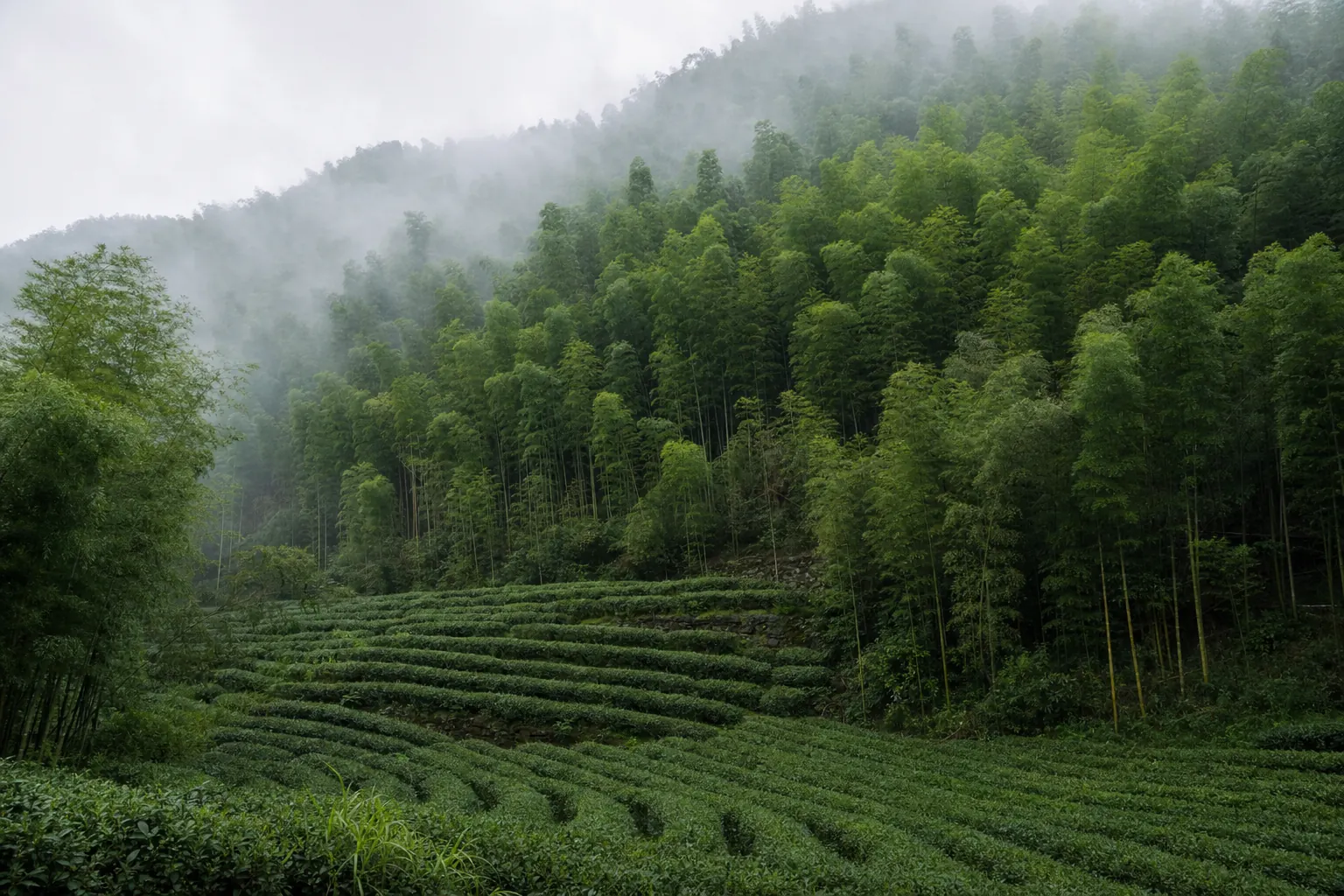
This matters more than anything else on the page. The bamboo on Moganshan is a working commercial crop. It is not landscaping, and nobody planted it for your photograph.
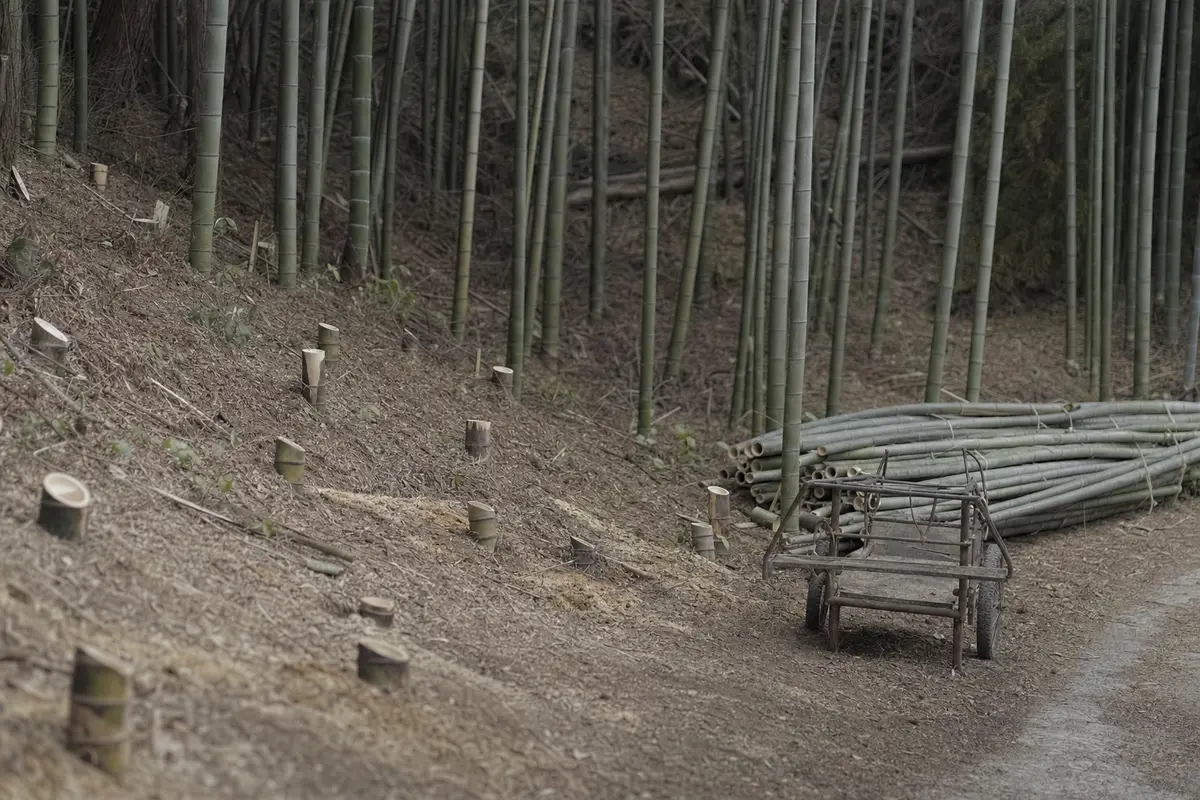
Farmers cut the poles and dig the shoots, and both are sold. So the forest looks worked, because it is. Cut stumps, thinned stands, tracks running off the path, ground that somebody has clearly been over recently. Visitors sometimes read that as neglect. It is the opposite. The tidy version would be the fake one.
Forest cover, species and commercial land use, BeyondBorder Group Ltd primary research, 1 to 5 August 2026.
What it looks and sounds like
The sound is the part people remember. Moso stands are dense and tall, so wind does not pass through them quietly. On a breezy day the whole slope creaks and knocks above your head, and the noise moves across the hillside like weather. Standing still for two minutes is worth more than another kilometer of walking.
The look changes with the weather more than with the season, because bamboo does not turn color and drop. Summer is deep shade and heavy green. The mountain averages 24.1 °C through July and August, which is 6 to 7 °C cooler than Shanghai and Hangzhou, and the forest is the reason. Winter thins the feel of the place without changing the color. January averages 1.4 °C, close to freezing, and the mountain empties out.
Rain and low cloud are not a lost day here. Grey light suits bamboo better than hard sun does. The weather page has the monthly detail.
When the light is best
Early morning and the last hour or so before sunset. In a dense stand, midday sun comes almost straight down and gives you blown-out gaps and black shadow in the same frame, which is a hard thing to photograph and a slightly unpleasant thing to walk in.
Overcast days are the reliable ones. The canopy softens the light and the whole path goes green.
This is guidance from walking there, not a measurement. Nobody publishes light angles for a bamboo slope.
Where to walk in it
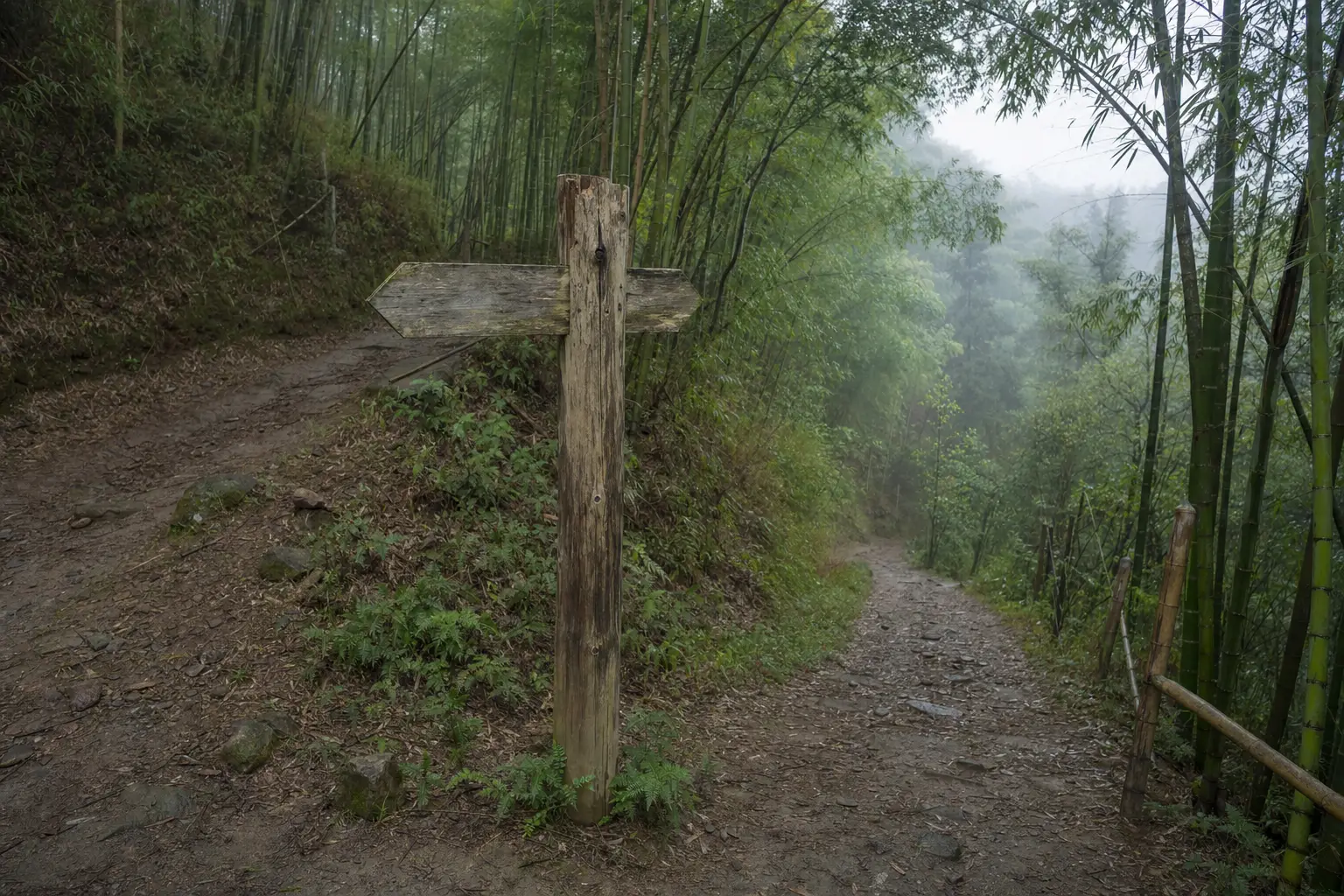
The named sights inside the core scenic area are linked by paths, and the bamboo is the connective tissue between all of them: Sword Pond (Jianchi), Luhuadang Park, Dakeng, the Xuguang sunrise platform, Chiang Kai-shek’s villa and the Bai and Yun Art Museum.
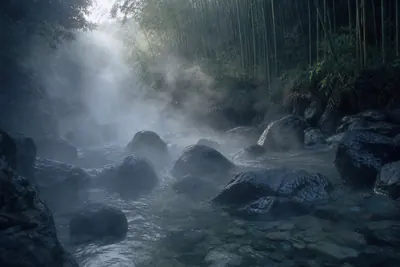
Sword Pond carries the mountain’s founding story. The name Moganshan comes from Mo Ye (莫邪) and Gan Jiang (干将), a swordsmith couple of the Spring and Autumn period who, in legend, forged blades for the King of Wu. The pond is said to be where the blades were quenched. Treat it as legend, which is what it is, and it is still a good walk.
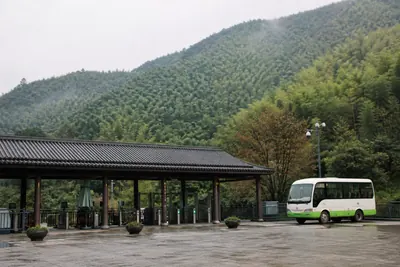
One rule catches people out. Private vehicles cannot drive inside the scenic area. You transfer at Yucun, Fatou or Houwu, and all three run 08:00 to 18:00. That has a direct effect on your bamboo photography, because the best light sits at both ends of the day, outside those hours. If you want the mountain at 06:30, you need to already be sleeping inside or beside the scenic area. Getting around Moganshan covers the transfer system, and where to stay covers which villages sit where.
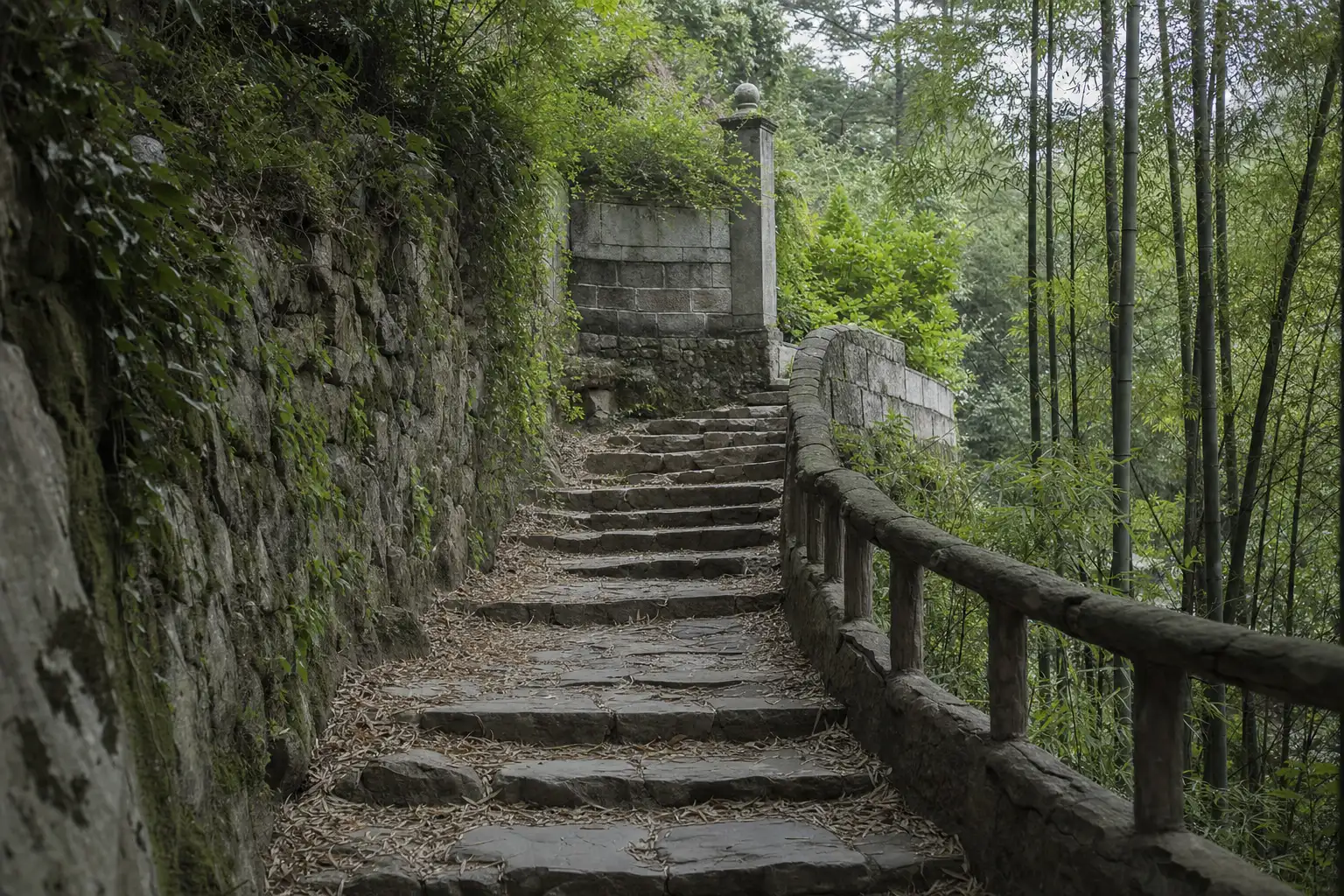
For routes and distances rather than viewpoints, use the hiking guide.
Spring shoots
In spring the shoots come up, and the same forest you have been walking through turns into food. Farmers dig them, and they appear on guesthouse menus within hours. Bamboo shoots are one of the two things the local season is actually promoted on, along with the meadows.
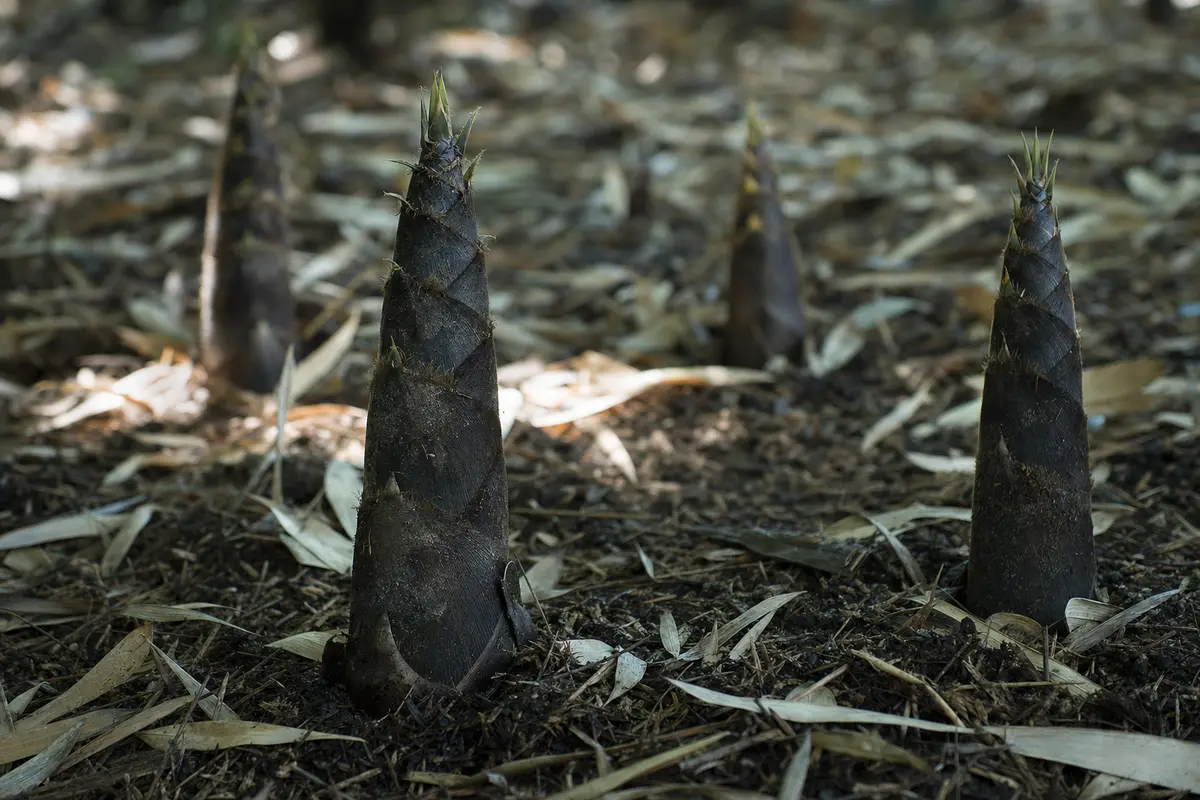
Shoot timing moves with the weather from year to year. Treat it as a few weeks in spring, not a date you can book against.
If you have seen bamboo elsewhere in Asia
Many visitors arrive with a picture in their head from a famous grove on a tour itinerary somewhere else in the region. Set it aside, because the two experiences are not the same product.
Those places are usually short, groomed and singular: a lane you walk down, photograph, and finish. Moganshan is a working forest spread across a whole mountain, with roads and houses in it and farmers in it, and no single spot where the bamboo officially happens. That is better if you want to spend a day inside it and worse if you want one guaranteed frame in twenty minutes.
Month by month
| Month | What the bamboo is doing | How busy |
|---|---|---|
| January | Green, still, cold. January mean 1.4 °C | Quietest of the year. Scenic-area tickets half price in winter |
| February | Wet ground, dull light, no new growth | Quiet |
| March | Shoots start to push up, weather depending | Quiet on weekdays, weekends filling |
| April | Shoot season and the freshest green of the year | Busy weekends, promoted shoulder season |
| May | New growth still coming up, everything green | May Day Golden Week is one of two annual spikes |
| June | Full leaf, warm, wet | Moderate midweek, busy weekends |
| July | Deep shade. July and August mean 24.1 °C, 6 to 7 °C cooler than the cities | Peak season |
| August | Same, and the historic reason the hill station exists | Peak season |
| September | Heat starts to ease, light lengthens | Busy weekends |
| October | Clear late-autumn light, the best walking month for many people | National Day Golden Week is the other spike |
| November | Cool, clear, low sun in the stands | Quieter, good value |
| December | Cold and empty | Quiet. Winter tickets half price |
Temperature means, seasonal patterns and holiday demand, BeyondBorder Group Ltd primary research, 1 to 5 August 2026.
The two Golden Weeks are worth taking seriously. High-end guesthouse occupancy hit 94 percent over the May 2024 holiday. During National Day 2025, daily footfall in Yucun ran 30 to 40 percent above normal. The weekday and weekend split is severe here all year, and Mondays are notably quiet.
At those peaks, the main paths through the bamboo are busy in the ordinary Chinese-holiday sense: continuous, loud, and queued at the photogenic points. The forest is big enough to absorb it if you walk twenty minutes off the obvious route. Most people do not. The seasons guide sets out the calendar properly.
Temperature figures, holiday occupancy data and transfer center hours last checked 5 August 2026. Ticket prices vary between sources and should be confirmed at booking.
Last checked 8 August 2026 by Liyan Ye. Prices, timetables and entry rules on this mountain move without notice, so confirm anything you are booking around.
Photographs on this site are representative illustrations, not documentary images of the specific building, property or service described.