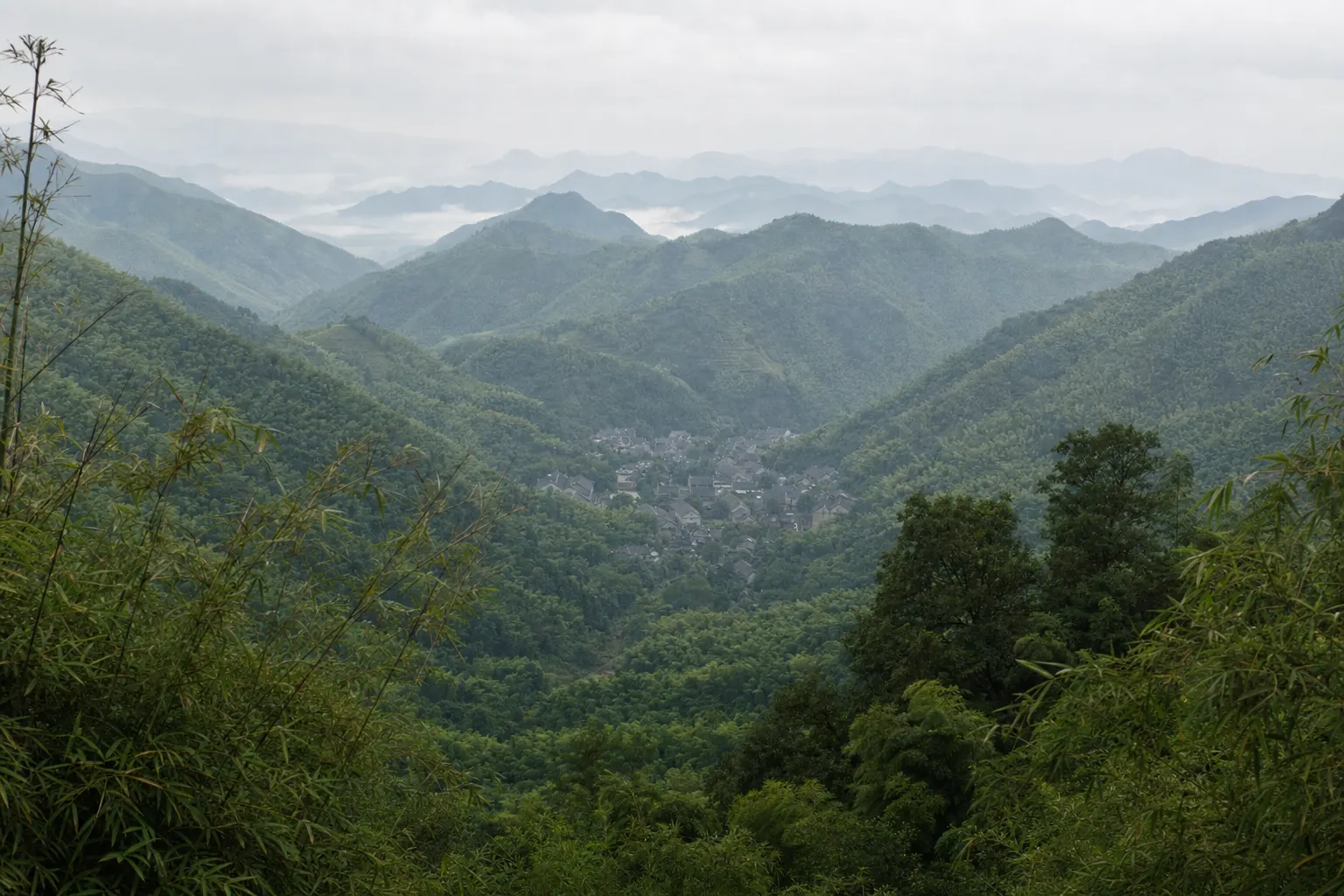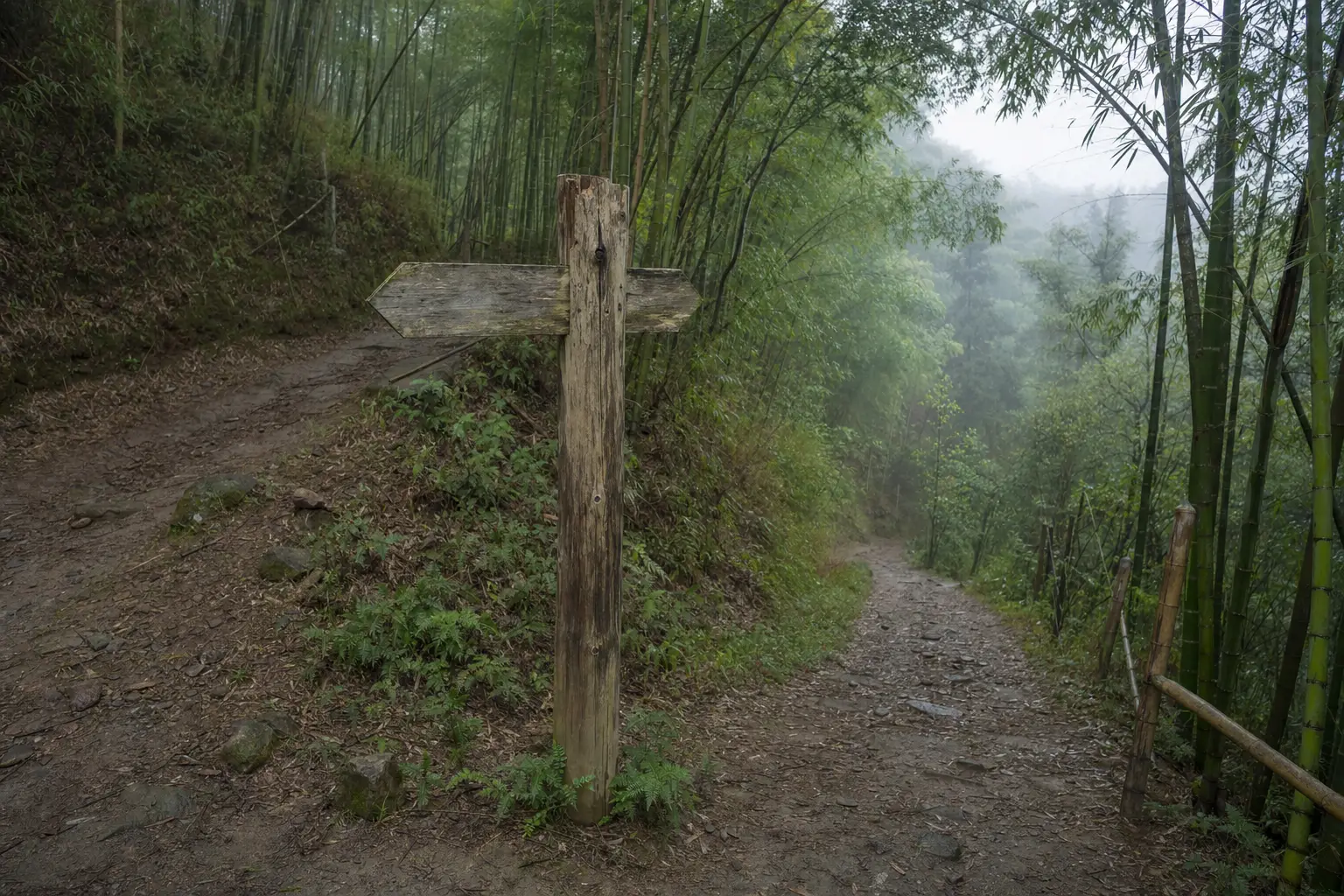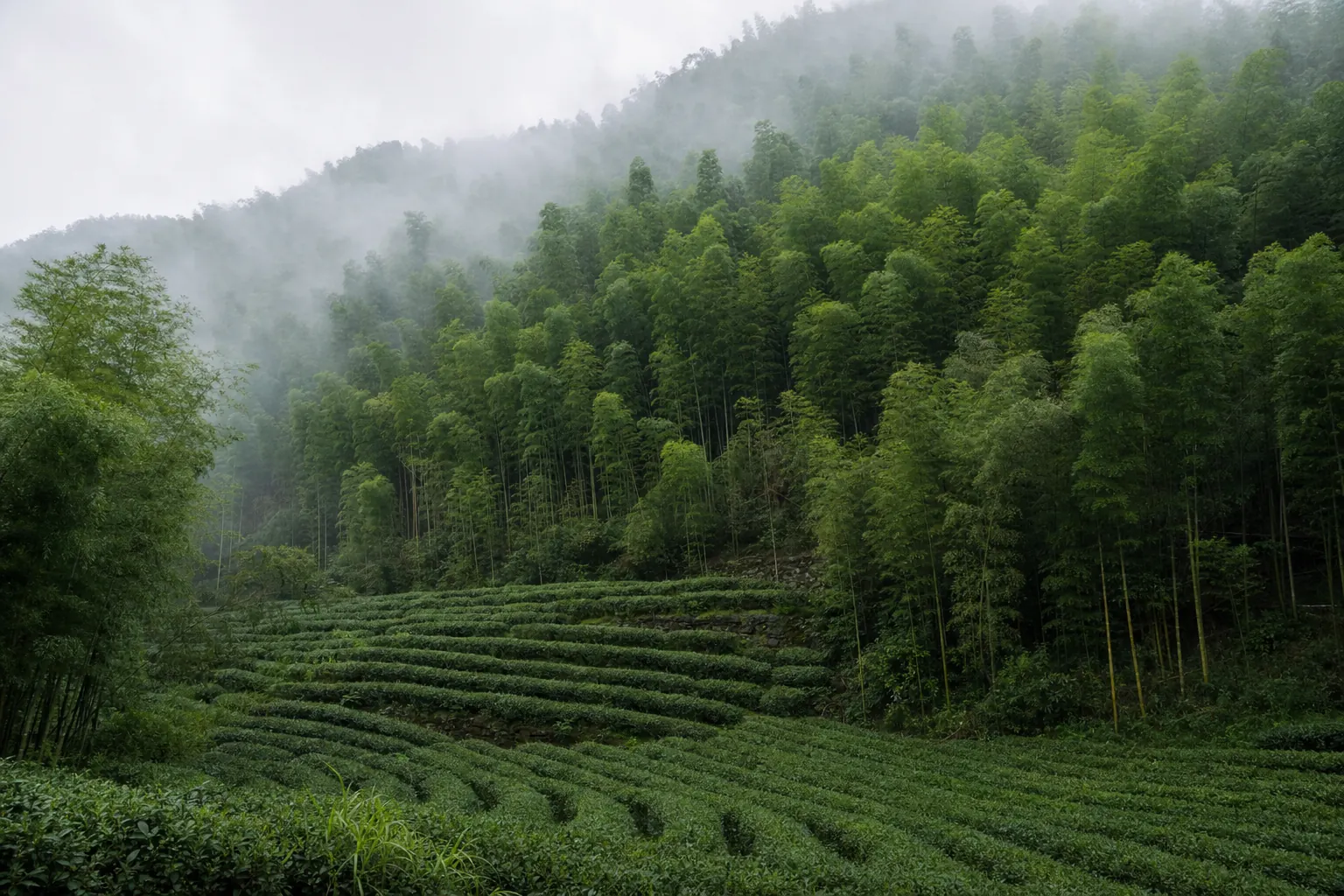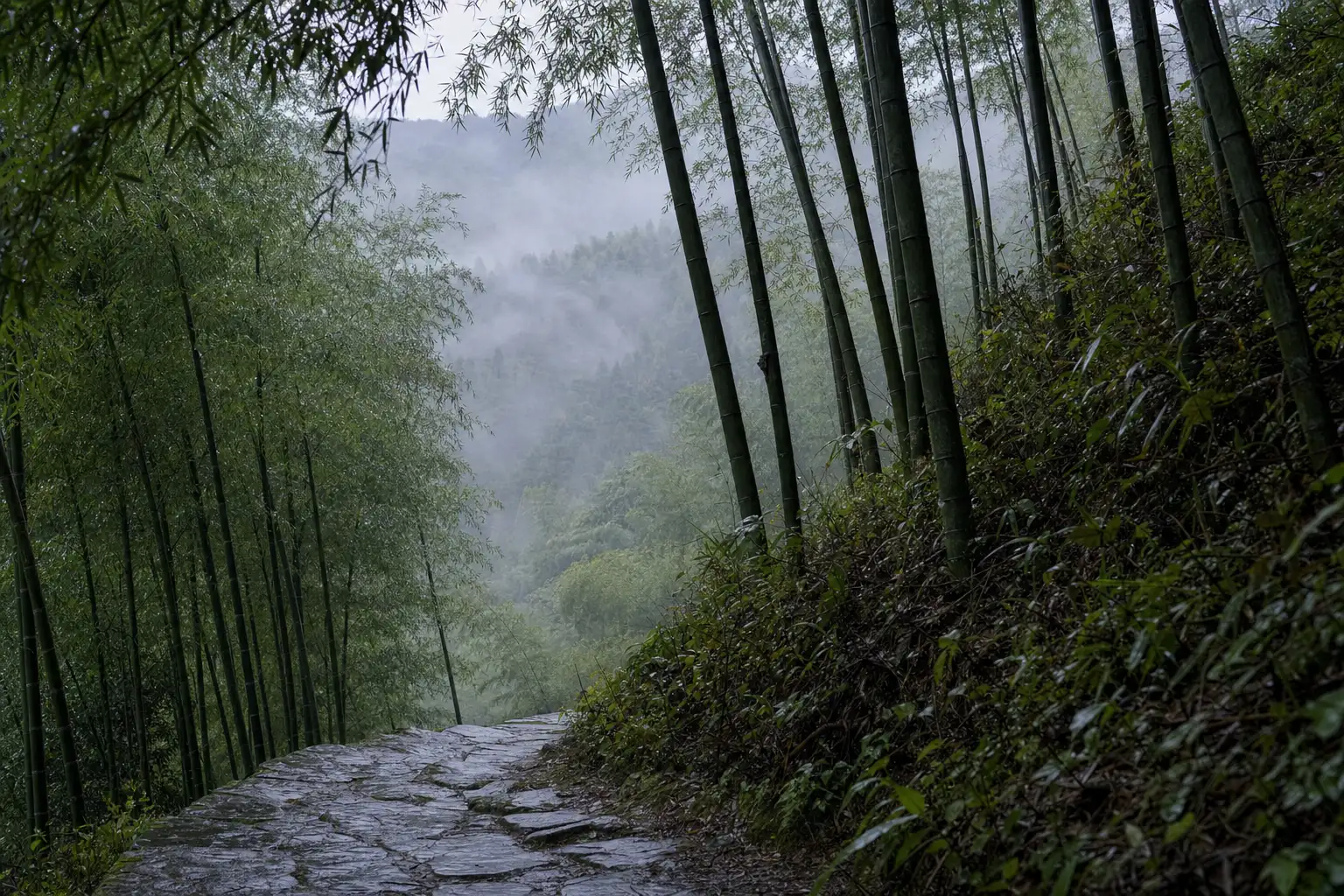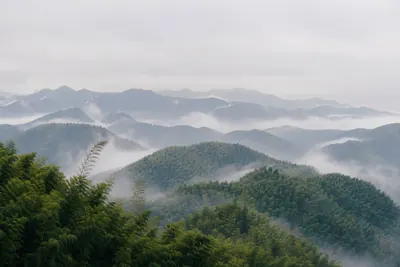
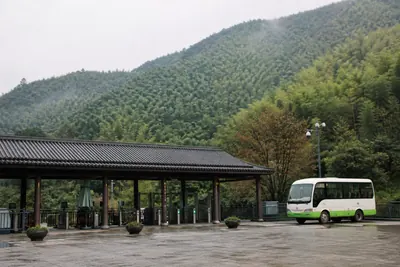
Deqing County, in Huzhou prefecture, Zhejiang Province, is where you find Moganshan: a mountain about 60 km north of Hangzhou and 200 to 240 km from Shanghai. The protected part of it is the Moganshan National Scenic Area, and it is smaller than people expect.
The layout is what trips people up. The villages, and almost all of the roughly 1,000 guesthouses, sit outside the ticketed area. So do most restaurants. You do not stay inside the scenic area. You go in for part of a day, come back out for dinner, and the last transfer leaves earlier than you expect.
If you are here after Moganshan Road, that is the M50 art district in Shanghai, which the what and where Moganshan is page sorts out.
Three designations, one mountain
Three official labels sit on the same mountain.
| Label | What it is | Dated |
|---|---|---|
| National scenic area | China’s state-level category for protected landscape | not published |
| National AAAA tourist attraction | The top-but-one grade in the national A-level system | not published |
| National-level tourism resort | Named “Deqing Moganshan International Tourism Resort” by the Ministry of Culture and Tourism | 15 December 2020 |
What reaches you is the effect of the labels. Protected status is why there is a boundary and a ticket, and why you cannot drive your own car up the hill. This is not a national park in the sense that phrase carries in the US or Europe, and none of the three titles tells you where the boundary runs.
Designations and the 15 December 2020 resort listing, BeyondBorder Group Ltd primary research, 1 to 5 August 2026.
How big the scenic area is
| Measure | Figure |
|---|---|
| Core scenic area | About 20 km². Some sources quote 43 km² for a wider designated area |
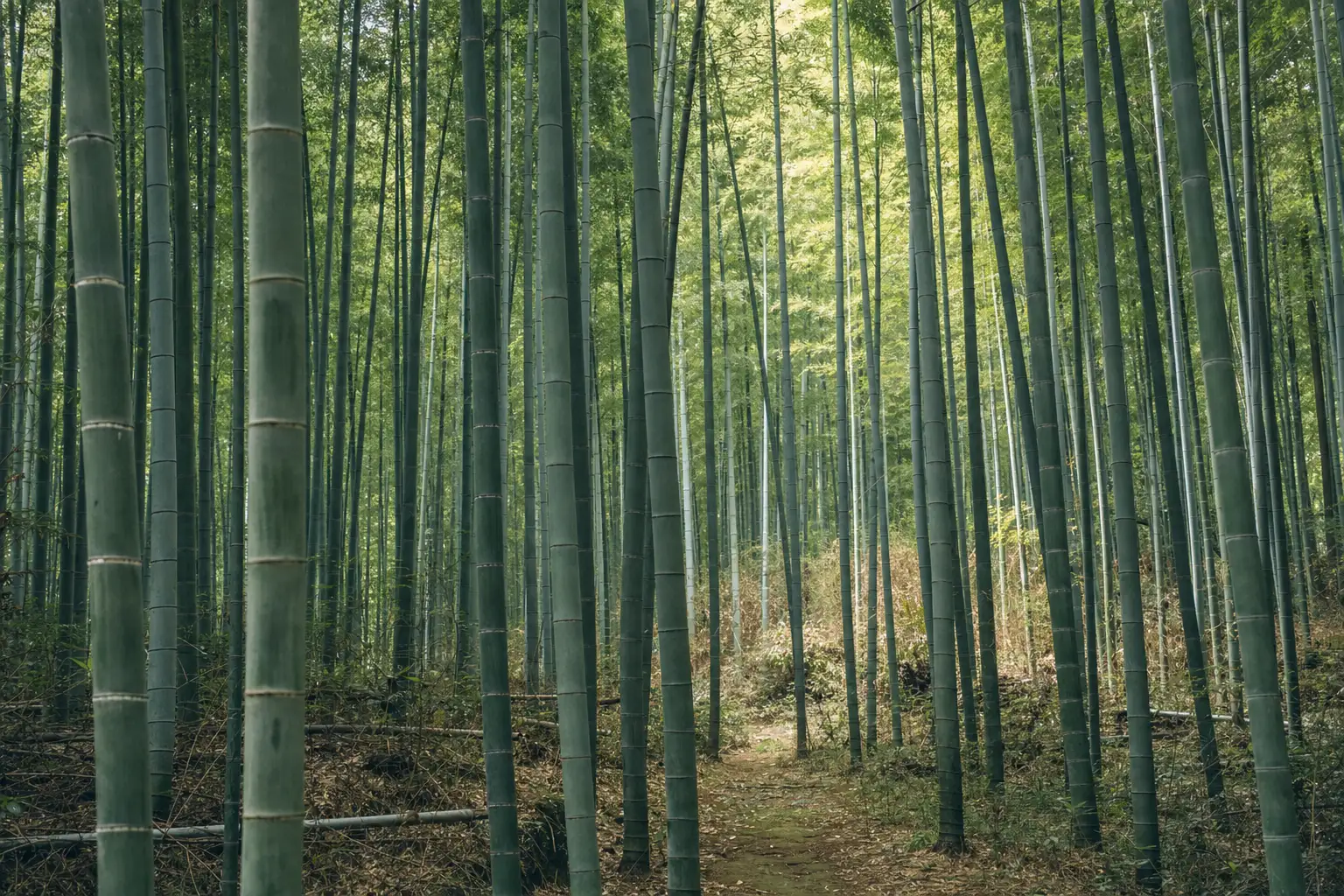
| Forest cover | Over 92 percent, nearly all moso bamboo |
| Main peak | Tashan, 719 to 720 m. You will see 758 m elsewhere; ignore it |
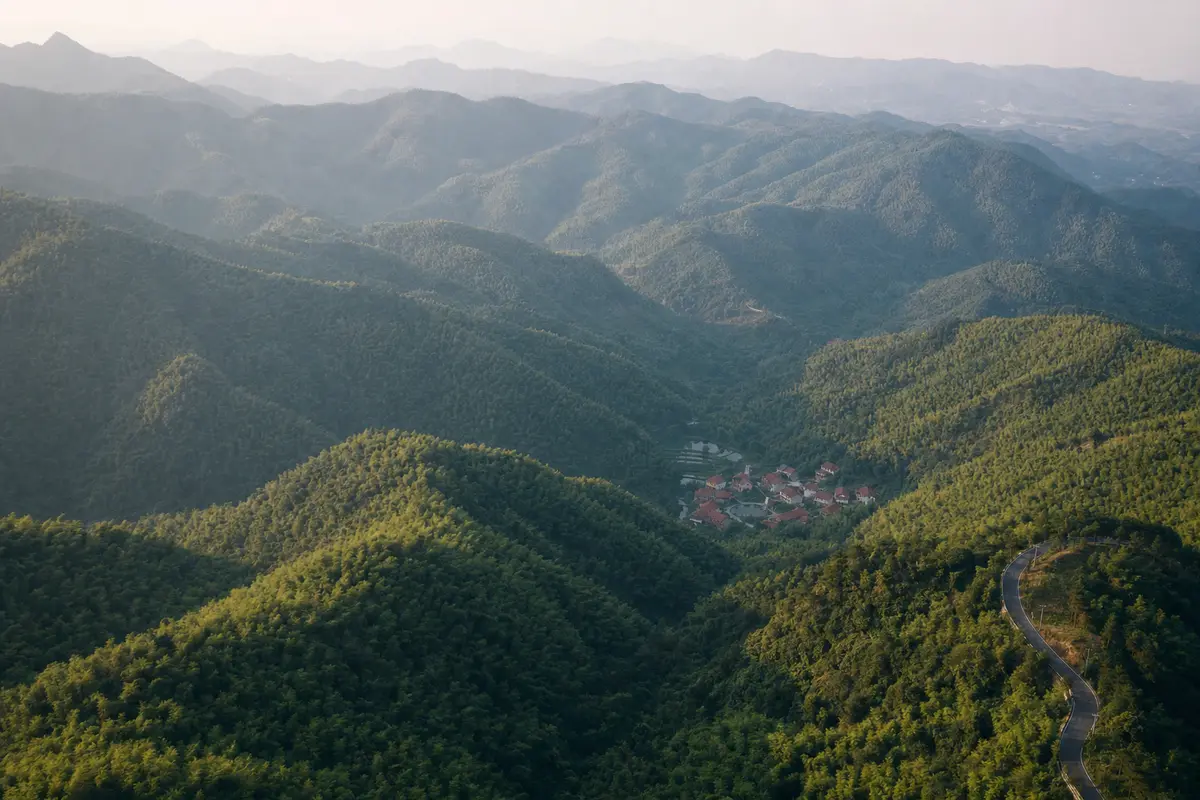
Use the smaller figure, since that is the part with a ticket on it. The bamboo is grown and cut as a commercial crop, and the bamboo forest page shows what that looks like on the ground.
What is inside, and what is not
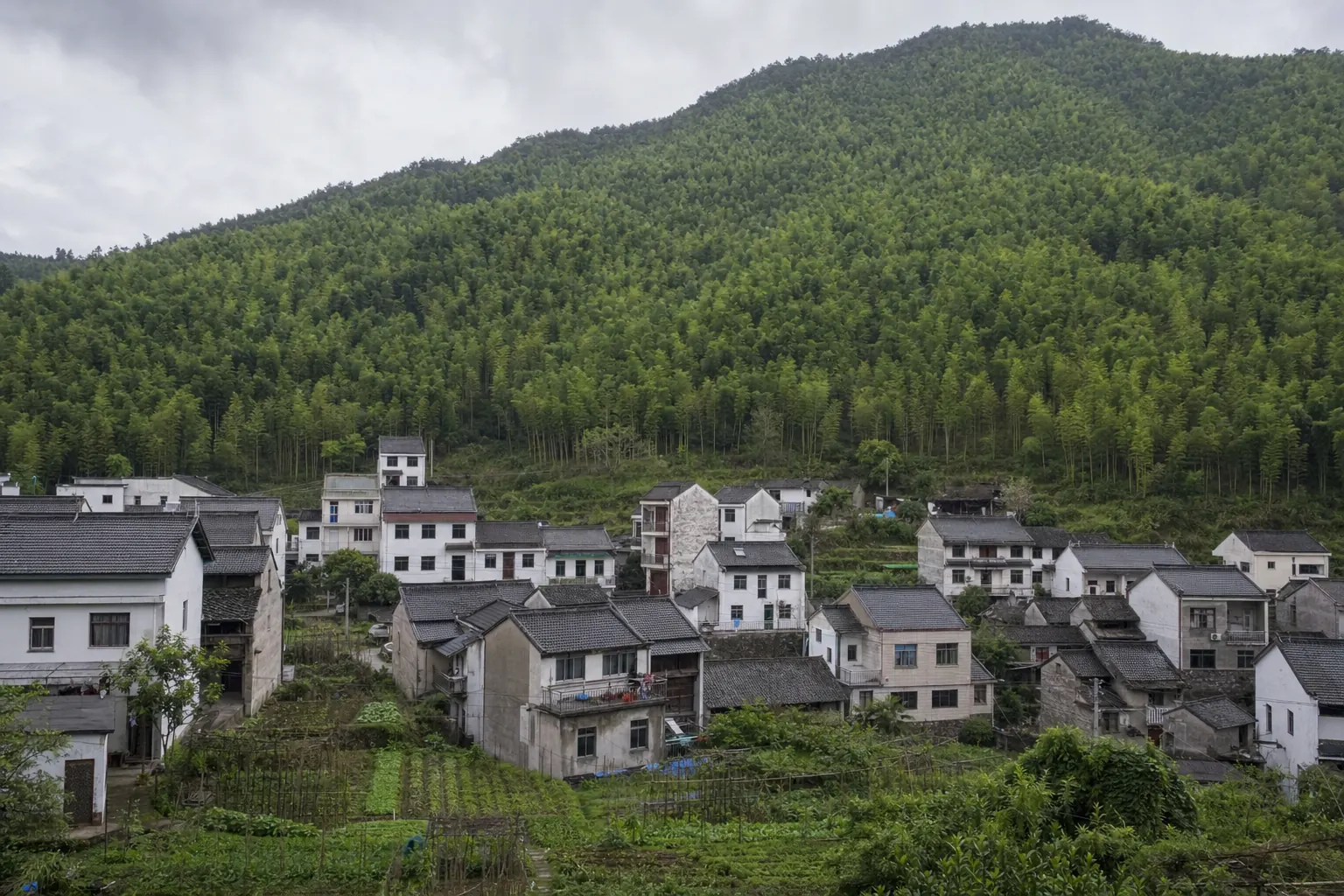
Moganshan Town and the scenic area are not the same thing. The town covers the foot of the mountain, with the villages and the guesthouses in it. The scenic area is the ticketed core above. Most of your trip happens below the gate.
The split below decides where your day happens.
| Inside the ticketed core | Outside it |
|---|---|
| Sword Pond (Jianchi) | Yucun, the main village at the foot: square, market, 1932 culture park |
| Luhuadang Park | Xiantan, the guesthouse village on the north side, about 135 minsu |
| Dakeng | Laoling, Sanjiuwu, Houwu, Dazaowu |
| The Xuguang sunrise platform | Almost all of the roughly 1,000 guesthouses |
| Chiang Kai-shek’s villa | Nearly all the restaurants and shops |
| The Bai and Yun Art Museum | The three transfer centers themselves |
| The bamboo slopes of the core | Wukang, the county town 20 km away, and Deqing station |
You sleep and eat in the right-hand column.
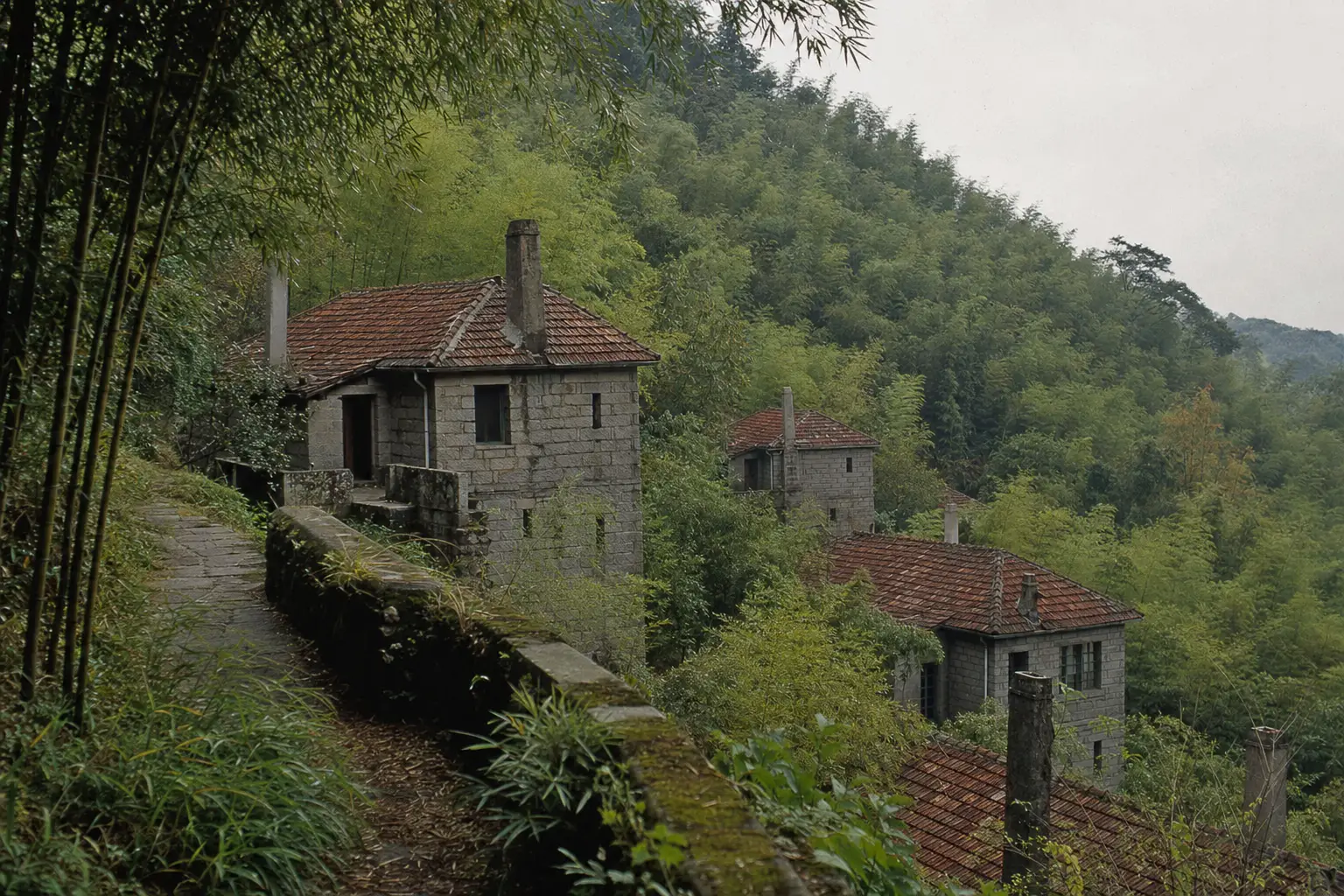
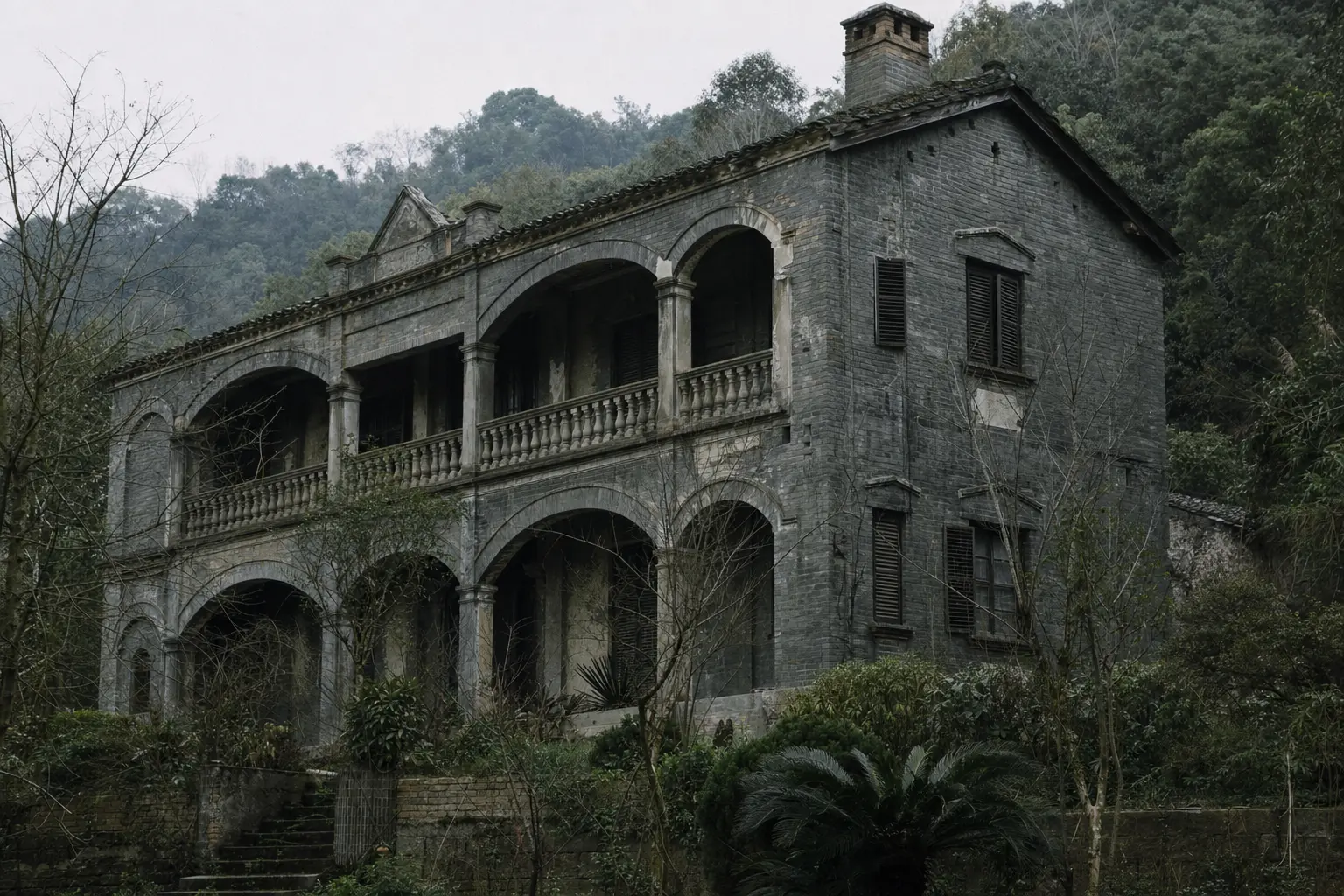
The roughly 250 surviving historic villas fall on both sides of the line, with the densest cluster up in the old hill station.
The gates and the three transfer centers
Knowing where the line falls is only half of it. Crossing it trips people up.
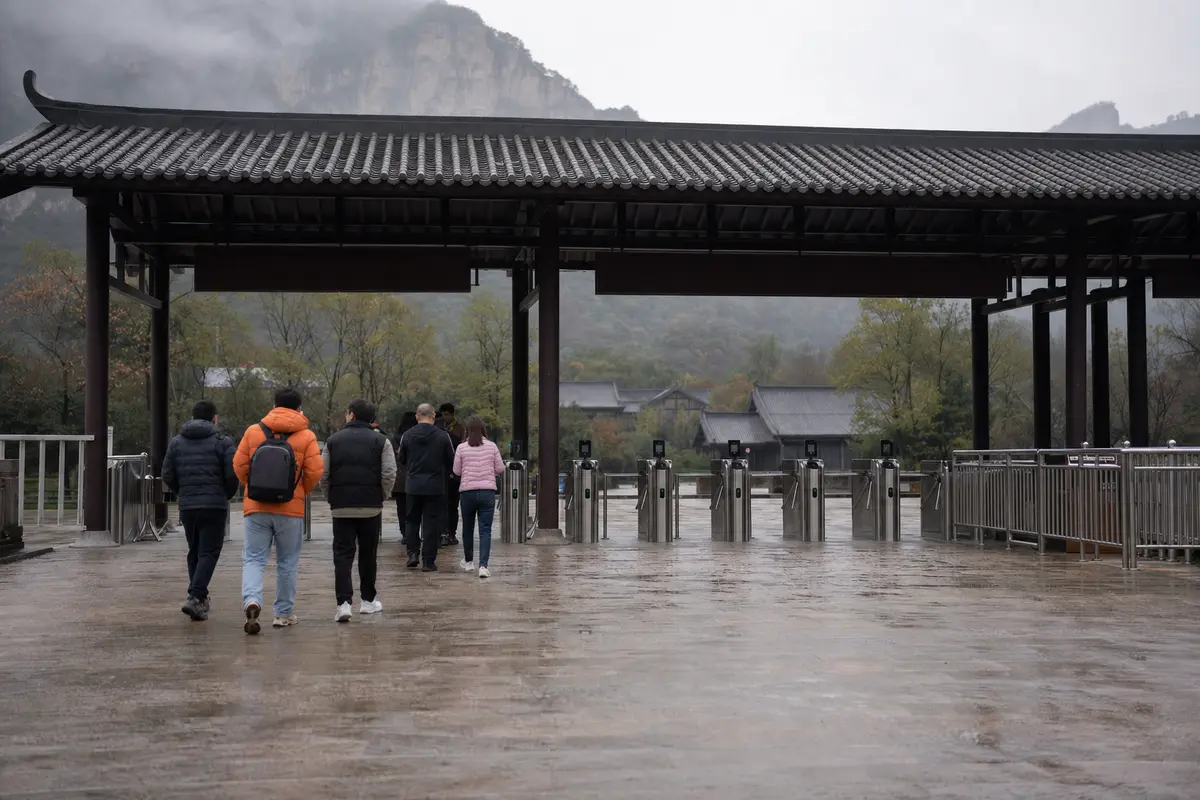
One rule shapes every visit, and English-language sources almost never print it. Private vehicles cannot drive inside the scenic area.
In practice the gate and the transfer point are the same thing. You leave the car at one of three centers and change to scenic-area transport there.
| Entry rule | What applies |
|---|---|
| Transfer centers | Yucun (main gateway), Fatou, Houwu |
| Hours | 08:00 to 18:00, all three |
| Private cars past this point | Not allowed |
| Y1 tourist shuttle | Deqing Coach Center to Moganshan town, 30 to 40 min, RMB 10, seven a day |
| Where the Y1 ends | Moganshan town, outside the scenic area |
Private-vehicle rule and transfer hours, BeyondBorder Group Ltd primary research, 1 to 5 August 2026.
The three transfer centers are the gates. There is no separate list of pedestrian entrances, and outside those hours the whole system is shut.
Those hours look harmless until you plan a day around them. Sunrise at the Xuguang platform is out of reach unless you are sleeping up there, and the best light falls outside the window at both ends. Day-trippers should start back well before 18:00.
Public transport also drops you outside. The timetable sits on getting around Moganshan.
Moganshan tickets: two published prices
Prices are not consistent across sources. Two ranges are in circulation, and neither has earned the right to be printed as the answer.
| What the source says | Adult ticket |
|---|---|
| Higher range, with a winter discount | RMB 120 online, RMB 130 at the gate, half price in winter |
| Lower range, split by season | RMB 50 off-season, RMB 80 peak |
Both published ticket ranges, BeyondBorder Group Ltd primary research, 1 to 5 August 2026.
Both were checked on 5 August 2026. The ranges do not overlap, so one of them is out of date or priced for something narrower than the whole core.
Budget for the higher figure, and be pleased if the gate charges less. Your guesthouse is the fastest place to check. Tickets and entry has the detail.
Concessions for children, students and seniors are handled at the window rather than published, so bring documentation and ask there.
Inside the gate: the named sights
Once through, this is the part you paid for.
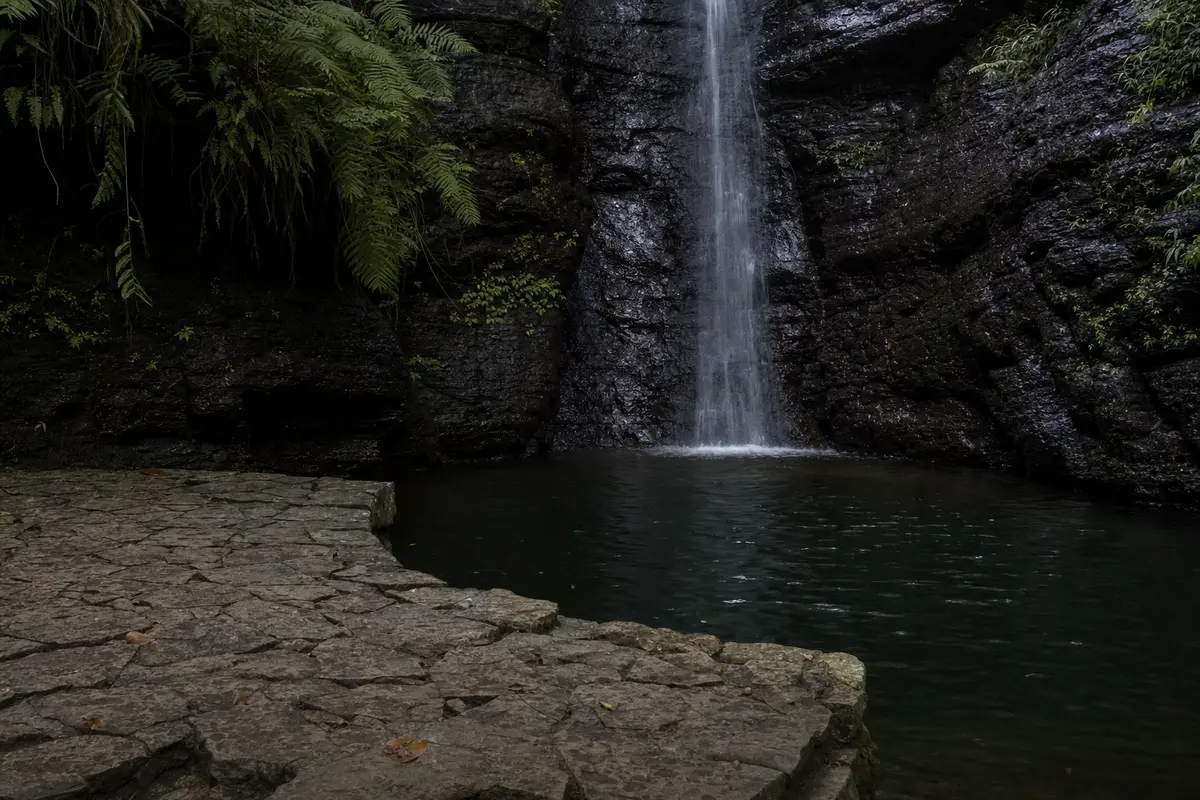
Sword Pond carries the mountain’s founding story. The name Moganshan comes from Mo Ye (莫邪) and Gan Jiang (干将), a swordsmith couple of the Spring and Autumn period who, in legend, forged blades for the King of Wu and cooled them here. It is a legend, and the walk is worth doing anyway.
Luhuadang Park and Dakeng put you deep in the bamboo, and Xuguang is the sunrise viewpoint. Things to do covers the wider list, most of it outside the gate.
When to go, and how busy it gets
Summer is the historic season and still the main one. Moganshan is counted traditionally as one of China’s four great summer resorts, with Beidaihe, Lushan and Jigongshan.
| Time of year | Up on the ridge | At the gate |
|---|---|---|
| July to August | Mean 24.1 °C, 6 to 7 °C cooler than Shanghai and Hangzhou | Peak season |
| January | Mean 1.4 °C, close to freezing, and empty | Half price under the higher published range |
| Golden Weeks | 94 percent high-end occupancy over the May 2024 holiday | Everyone funnels through three points |
| Weekends | Busy year-round | Arrive early |
| Mondays | Notably quiet | The easiest day to go in |
Moganshan Town recorded 2.60 million visitors in 2018 and 2.52 million in 2021. Those are town totals rather than gate counts, but they set the scale.
Visitor totals for Moganshan Town, 2018 and 2021, BeyondBorder Group Ltd primary research, 1 to 5 August 2026.
Golden Weeks hit the transfer centers first. Footfall in Yucun ran 30 to 40 percent above normal during National Day 2025. For the month-by-month picture, see the weather page.
Transfer center hours, shuttle times and designation dates stand as at 5 August 2026. Ticket prices vary between sources and must be confirmed at booking.
Last checked 8 August 2026 by Liyan Ye. Prices, timetables and entry rules on this mountain move without notice, so confirm anything you are booking around.
Photographs on this site are representative illustrations, not documentary images of the specific building, property or service described.