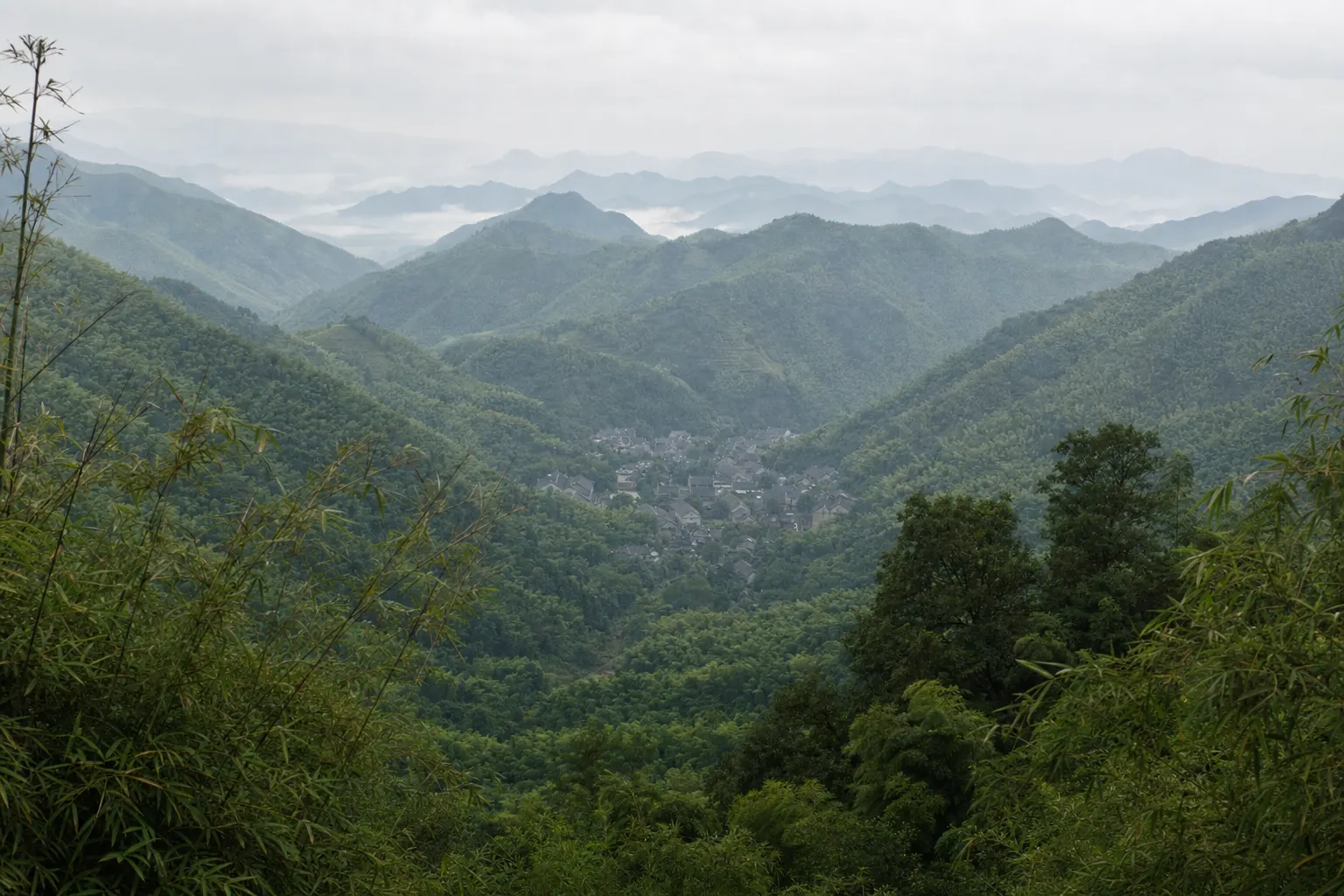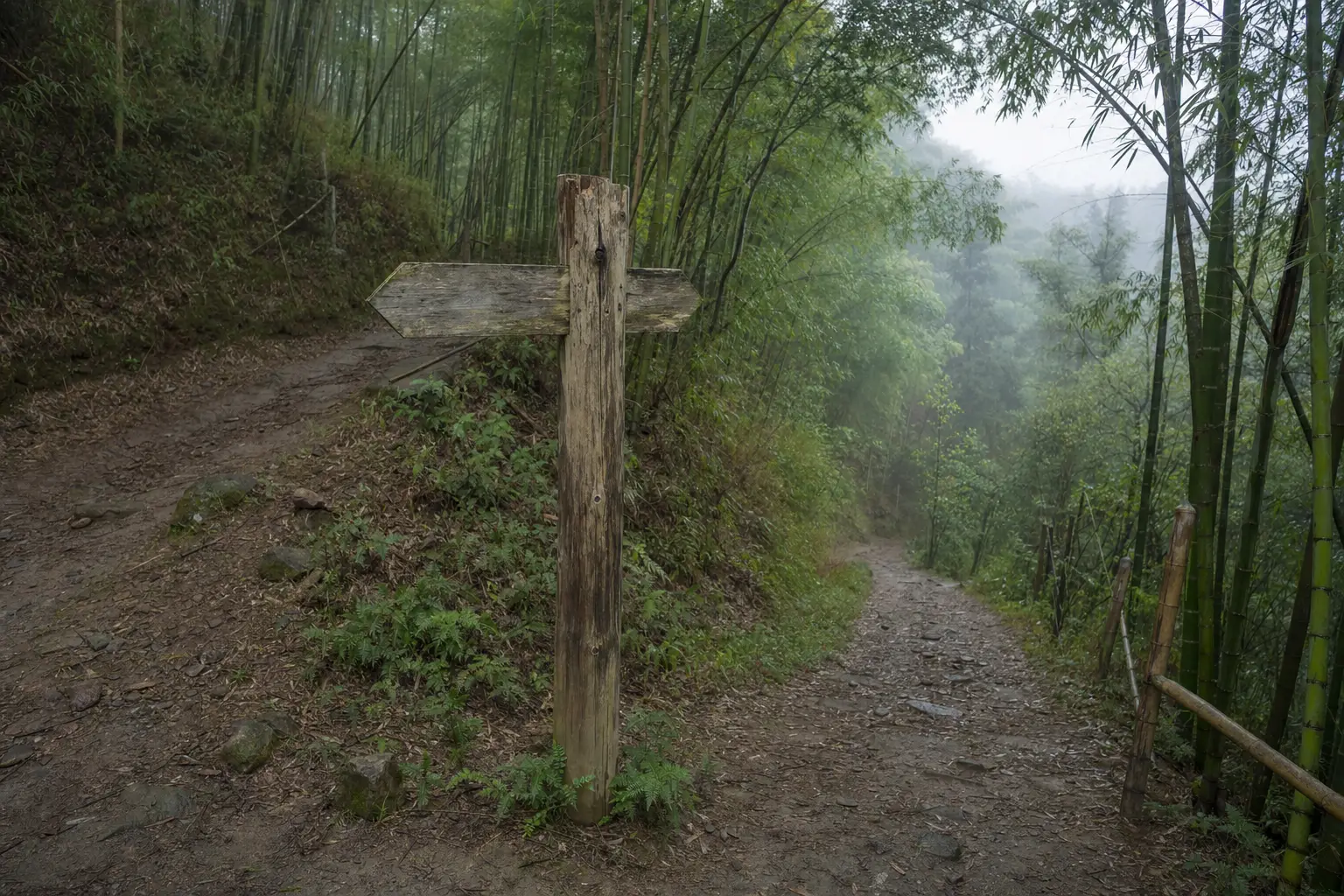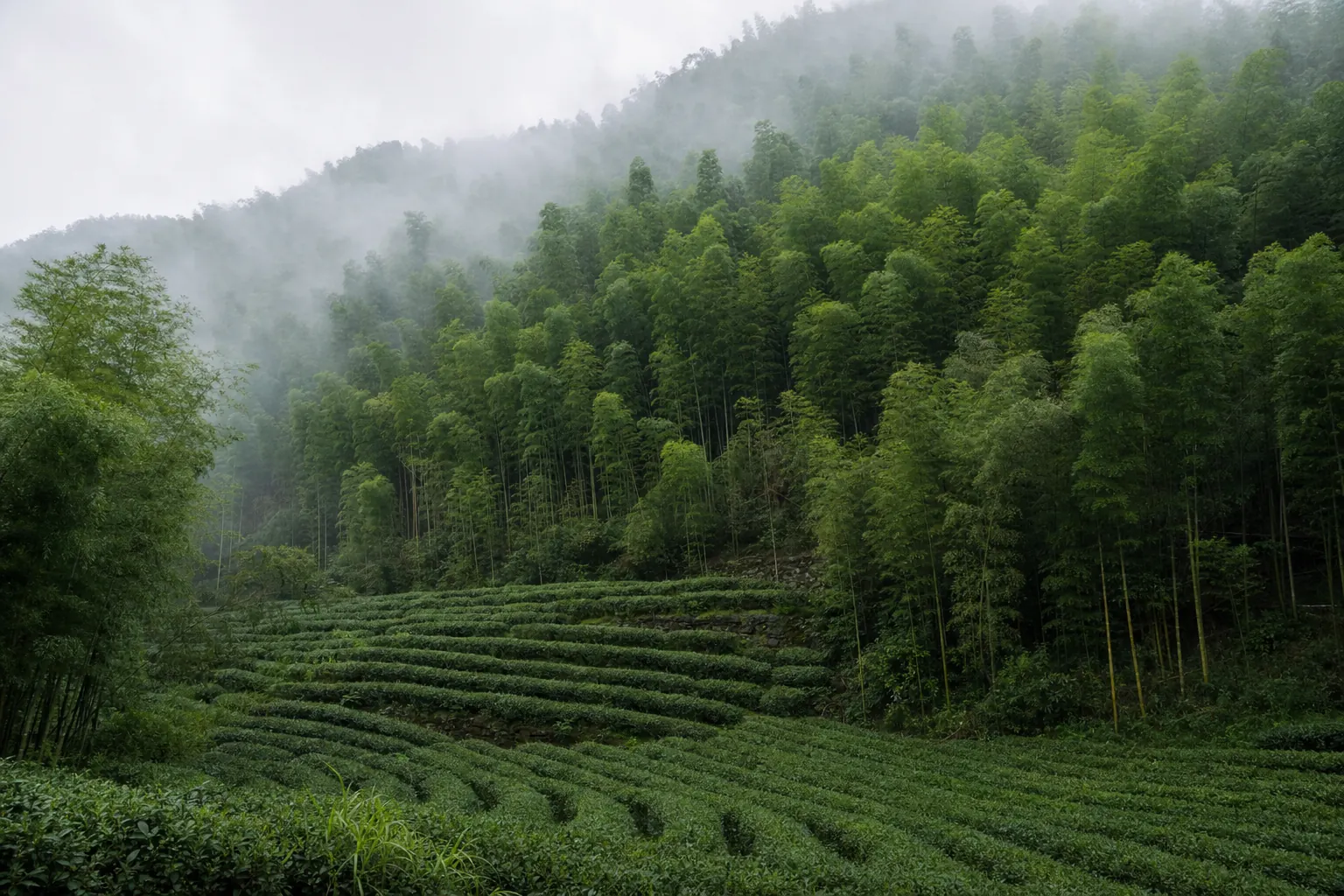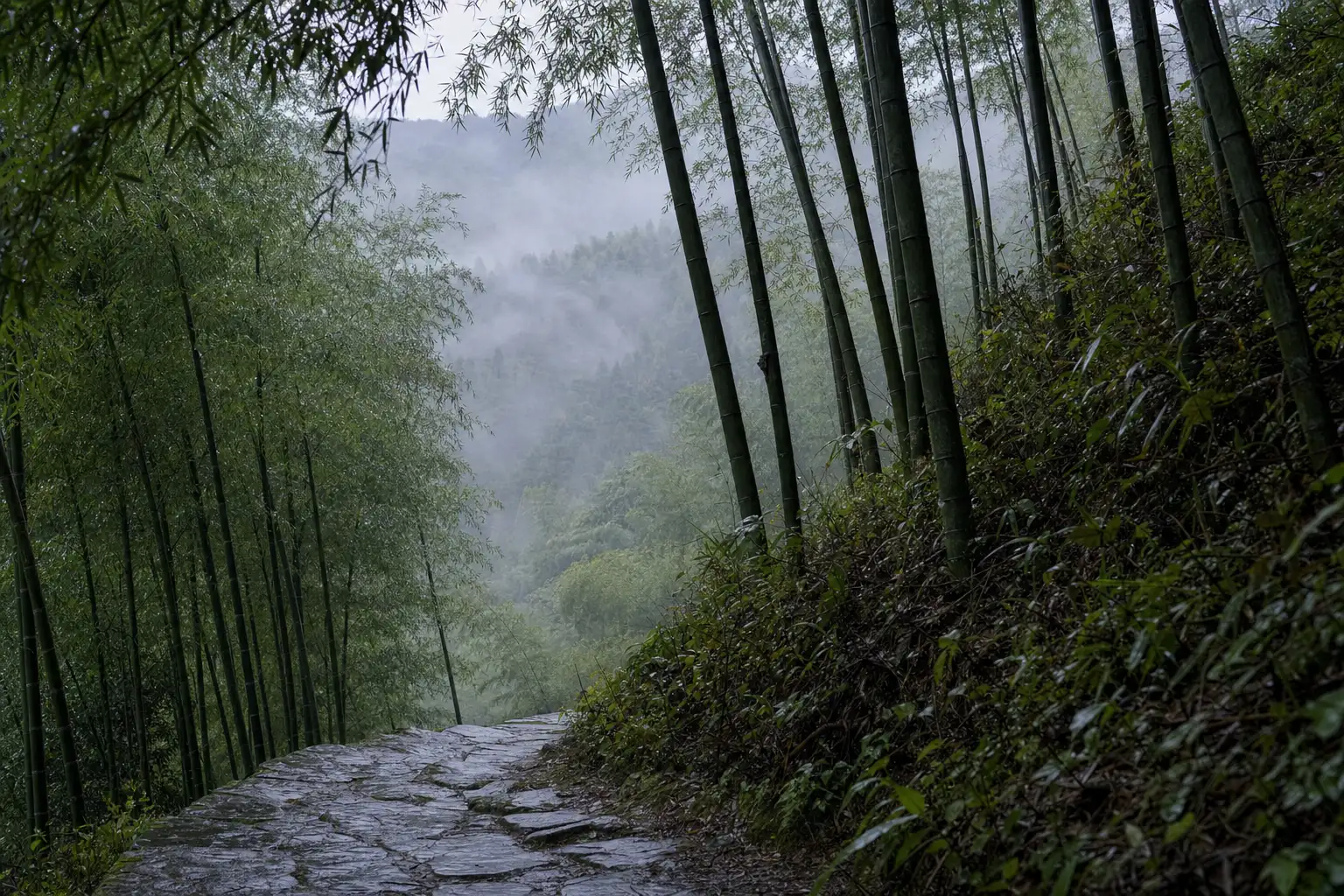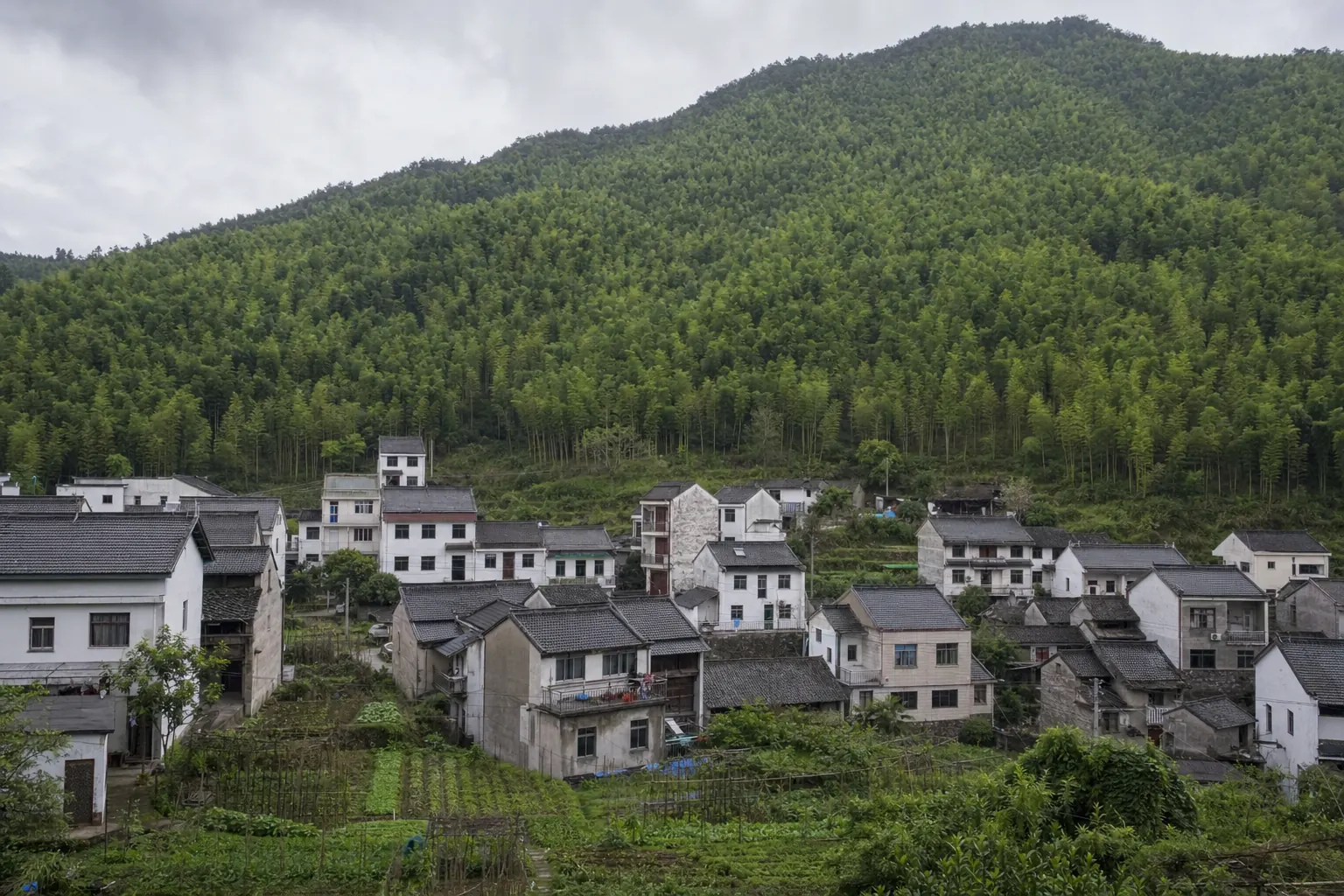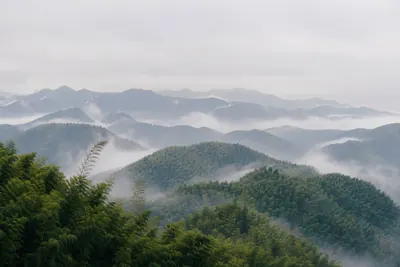
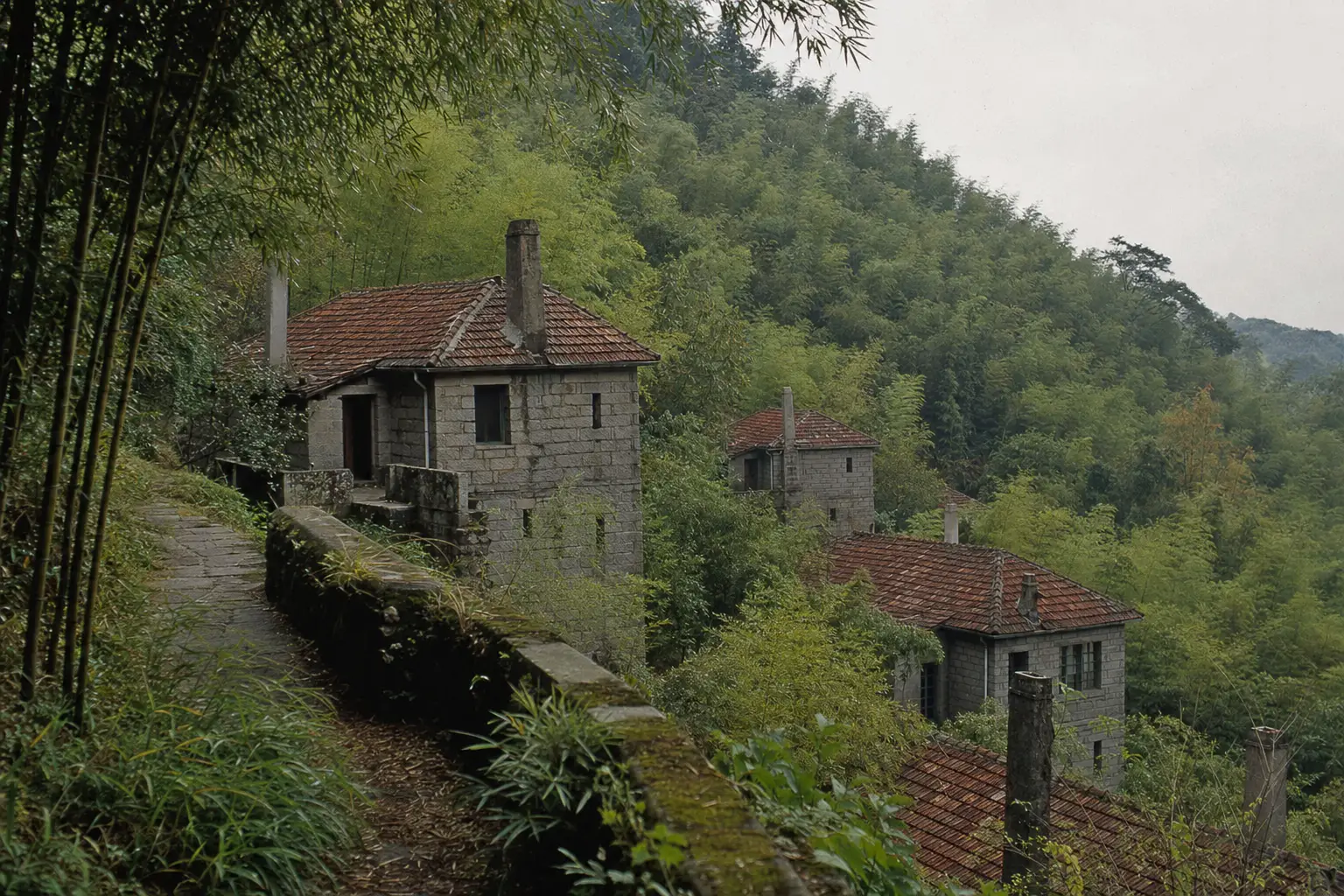
Moganshan is a mountain in Deqing County, in Huzhou prefecture, Zhejiang Province. It stands about 60 km north of Hangzhou and between 200 and 240 km from Shanghai. If a search engine has just sent you to a street in Shanghai, that is Moganshan Road in Putuo District, the M50 art district. Different place, same name.
For about half a century, this mountain was a summer town run mostly by Americans and Britons. They bought land on the ridges, built stone houses, elected a committee and laid a tennis court. Then, in 1949, they left. Roughly 250 of their villas are still standing, which is why this website exists at all.
Heat was the whole reason
Shanghai in July is hot and wet. In the 1890s there was no air conditioning, and foreign families with money looked for somewhere cooler to sit out the worst of it.
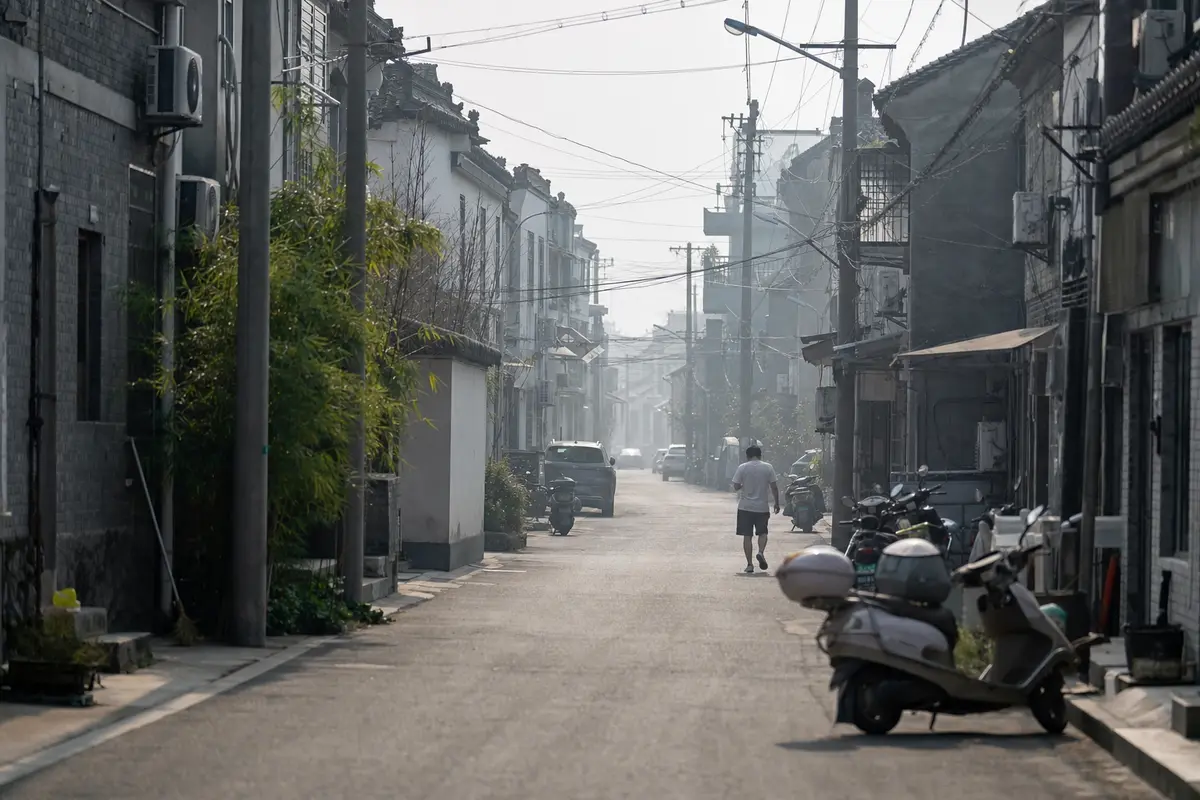
Moganshan solved that problem. The mean temperature in July and August is 24.1 °C, which runs 6 to 7 °C below Shanghai and Hangzhou. That is not a dramatic gap on paper. Sleeping in it, at night, without a fan, it was everything.
The mountain ended up on the traditional list of China’s four great summer resorts, alongside Beidaihe, Lushan and Jigongshan.
The missionary who found it
An American Northern Baptist missionary named E. N. Fletcher is credited with identifying Moganshan as a summer retreat. Sources date that anywhere from 1891 to 1894, and none of them agree.
The first Western villas went up between 1896 and 1898. Who put up the first one is genuinely unsettled. One account names George A. Hudson, an American Presbyterian, in 1898. Another names an American called W. W. White. A third credits an English merchant in 1896. The range is the honest answer, and no name settles it.
The pattern is clear enough. Missionary networks found the site, and merchants and consular staff followed them up the hill.
A committee, and rules, from 1898
The colony organized itself early. The Moganshan Summer Resort Association (莫干山避暑会), which translates roughly as the summer-escape association, was formally constituted in 1898.
It behaved like a small municipal government. It held an annual meeting on the first Thursday of mid-August, when most members were on the mountain anyway. Land, building, roads and disputes went through it.
Tennis, 1901
The first tennis court on Moganshan was built in 1901. A tennis association followed. By 1909 the Moganshan open championship had become a real social fixture, and Chinese and foreign players both took part.
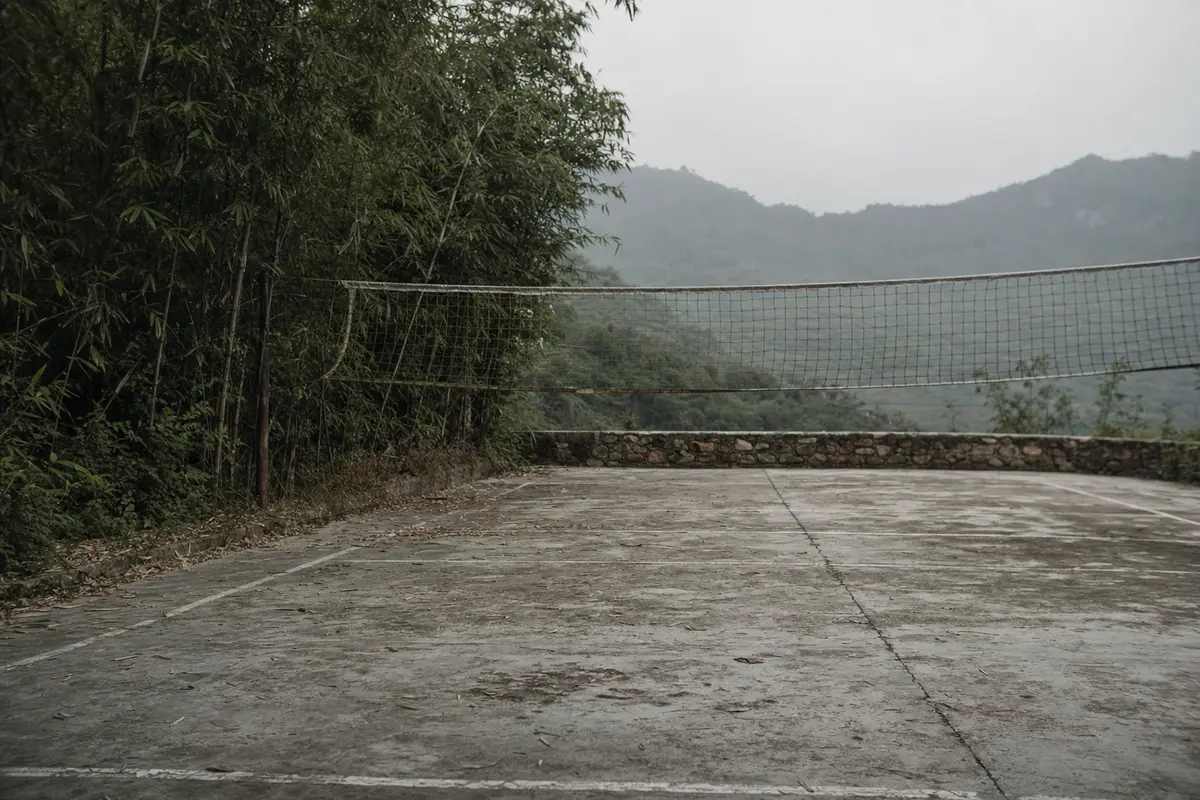
A tennis court is not something you build for a camping trip. You build one when you expect to come back every summer for twenty years, and to bring your children.
The children were the point for many families. Public swimming pools spread across the mountain in the 1930s. Churches and public halls went up. A Scottish physician and missionary named Maitland built a villa in the style of an English castle in 1910; it was restored much later and now operates as naked Castle.
By 1910 the summer population had reached about 300 foreigners, mostly American and British. They were missionaries, businessmen, customs officials and their families.
Hayley Keon, “A Peaceful Place: Raising Imperial Children at China’s Moganshan Hill Station,” Journal of Imperial and Commonwealth History, published online 9 January 2026.
That paper treats Moganshan as a place where foreign families raised foreign children inside China, at a distance from Chinese cities. Read that way, the tennis court and the pools stop being holiday extras. They were the equipment of a separate world.
The count, in the 1920s
By the 1920s the mountain held 154 Western-style villas. The ownership split is the number worth sitting with.
| Year | Total Western-style villas | Foreign-owned |
|---|---|---|
| 1920s | 154 | 118 |
| 1929 | not stated in the record | 78 |
Foreign ownership dropped from 118 to 78 in a few years. Chinese buyers were moving in, and the balance of the place was already tipping before any formal change happened.
The handover of 1928
In 1928 the Moganshan Management Bureau was established, and Chinese administrative control returned to the mountain.
The foreign residents did not vanish. What changed was who set the rules. The building boom that followed was Chinese: between 1928 and 1949, owners added more than 300 further villas.
This is the stretch that gave Moganshan its political reputation.
- Chiang Kai-shek honeymooned at Songyue Lodge in Wuling village with Soong Mei-ling in December 1927. He came back in 1948, by then President, and held currency-reform meetings on the mountain.
- Du Yuesheng and Zhang Xiaolin, the two Green Gang bosses, built an ornate Chinese-style villa in 1935.
- Zhou Enlai met Chiang at Baiyun Shanguan in 1937 for secret talks between the Communists and the Nationalists, part of the Second United Front. The villa belonged to Huang Fu, a Republican diplomat and former acting premier.
- In 1940 Moganshan became the headquarters of the Communist Party’s West Zhejiang Special Committee.
1949, and the long quiet
The foreign residents left in 1949. Their villas were redistributed to work units or requisitioned outright. The summer colony, as a functioning society, simply stopped.
The buildings stayed. Some became state guesthouses. Others went to danwei (work units) for staff holidays, and a number were left to the weather.
Mao Zedong stayed on the mountain in 1954, in a villa built in 1934 by the banker Jiang Yizhe, known earlier as the Empress Hotel. That was the year China adopted its first constitution. Local Chinese sources often tie his stay to the constitution directly, but the drafting work is documented as having happened in Hangzhou. So we will say only this: he stayed here in 1954. The rest is a claim we cannot stand behind.
In 1984 the assembly hall hosted the Moganshan Conference, a gathering of young reform economists still cited in China as a turning point in economic thinking.
2003, and the second foreign arrival
Foreigners came back one at a time.
In 2003, Mark Kitto, a British former magazine publisher and the author of China Cuckoo, took a lease and opened Moganshan Lodge. He is generally described as the first foreigner to live on the mountain in modern times. (His old web address has lapsed and now points to an unrelated gambling site. Do not follow it.)
In 2007, the South African founder Grant Horsfield opened naked Xiang, also called naked Home Village, in the village of Sanjiuwu. It was the first yangjiale (洋家乐), a local word meaning roughly “foreigner’s farmstay.” In 2011 the same group opened naked Stables Private Reserve, the first LEED Platinum certified resort in mainland China.
Operators from France, the UK, Belgium, Denmark, the Netherlands, South Korea and Russia followed. Guesthouse investors on the mountain now come from 18 countries.
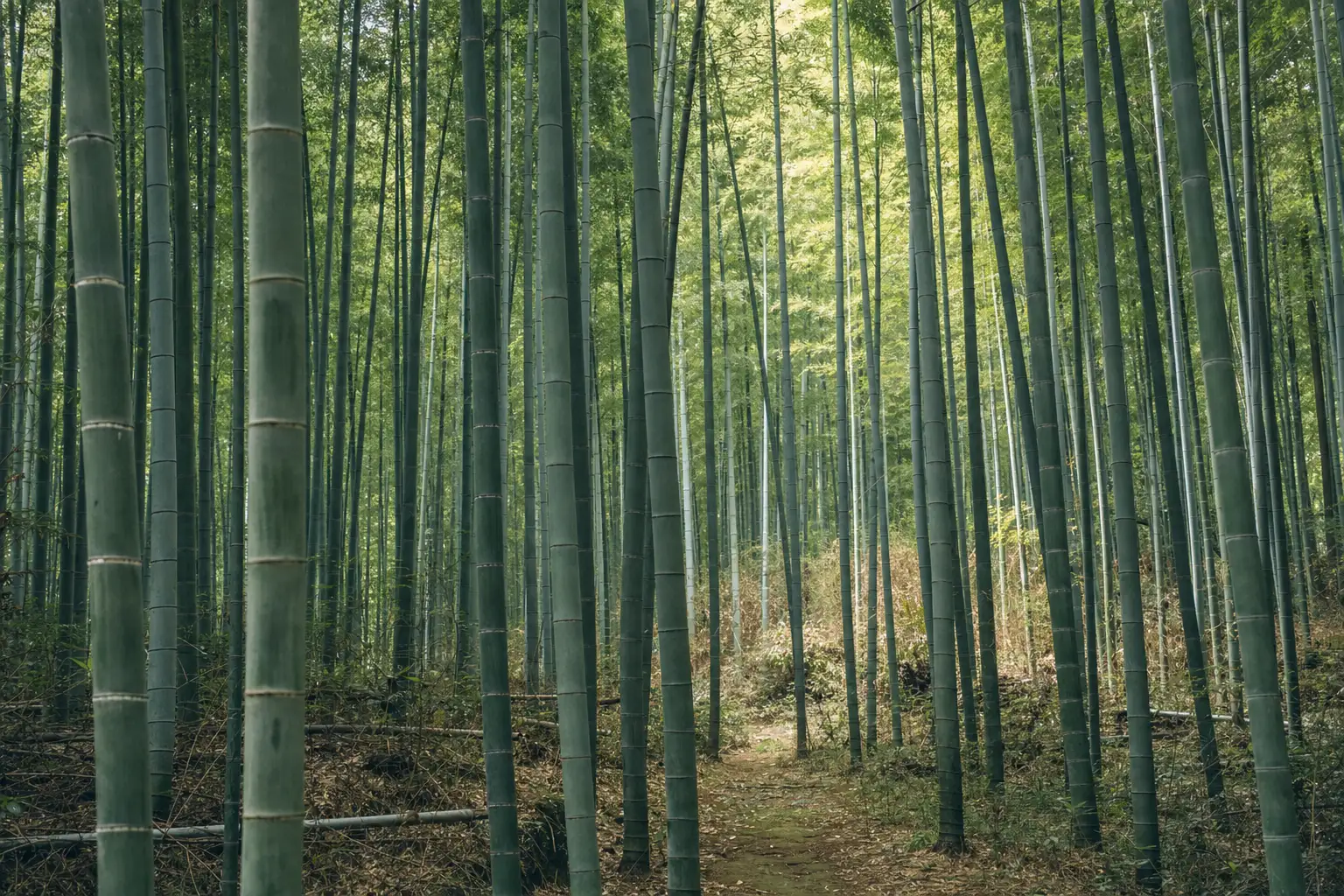
Tatler Asia has called Moganshan “the Hamptons of China.” Take that as magazine shorthand rather than a description. What you actually find is a working bamboo mountain with old stone houses on it, some restored beautifully and some not restored at all.
Timeline
| Year | What happened |
|---|---|
| 1891 to 1894 | E. N. Fletcher identifies the mountain as a summer retreat (date disputed) |
| 1896 to 1898 | First Western villas built |
| 1898 | Moganshan Summer Resort Association constituted |
| 1901 | First tennis court |
| 1910 | About 300 foreign summer residents |
| 1920s | 154 Western villas, 118 of them foreign-owned |
| 1928 | Moganshan Management Bureau takes over administration |
| 1928 to 1949 | Chinese owners add 300+ villas |
| 1949 | Foreign residents leave; villas requisitioned |
| 2003 | Mark Kitto opens Moganshan Lodge |
| 2007 | naked Xiang opens, the first yangjiale |
What is left to look at
About 250 historic villas survive. Some sources say 200 or more, so treat the number as an estimate rather than a count.
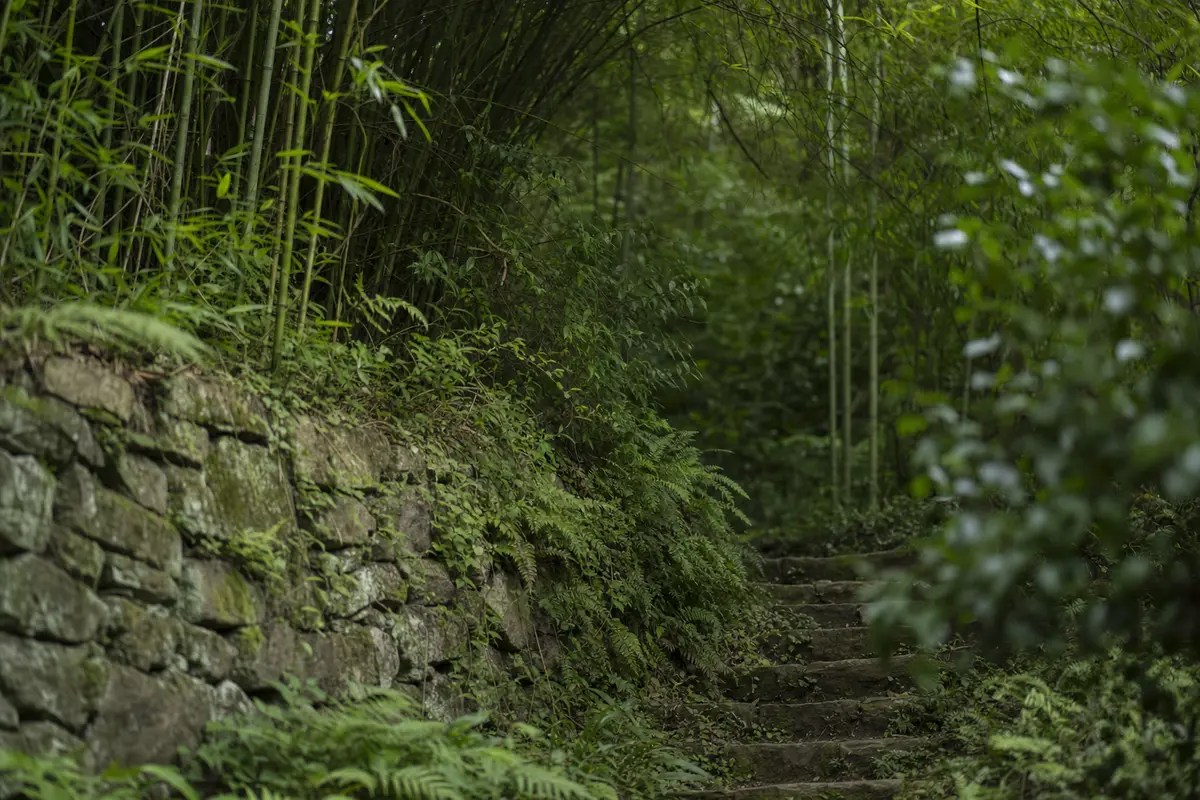
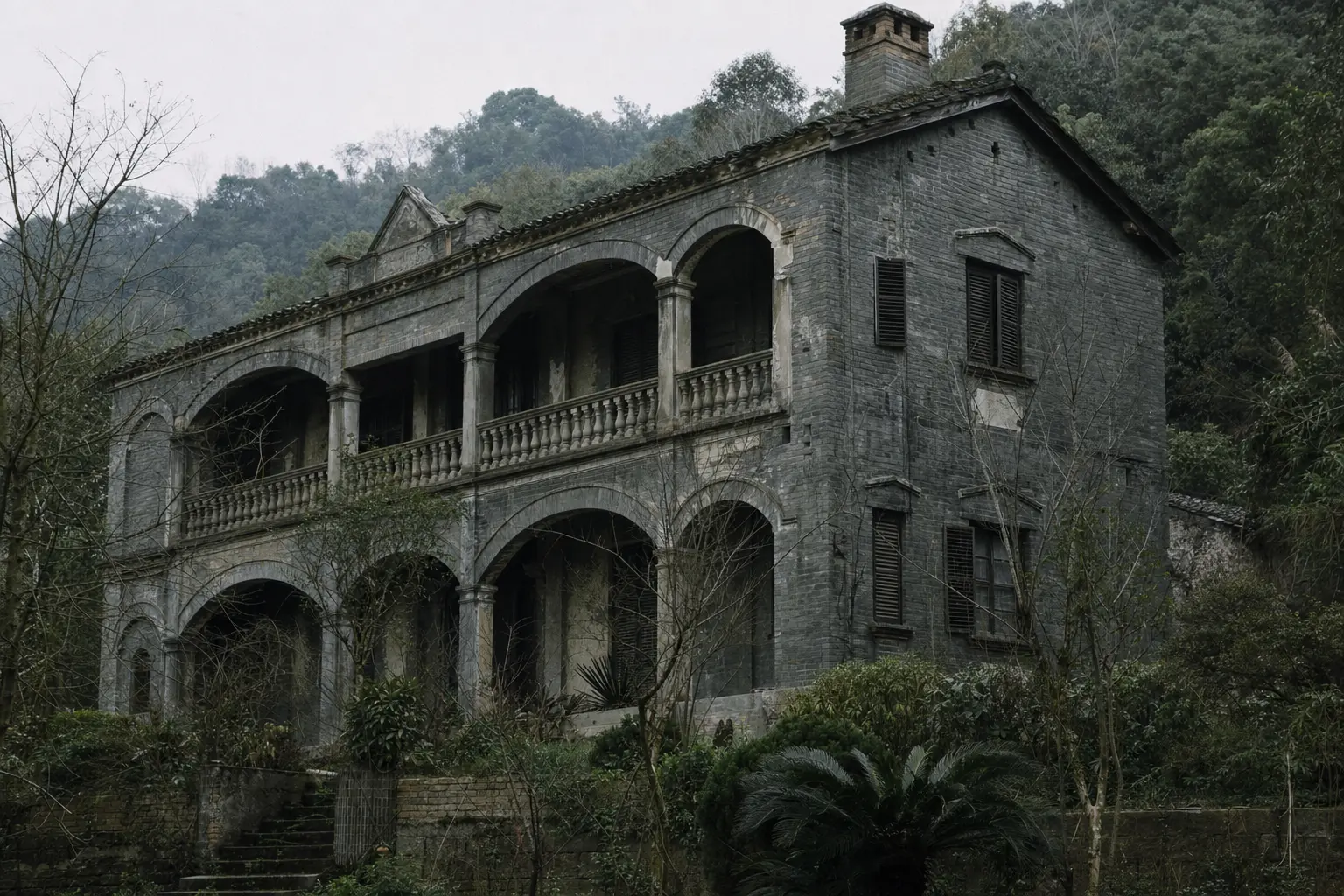
They are built from local mountain stone, in British, American, French, German and Chinese-eclectic styles. Chinese writing about the mountain calls the collection an “architecture of all nations.”
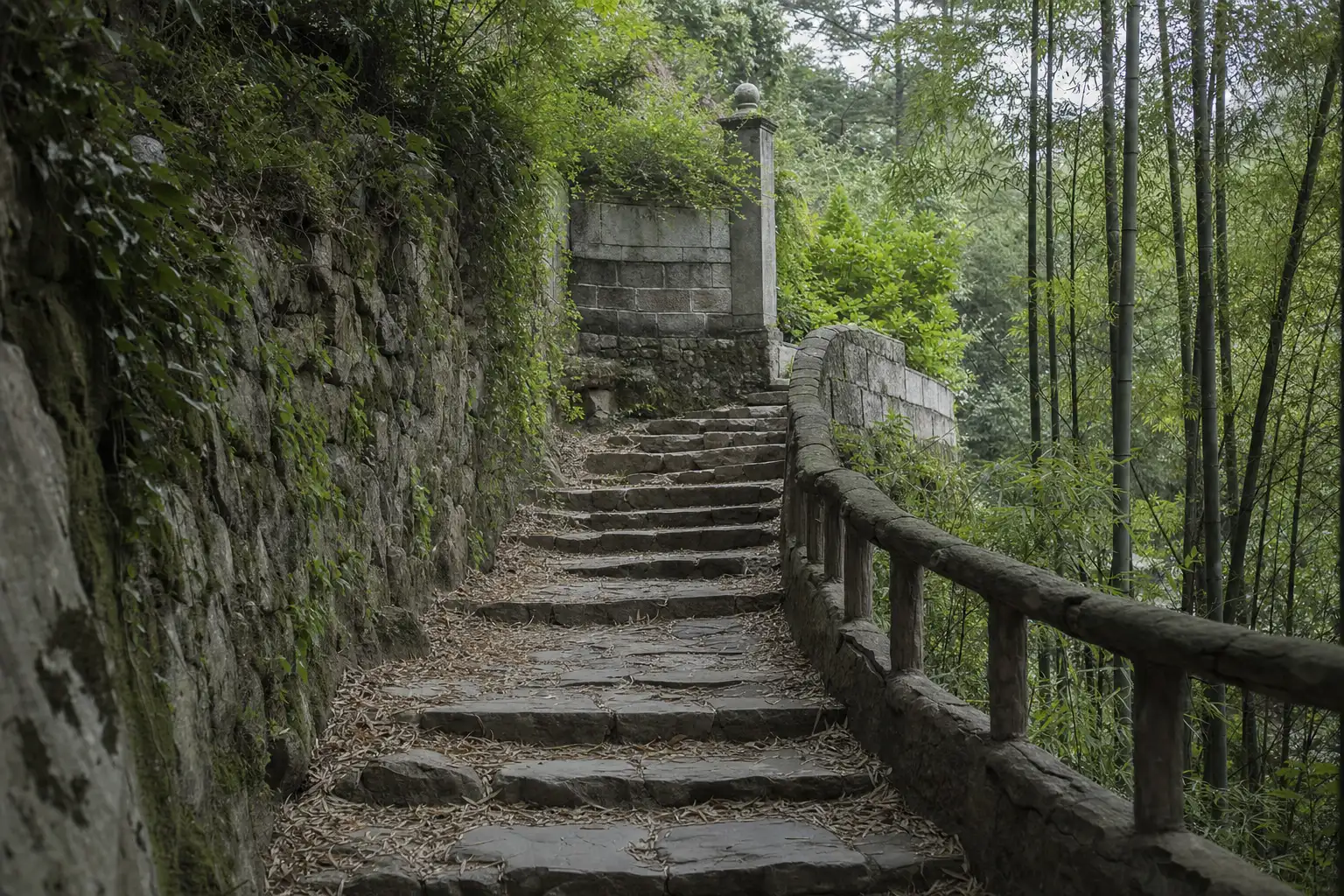
Most are private homes, hotels or closed buildings, so you cannot wander in. What you can do is walk the ridge roads and read them from outside. Our villa guide covers the individual buildings, the walking tour puts them in an order that works on foot, and the longer history goes deeper on the dates and the disputes than this page does.
For the mountain in general, start at the Moganshan overview. Several of these buildings are now hotels, and the where to stay page treats all of them on the same terms.
Historic figures on this page follow the fact base compiled 1 to 5 August 2026. Where sources conflict, the range is given rather than a single number.
Last checked 8 August 2026 by Cyril Drouin. Prices, timetables and entry rules on this mountain move without notice, so confirm anything you are booking around.
Photographs on this site are representative illustrations, not documentary images of the specific building, property or service described.