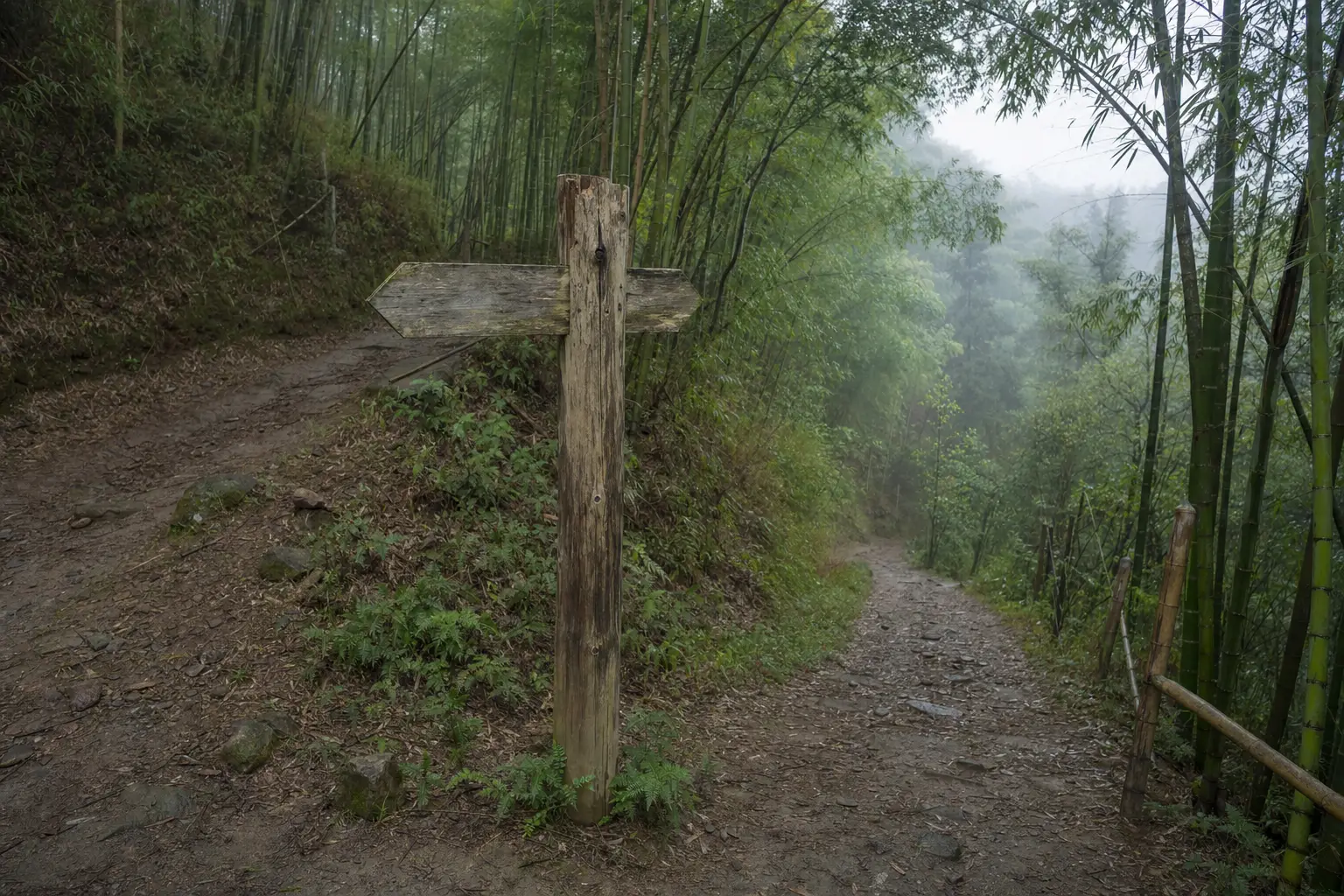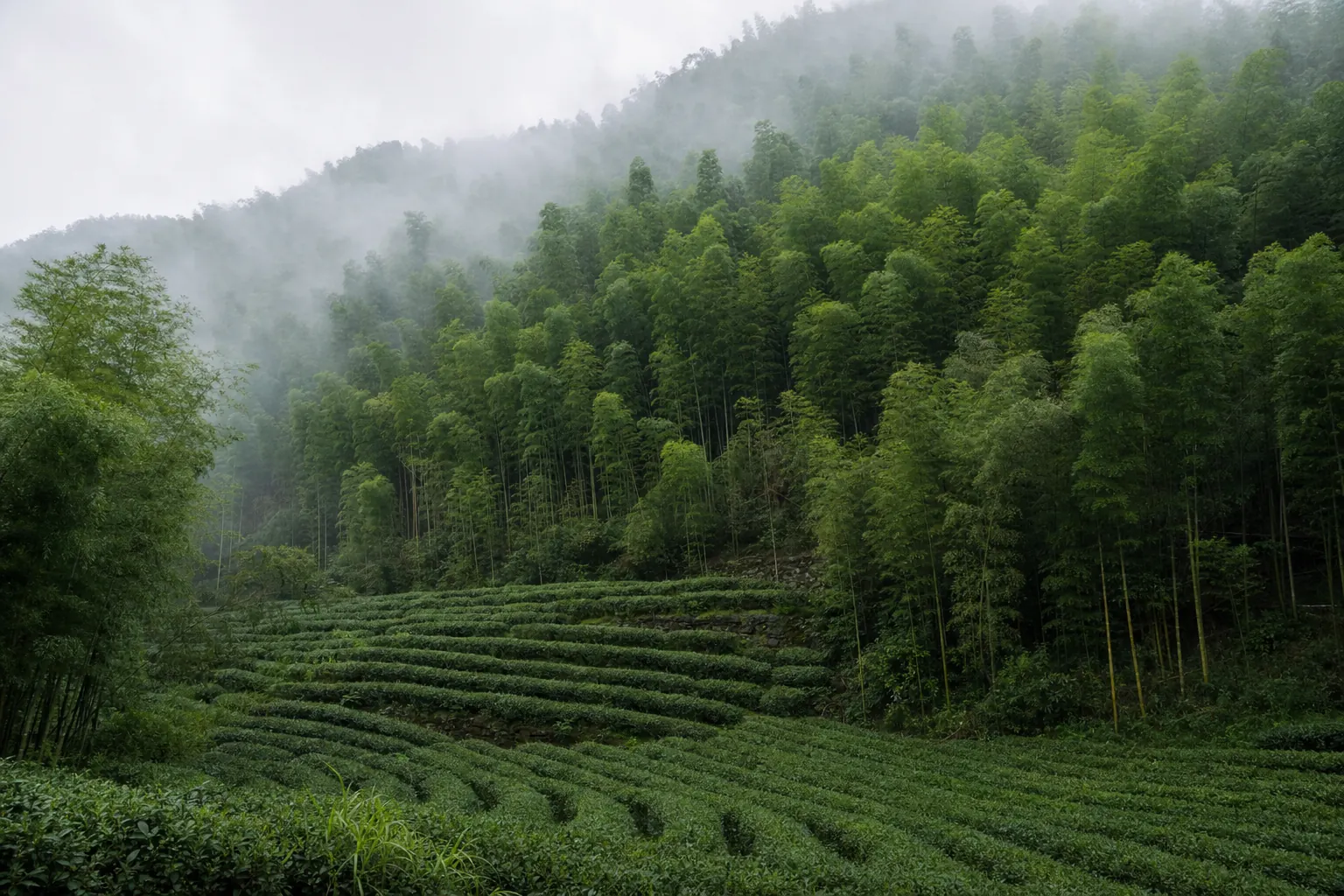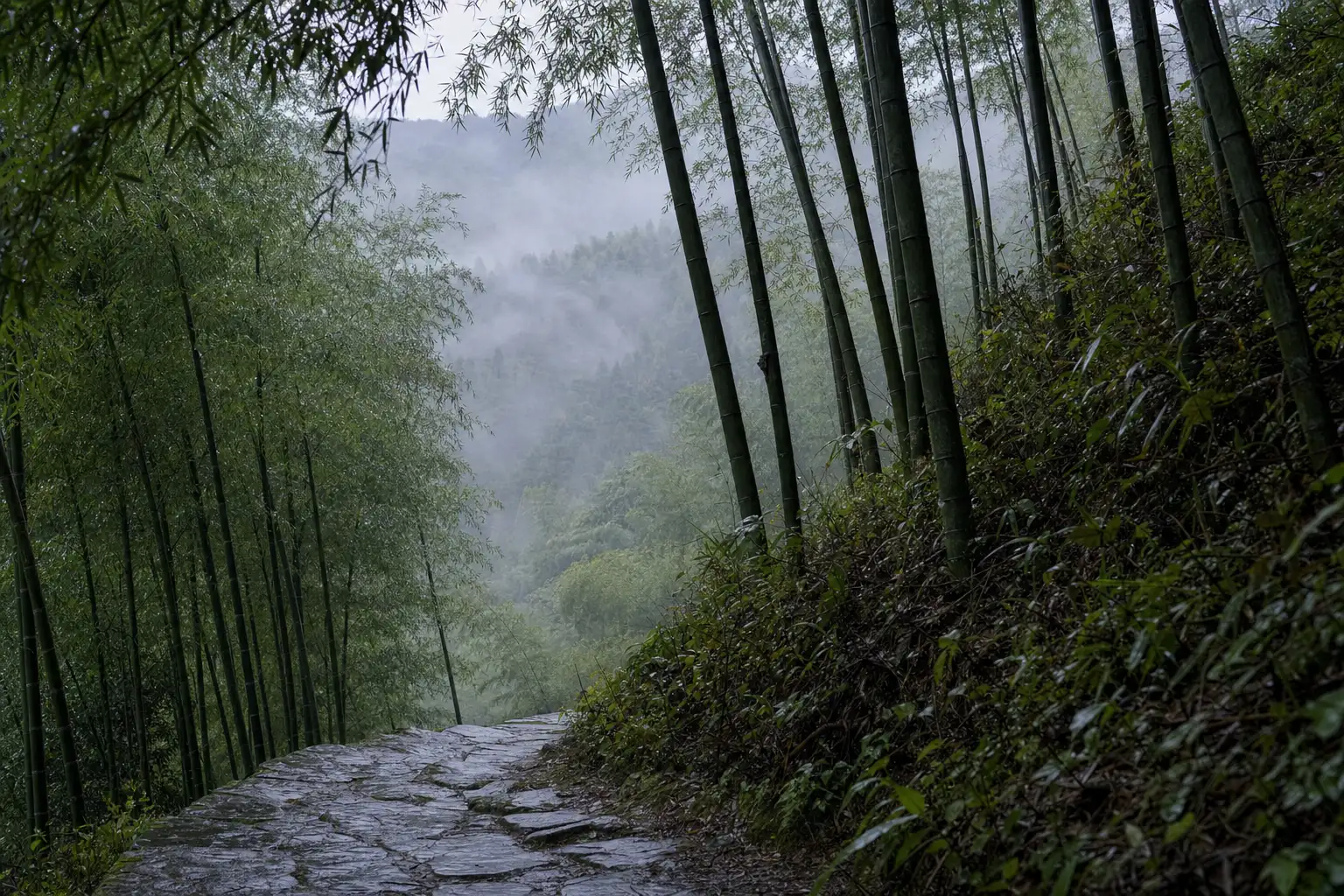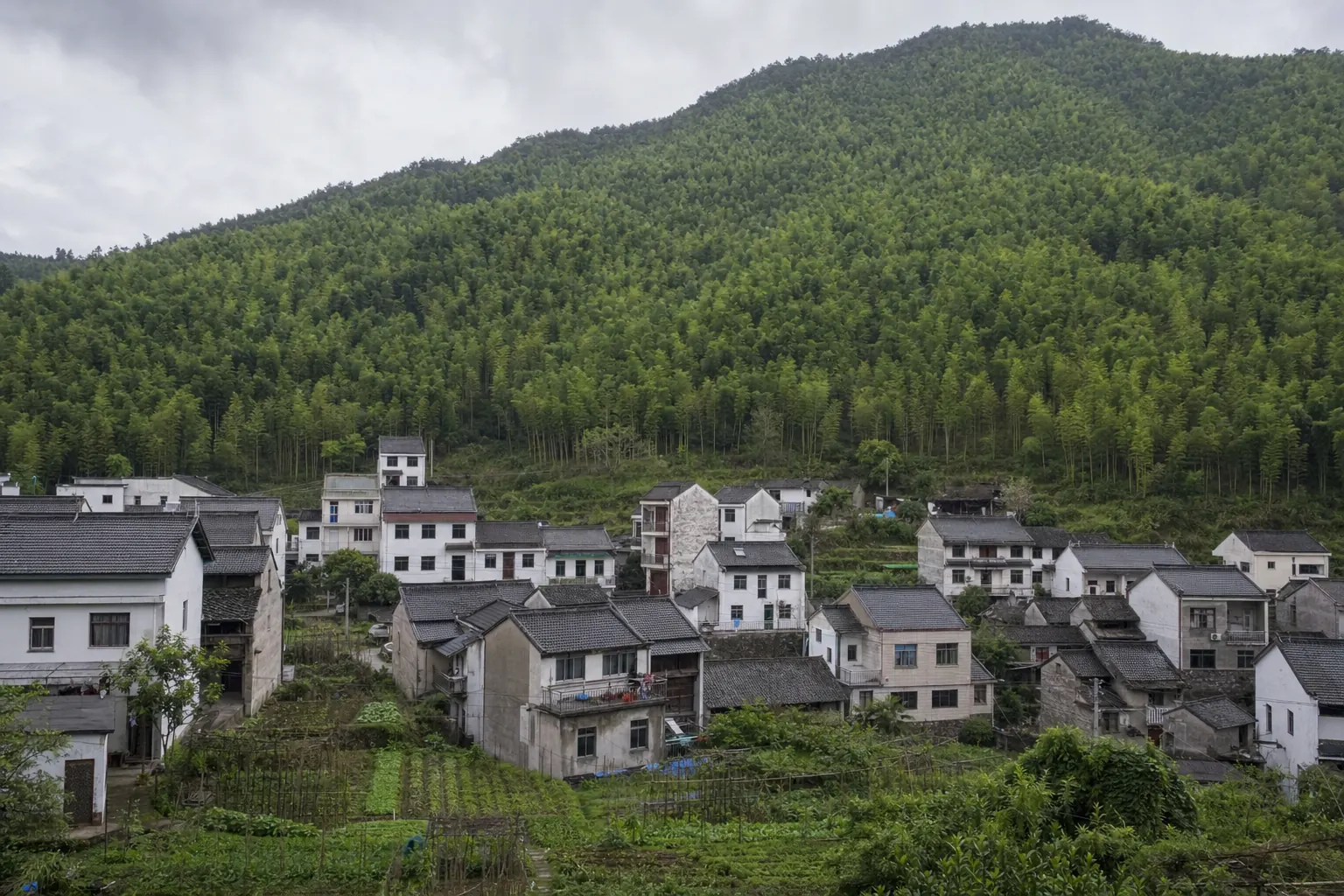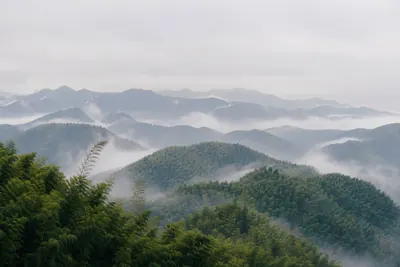
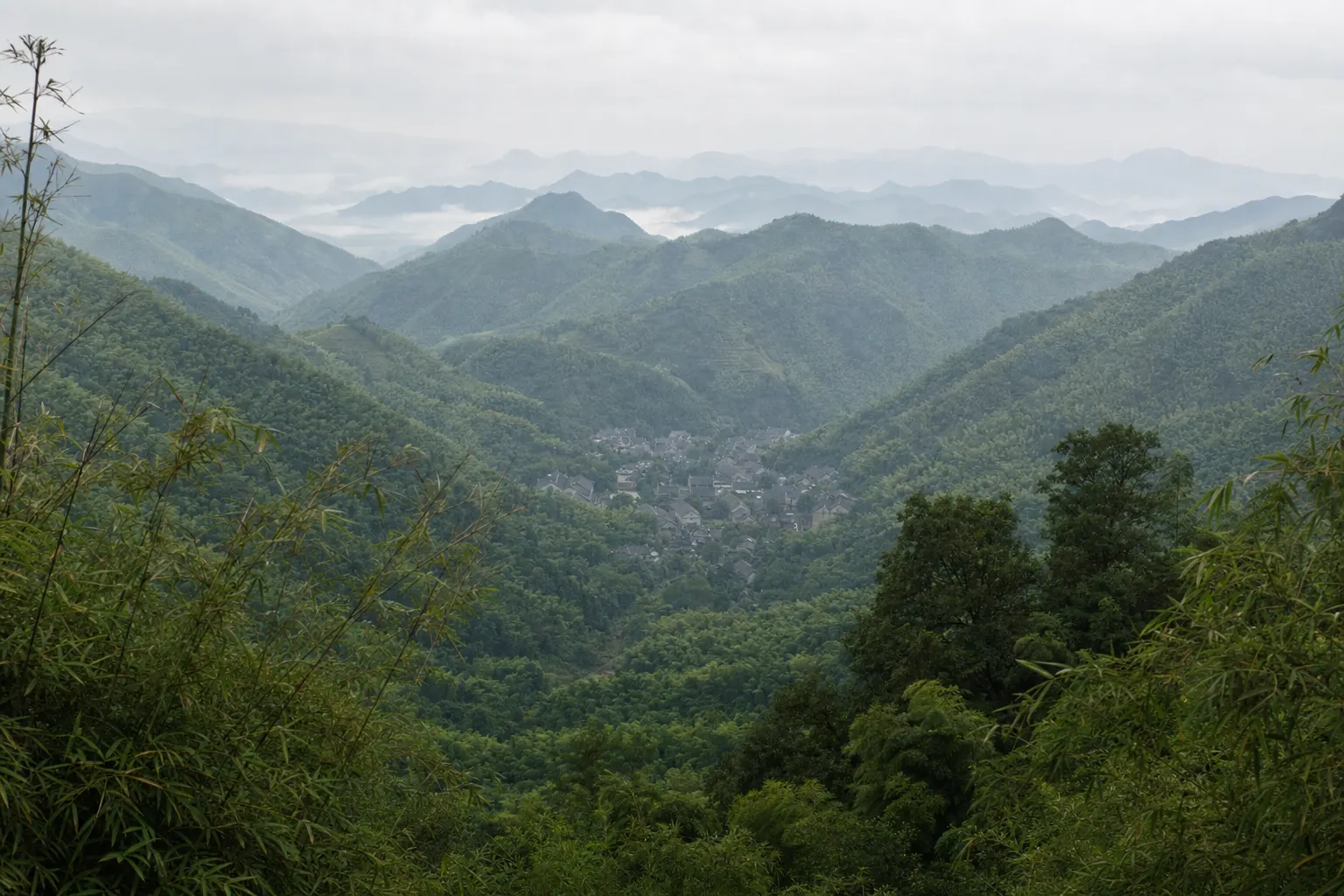
Moganshan is a mountain in Deqing County, part of Huzhou prefecture, in Zhejiang Province, China. It stands about 60 km north of Hangzhou and somewhere between 200 and 240 km from Shanghai. The main peak, Tashan, is 719 to 720 meters high. Bamboo covers more than 92 percent of the slopes.
In Chinese it is 莫干山, written in English as Moganshan or Mount Mogan. That is the geographic answer, and it belongs at the top, because the name causes real confusion online.
Quick facts
| Chinese name | 莫干山, also written Mount Mogan |
| Where | Deqing County, Huzhou prefecture, Zhejiang Province |
| From Hangzhou | about 60 km |
| From Shanghai | about 200 to 240 km |
| Main peak | Tashan, 719 to 720 m |
| Core scenic area | about 20 km² |
| Forest cover | over 92 percent, mostly moso bamboo |
| Nearest useful station | Deqing (德清) |
| Summer temperature | 24.1 °C mean in July and August |
| Official status | National scenic area, national AAAA attraction, national-level tourism resort since 15 December 2020 |
| Guesthouses | about 1,000 as of September 2025 |
Elevation, area, forest cover, designations and guesthouse count, BeyondBorder Group Ltd primary research, 1 to 5 August 2026.
Three different things carry this name
Moganshan Road (莫干山路) is a street in Putuo District, Shanghai. It is the M50 art district, about 200 km from the mountain. Galleries and converted warehouses, no bamboo, no hills. A large share of the English search results for “Moganshan” point there.
Moganshan Veneer is an industrial plywood and veneer brand. It shares the name and nothing else.
Moganshan railway station is the third trap, and the costliest one. It sits on the Shangqiu to Hefei to Hangzhou line and serves Deqing and Wukang town, not the mountain. Book Deqing station instead. The getting here page covers this in detail.
One more, for anyone reading Chinese sources. Moganshan’s village Yucun is written 庾村. Anji County has a different Yucun, 余村, which won a UN Tourism Best Tourism Village award in 2021. Different characters, different county. Moganshan has never won that award.
What the mountain is actually like
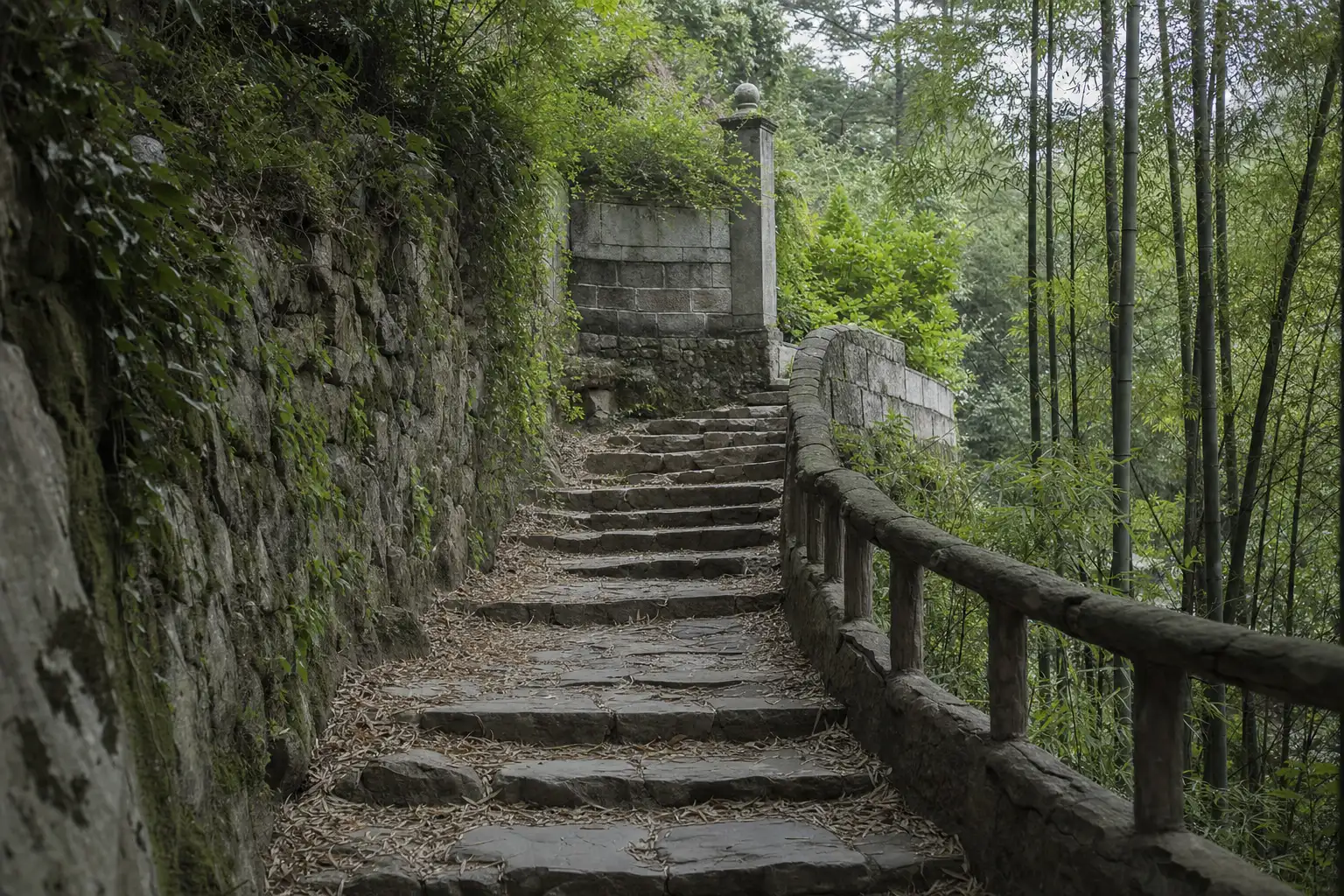
The core scenic area covers about 20 km². It is not a single summit you climb and tick off. It is a low, wooded ridge with roads, villages and walking paths running through it.
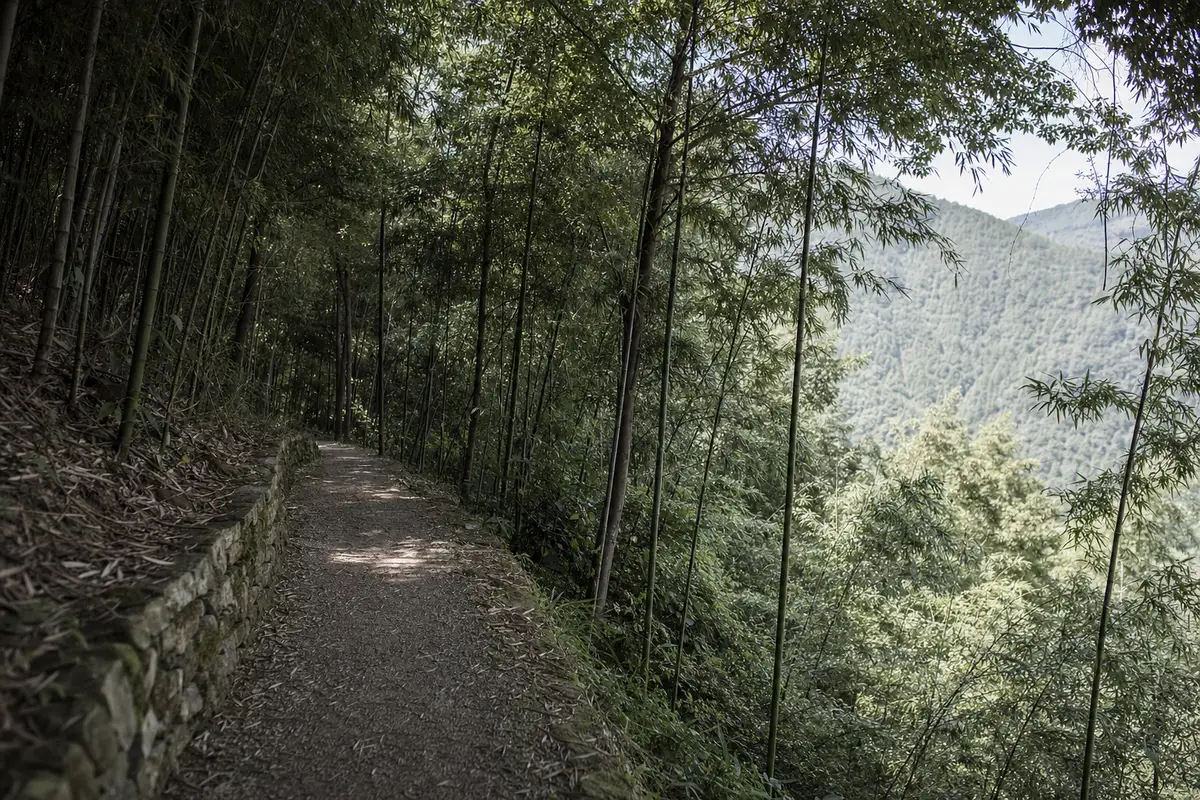
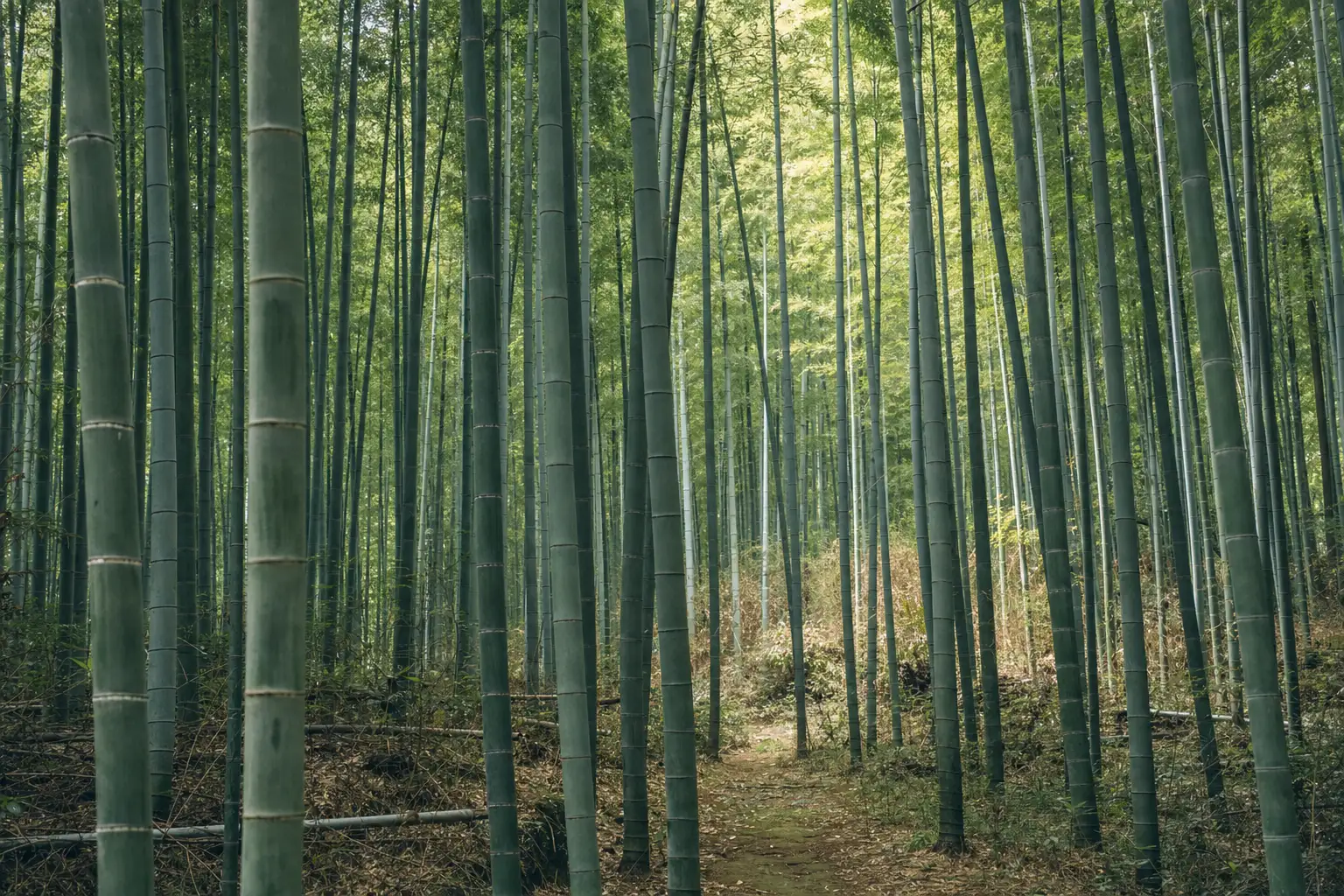
The bamboo does most of the work. Moso bamboo grows tall and close, and on a windy day the whole slope creaks above your head. This is a working commercial crop, not landscaping. Farmers cut it, dig the shoots and sell both. The bamboo forest page covers what that means for walking there.
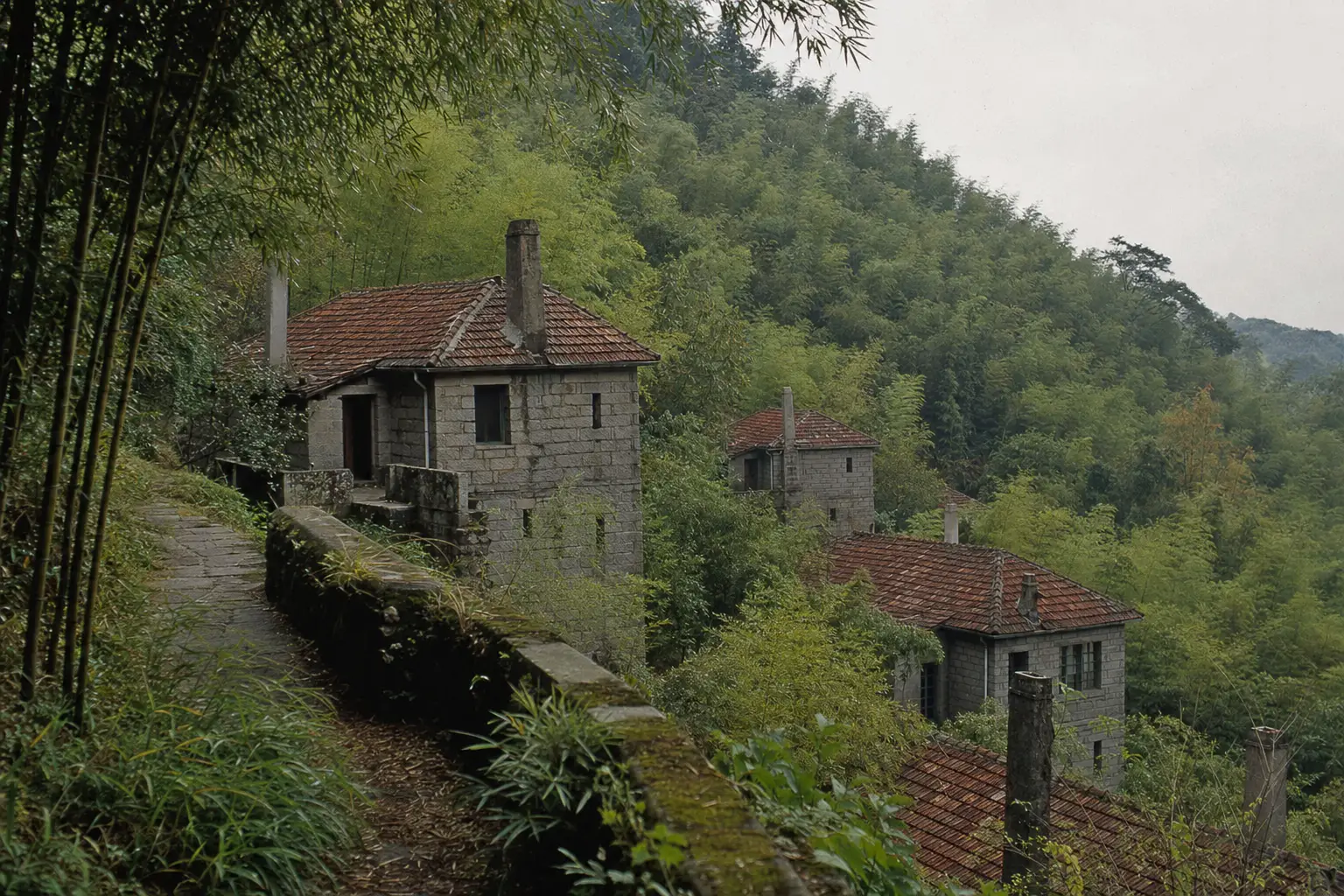
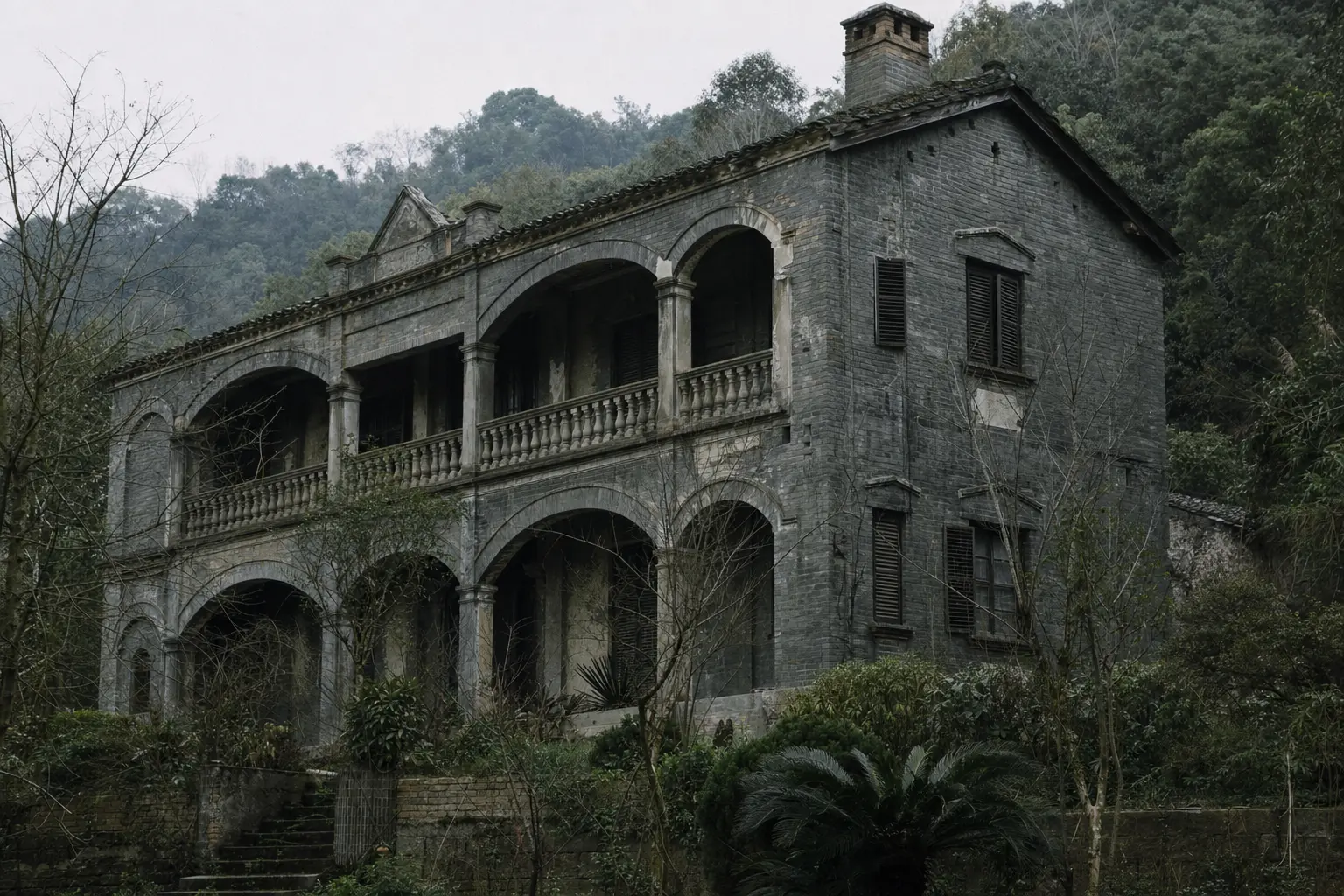
Between the trees sit around 250 surviving historic villas, built from local mountain stone. Some sources say 200 and up. They come in British, American, French, German and Chinese-eclectic styles, which Chinese writers describe as an architecture-of-all-nations collection.
The named sights are modest and you can see most of them in a day: Sword Pond (Jianchi), Luhuadang Park, Dakeng, the Xuguang sunrise platform, Chiang Kai-shek’s villa and the Bai and Yun Art Museum. None of them is the reason to come. The forest and the temperature are.
Moganshan is listed as one of China’s four great summer resorts, with Beidaihe, Lushan and Jigongshan. That listing is about climate, not scenery.
The villages
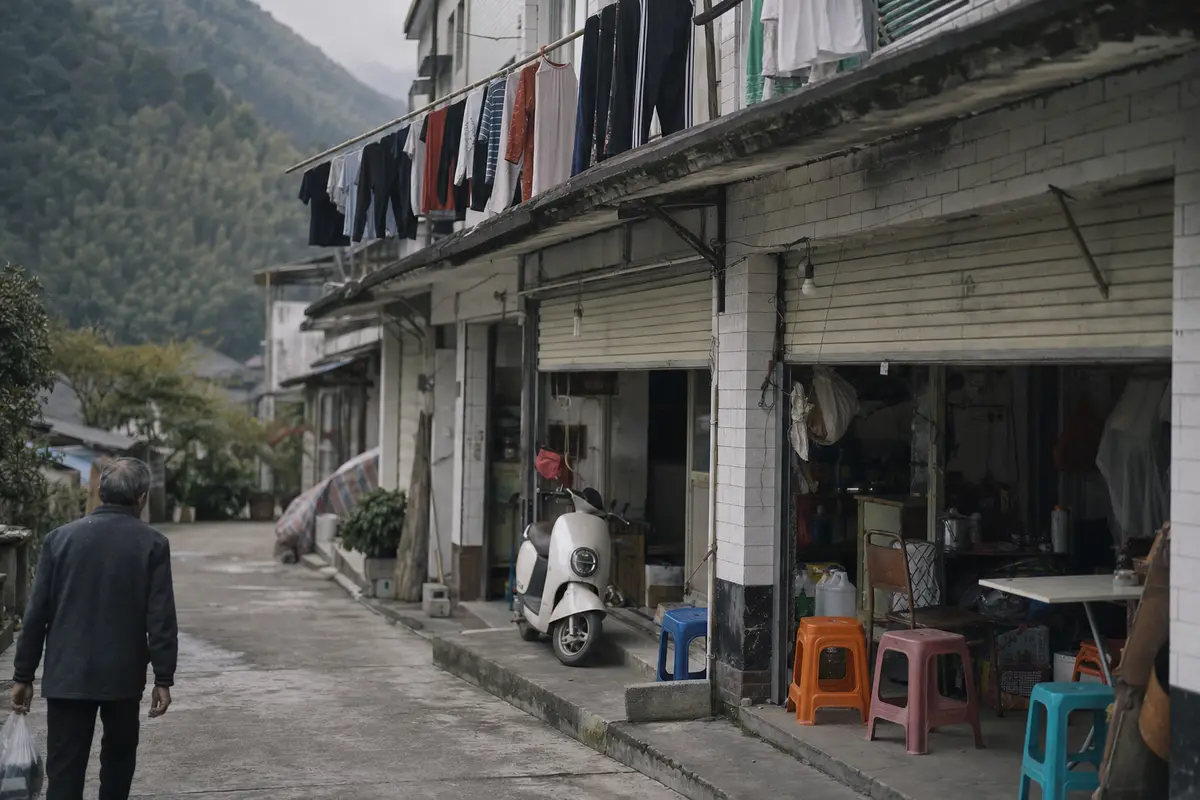
Most visitors sleep in a village, not on the peak. All of these sit in Moganshan Town, Deqing County.
| Village | Chinese | What it is |
|---|---|---|
| Yucun | 庾村 | The main hub at the foot of the mountain. Square, market, restaurants, the 1932 culture park, and the main scenic-area gateway. |
| Xiantan | 仙潭村 | Northern foot. The densest guesthouse village: about 135 minsu in a village of under 2,000 people, roughly 90 percent locally run. |
| Laoling | 劳岭村 | South side. Reservoir, kayaking, cycling. One of the first farmstay clusters. |
| Sanjiuwu | 三九坞 | Where naked Home Village opened in 2007. |
| Houwu | 后坞 | Quiet, on the west side, about 30 minutes from Yucun. |
| Dazaowu | 大造坞 | The most remote. Rice paddies and the Dadouwu reservoir. |
| Wukang | 武康 | The Deqing county seat, about 20 km away. Rail, shops, services. |
“Minsu” (民宿) is the Chinese word for a small guesthouse, usually owner-run. Which village you pick changes your trip more than which property you pick. The villages guide compares them, and where to stay covers the properties.
The history, in three paragraphs
Moganshan became a hill station because Shanghai summers were unbearable. An American Northern Baptist missionary, E. N. Fletcher, identified the mountain as a summer retreat sometime between 1891 and 1894. The first Western villas date to 1896 to 1898, and sources disagree about who built the first one. The Moganshan Summer Resort Association was formally constituted in 1898. By 1910 roughly 300 foreigners, mostly American and British, held summer homes here, along with churches and public halls. The first tennis court went in during 1901.
Control shifted in the late 1920s. The Moganshan Management Bureau was set up in 1928, returning Chinese administration to the mountain. Foreign-owned villas fell from 118 in the 1920s to 78 by 1929, while Chinese owners built more than 300 new ones between 1928 and 1949. Politics arrived with them. Chiang Kai-shek honeymooned at Songyue Lodge with Soong Mei-ling in December 1927 and came back as President in 1948. Zhou Enlai held secret negotiations with him at Baiyun Shanguan in 1937, part of the Second United Front. Mao Zedong stayed in a 1934 villa in 1954, the year the first PRC constitution was adopted. Two Green Gang bosses, Du Yuesheng and Zhang Xiaolin, built an ornate villa here in 1935.
The foreigners left in 1949 and the villas went to work units. In 1984 the assembly hall hosted the Moganshan Conference, a gathering of young reform economists still cited in Chinese economic history. The modern chapter starts in 2003, when British former magazine publisher Mark Kitto took a lease and opened Moganshan Lodge. In 2007 Grant Horsfield, a South African, founded naked Home Village at Sanjiuwu and gave the mountain its local label “yangjiale” (洋家乐), foreigner’s farmstay. Investors in Moganshan guesthouses now come from 18 countries.
Hayley Keon, “A Peaceful Place: Raising Imperial Children at China’s Moganshan Hill Station,” Journal of Imperial and Commonwealth History, published online 9 January 2026.
The hill station history page tells it properly.
Who Moganshan suits
It works for people who want a quiet two or three days between Shanghai and Hangzhou. Walking, bamboo, cool air, a good room, long meals, an early night. Families do well here because the terrain is gentle and the villages feel safe. Anyone escaping a Shanghai August has the original use case: the mountain runs 6 to 7 °C cooler than the cities below, with a July and August mean of 24.1 °C.
Design people get more out of it than most. The guesthouse scene has been a proving ground for small Chinese hospitality design for twenty years.
Tatler Asia calls Moganshan “the Hamptons of China”. The New York Times put it on its “45 Places to Go in 2012” list at number 18, which was numbered rather than ranked.
Who will not enjoy it
There is no nightlife. None. Not a reduced version of it.
The villages have almost no evening food. Chinese reporting on the area notes the lack of an evening economy. No night market, very little late food. If you have not booked dinner at your guesthouse, you may end up with instant noodles.
Weekends and the two Golden Weeks are busy. The weekday and weekend split here is severe. During the May 2024 holiday, high-end guesthouse occupancy hit 94 percent. Yucun’s daily footfall during National Day 2025 ran 30 to 40 percent above normal. Mondays are quiet, and that is the day to aim for.
The sights are small. If you measure a destination by monuments, Moganshan will disappoint you. Hangzhou is an hour away and does that better.
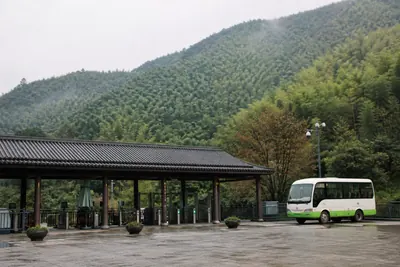
Getting there takes a transfer or two. There is no station on the mountain, and private cars cannot drive inside the core scenic area.
Getting there, briefly
High-speed trains reach Deqing in 63 to 80 minutes from Shanghai Hongqiao, and in 13 to 17 minutes from Hangzhou East. From there you cover the last stretch by shuttle bus or taxi, about 30 to 40 minutes. If you are heading into the core scenic area, you then change vehicles again at one of three transfer centers: Yucun, Fatou or Houwu. They run 08:00 to 18:00.
Full routes, fares and door-to-door estimates are on the getting here page.
Guesthouse counts, occupancy figures and visitor numbers last checked 5 August 2026. Ticket prices vary between sources and should be confirmed at booking.
Last checked 7 August 2026 by Cyril Drouin. Prices, timetables and entry rules on this mountain move without notice, so confirm anything you are booking around.
Photographs on this site are representative illustrations, not documentary images of the specific building, property or service described.