
If you came looking for a Moganshan blog, this is it. Three long reads are up, all of them on how this mountain came to be a resort and who it belonged to while it happened.
The Moganshan meant here is the mountain, 莫干山, in Deqing County, which belongs to Huzhou prefecture, in Zhejiang Province, China. Hangzhou is roughly 60 km south, Shanghai 200 to 240 km. If your search turned up an art district, you found Moganshan Road, the M50 quarter of Putuo District in Shanghai, 200 km from this mountain.
What is published
Three pieces, in the order the mountain lived them.
| Piece | What it argues |
|---|---|
| The founding, and the committee | The residents wrote themselves a constitution in 1898, a few seasons after the first villas. A colony that does that has stopped thinking of itself as temporary |
| 118, then 78 | Two ownership counts taken years apart carry the whole claim that Moganshan stopped being foreign long before 1949. What they support, and how much of the gap nobody has explained |
| The second opening | Foreigners reopened the mountain after 2003 and named a category after themselves. The domestic guesthouse boom that followed took the trade away from them |
There is no archive behind a category filter and nothing put up as a placeholder. Two of the five researched subjects below are still unwritten, and they stay unwritten until the reporting is done. There is no publication schedule, because a piece goes up when it is finished and not on a date set in advance.
There is no mailing list either, and no pop-up asking for your address. New pieces show up here and in the news index.
What the journal will carry
The guide pages answer questions with a train leaving: how to get here from Hongqiao, what a minsu is (a small guesthouse, usually owner-run), what a ticket costs.
The journal is the other half. Moganshan stories do not fit a planning page: the mountain’s past, and the people running things on it now.
| Format | What it carries |
|---|---|
| Long reads | One subject at length, sources named in the text |
| Photo essays | Pictures first, captions carrying the facts |
| Interviews | Guesthouse owners, hoteliers and officials, in their own words |
| News | Dated items: openings, closures, timetable and rule changes |
The interview list starts in Xiantan, where about 135 guesthouses serve fewer than 2,000 residents, nine in ten of them locally run.
News gets its own index at Moganshan news, so a reader checking whether the Y1 shuttle still leaves at 07:30 need not scroll past an essay. News here is narrow: something changed, and the change carries a date. A restated press release does not qualify.
All four answer to the same three rules.
The editorial line, restated
They sit behind every other page here too. A journal is where they slip.
Facts have to trace to a dated source. A figure that is not in our fact base, compiled 1 to 5 August 2026, does not reach a page, rounded or otherwise.
Where two published sources disagree, both go up and we name the disagreement instead of smoothing it. Entry pricing is the standing case: one set puts a ticket at RMB 120 booked online and RMB 130 if you pay at the gate, another at RMB 50 out of season and RMB 80 at peak. Check yours when you book.
Conflicting published ticket ranges for the scenic area, BeyondBorder Group Ltd primary research, 1 to 5 August 2026.
And where the record is genuinely silent, the page says what is known and stops, rather than filling the space with a plausible number. About this site sets out the method.
None of that is standard on a destination site.
Five subjects researched, three of them written
Desk research turned up more than the guide had room for. These five have the material. Three are now published and linked below; two are not.

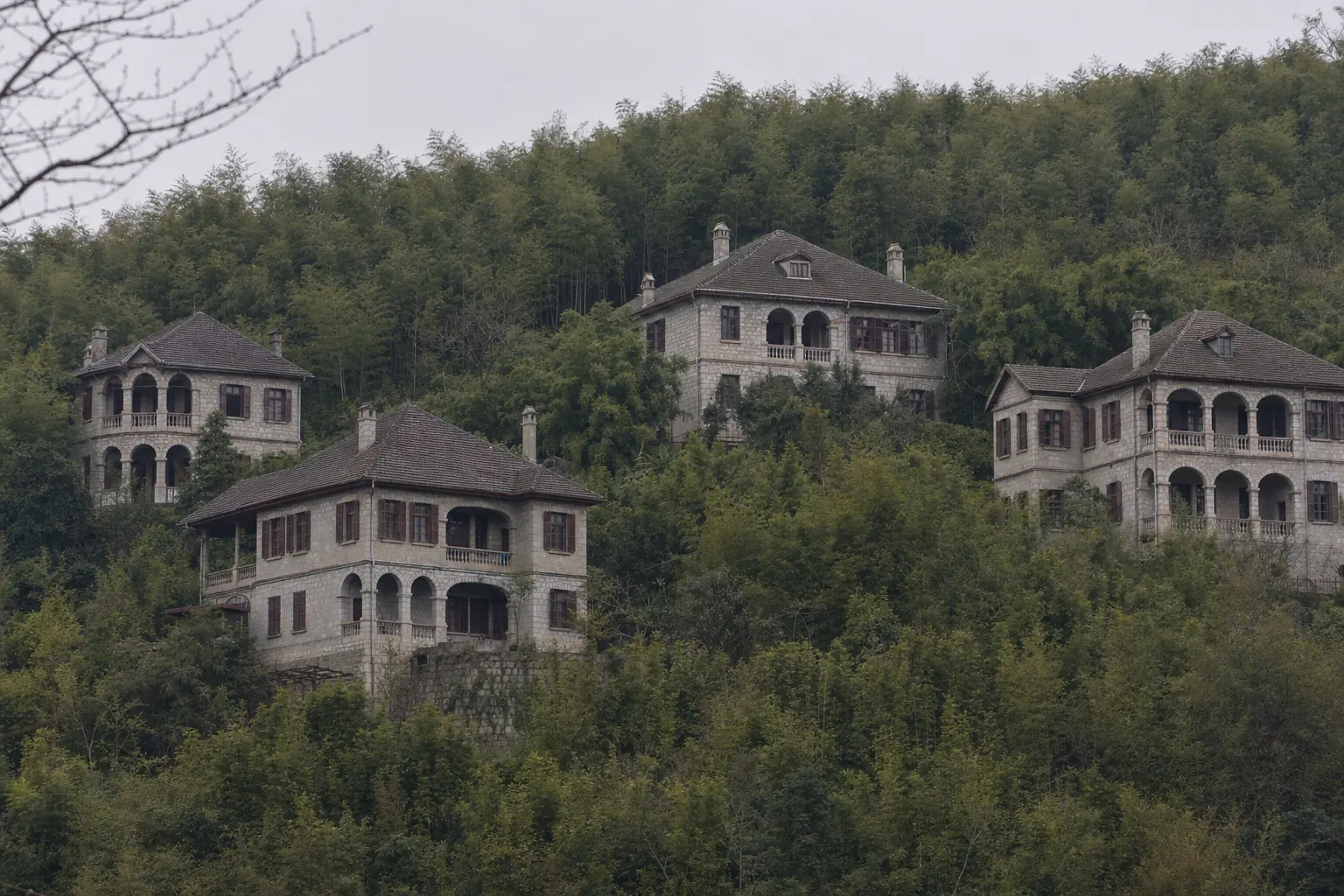
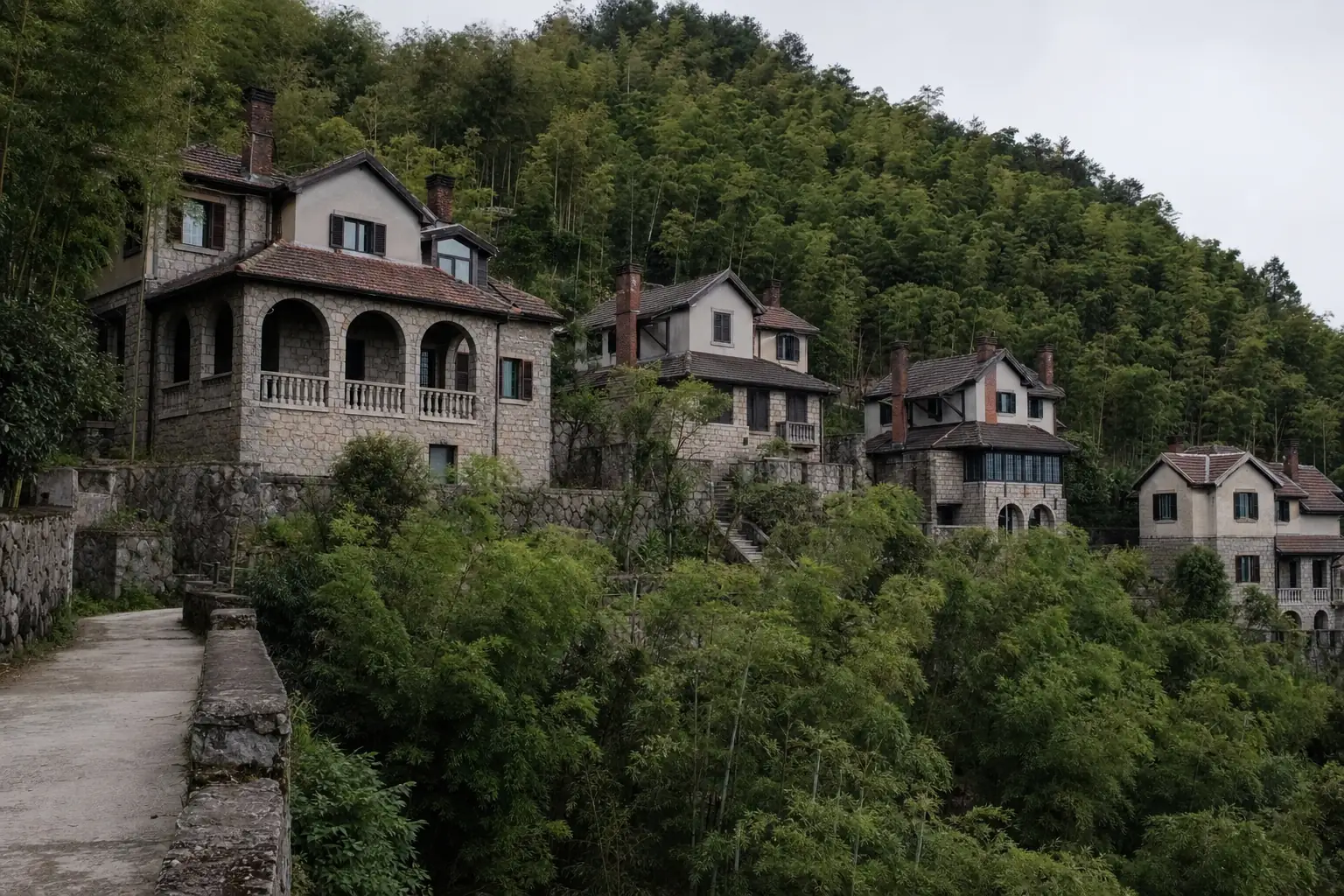
The founding, and the committee. Credit for finding the place goes to E. N. Fletcher, a missionary with the American Northern Baptists, in a year no source agrees on: 1891 to 1894. Western villas follow at 1896 to 1898, the first builder disputed three ways. Then in 1898 the residents constituted the Moganshan Summer Resort Association (莫干山避暑会), with a yearly meeting on the first Thursday of mid-August. A colony that draws up a constitution inside a few seasons had stopped thinking of itself as temporary. Published: The founding, and the committee. A short history of Moganshan has the outline.
What a tennis court tells you. A court went in during 1901. An association grew up around it, and the mountain’s open championship was a serious Sino-foreign event by 1909. Flat ground on a mountain has to be built, and it is no use otherwise. By 1910 about 300 foreign households summered here, mostly American or British, with churches and halls to match. You do not lay a court for people who come up for two weeks. Not written yet.
118, then 78. The ownership numbers are why this one is on the list.
| Villas on the mountain | Count |
|---|---|
| Western-style, 1920s | 154 |
| Of those, foreign-owned | 118 |
| Foreign-owned by 1929 | 78 |
Villa counts and foreign ownership, 1920s and 1929, BeyondBorder Group Ltd primary research, 1 to 5 August 2026.
Forty houses moved inside a decade, most of that before the Management Bureau of 1928 restored Chinese control, and Chinese owners put up over 300 more villas by 1949. Against that building record the decade stops reading as decline. Published: 118, then 78, which sets out four candidate explanations for the forty houses and declines to pick one. Moganshan’s hill station covers the period.
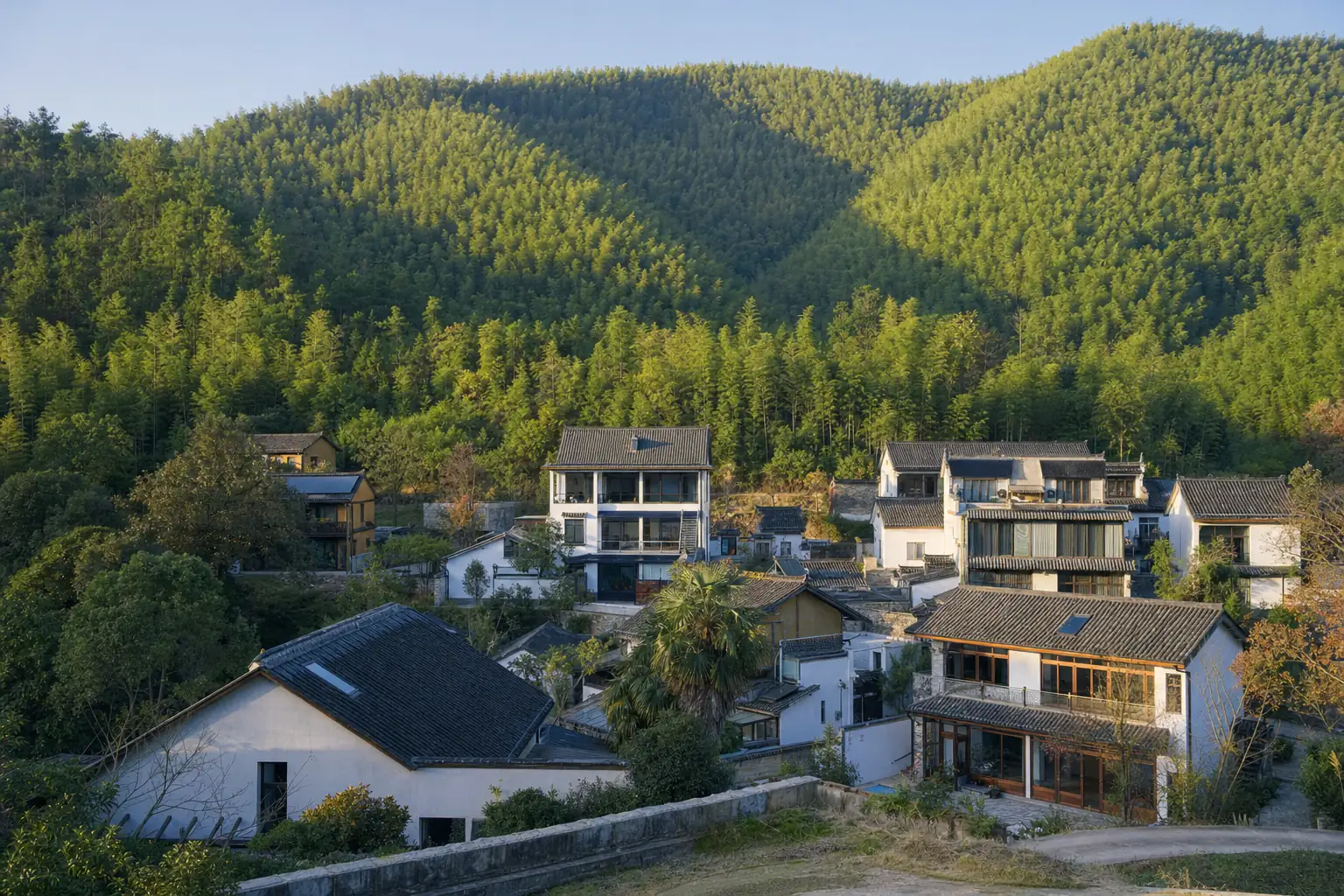
The second opening. Mark Kitto, a British former magazine publisher, took a lease in 2003 and opened Moganshan Lodge, picking up the line that follows him: first foreigner in modern times to live up here. Grant Horsfield opened naked Xiang at Sanjiuwu four years later, and the local word for it was “yangjiale” (洋家乐), a farmstay in foreign hands. From one guesthouse in 2002 the count reached about 1,000 by September 2025. What the numbers leave out is why it took hold when it did. Published: The second opening.
The next turn. Four Seasons put out its Moganshan announcement on 12 September 2025: 90 keys, a 23-hectare site at Yu Village, 2030.
Announcement of a Moganshan resort, Four Seasons Hotels and Resorts, 12 September 2025.
“Yu Village” is the release’s wording, close enough to Yucun (庾村) to be confusing and not obviously the same place. A branded resort arrives differently from a lease on an old lodge. What it does to about 1,000 village guesthouses, four in five individually owned, is the thing to watch. The construction years are the obvious Moganshan photo essay. Not written yet, and the three published pieces leave the Four Seasons material alone because it belongs here.
Journal status last checked 7 August 2026, against research compiled 1 to 5 August 2026. This page gets re-dated the day a fourth post lands.
Last checked 8 August 2026 by Cyril Drouin. Prices, timetables and entry rules on this mountain move without notice, so confirm anything you are booking around.
Photographs on this site are representative illustrations, not documentary images of the specific building, property or service described.