The foreign residents of this mountain met once a year, on the first Thursday of mid-August. Not a weekend, and not at either end of the season. A Thursday in the deepest part of the hottest month, when everybody with a stake in the place was already up the hill.
The meeting belonged to the Moganshan Summer Resort Association (莫干山避暑会), formally constituted in 1898. That is the fact worth putting first. In the English-language accounts we have read, it rarely leads.
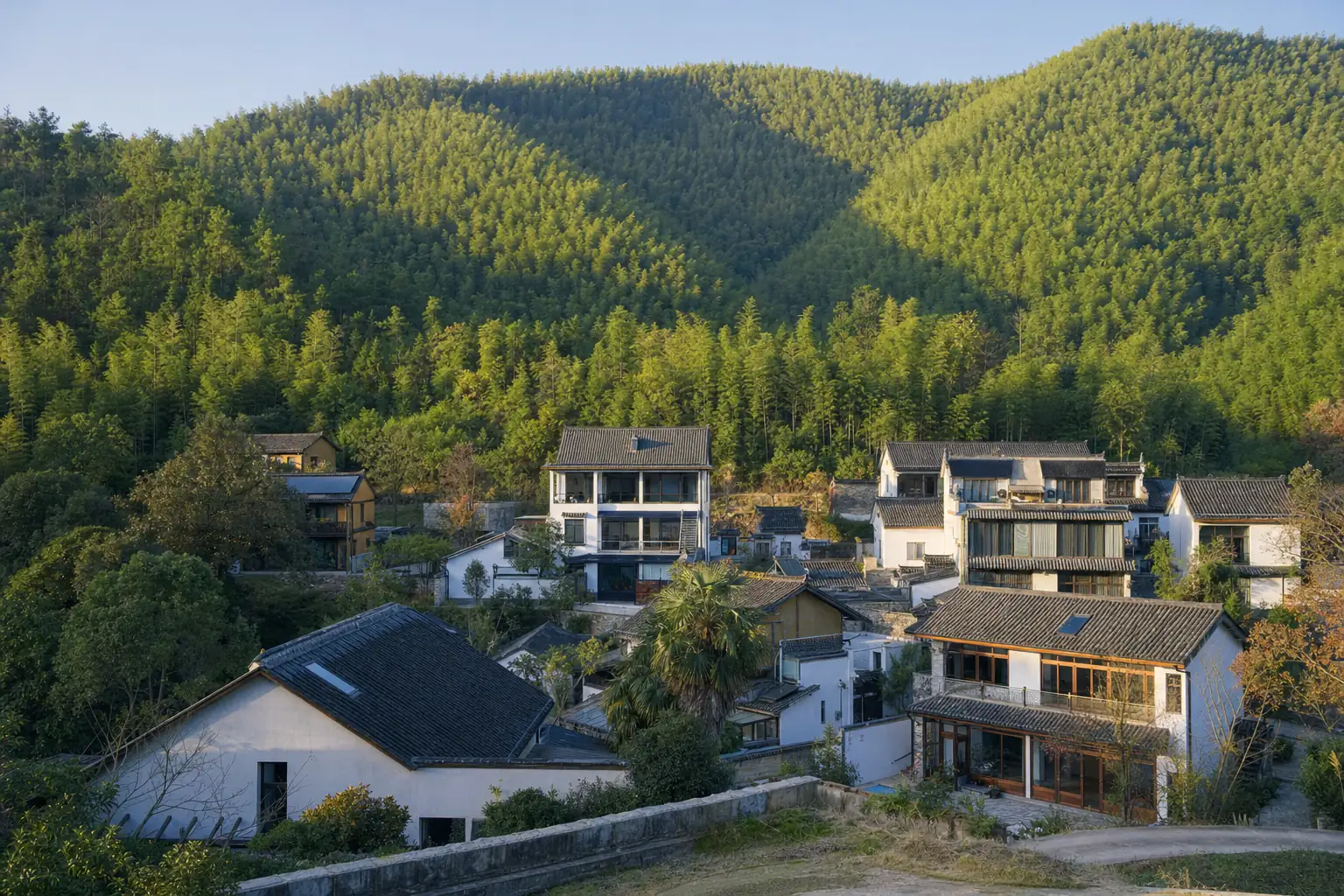
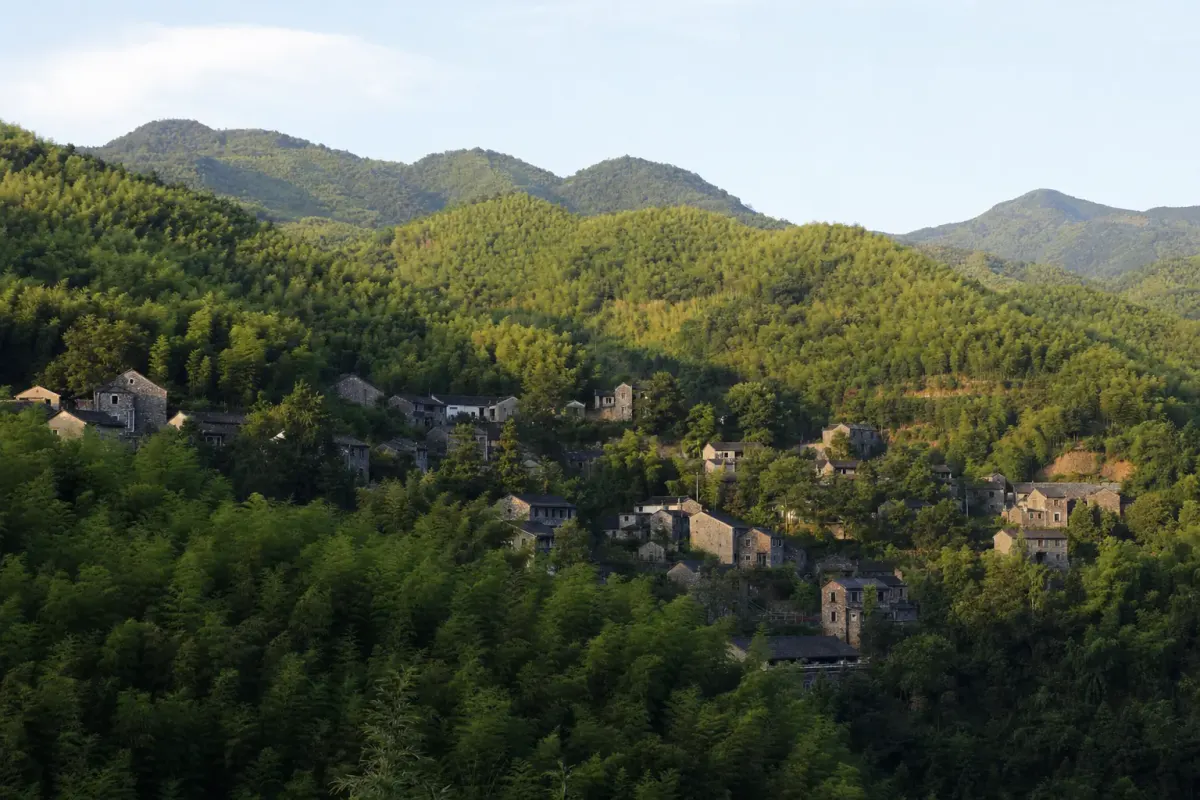
The mountain under them was Moganshan, in Deqing County, inside Huzhou prefecture, Zhejiang Province. Hangzhou is about 60 km to the south. Shanghai, the city whose summers they were running from, is 200 to 240 km off.
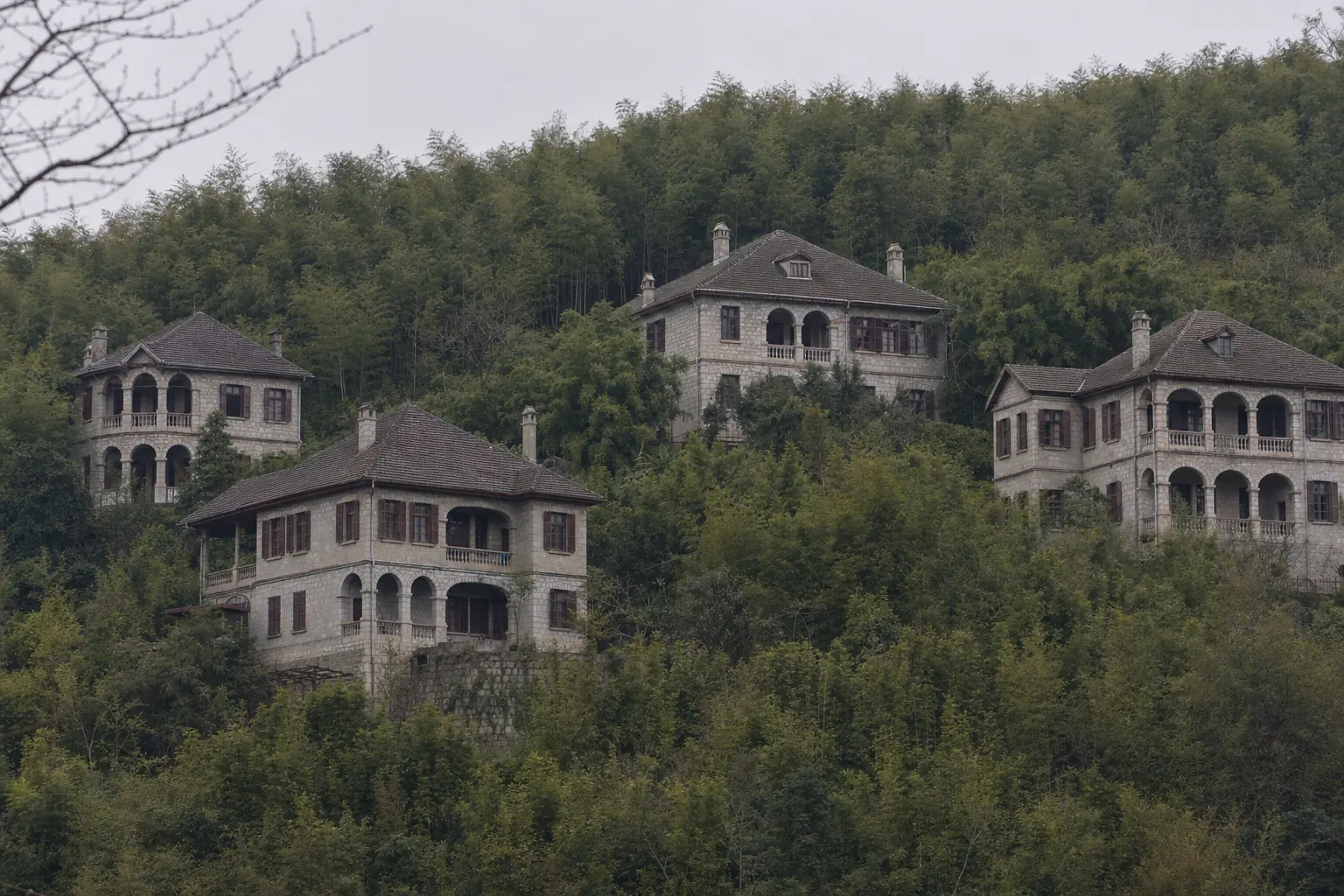
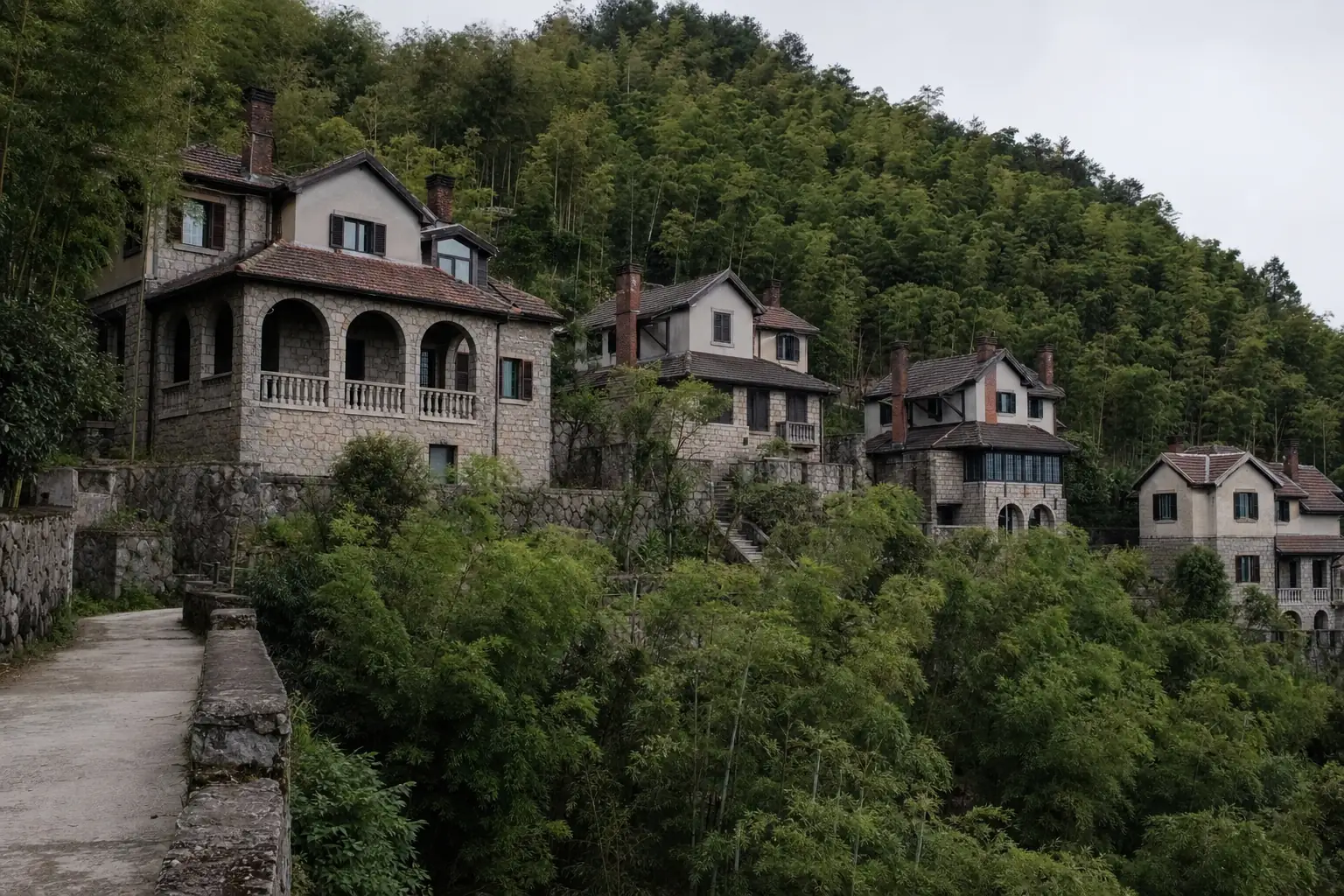
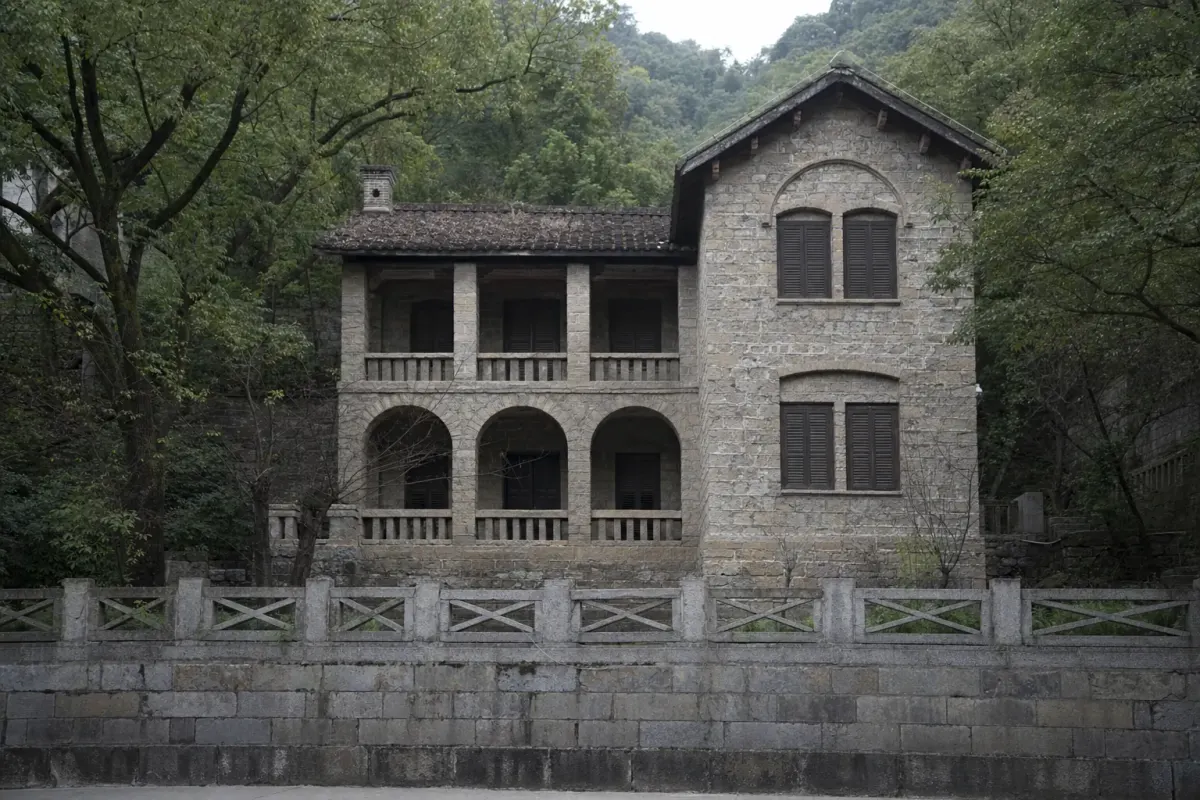
Most writing about a colonial hill station describes the houses, and Moganshan’s houses earn it. About 250 of them are still standing, in local mountain stone. But a house tells you only that somebody built. The association tells you what they thought they were building. A family putting up a holiday cottage does not draw up rules and a meeting calendar. A community that expects to be back every summer for thirty years, and to hand the place on to its children, does.
The credit, and a year that will not settle
Credit for finding the site goes to E. N. Fletcher, an American Northern Baptist missionary, who identified Moganshan as a place to spend a summer.
What “identified” covers, the record does not say. Whether he walked up on somebody’s advice or found the ridge by accident goes unrecorded, and whoever took him up there is named nowhere. Nothing describes what was on this mountain before the foreigners came. That absence sits in the record rather than in the mountain.
The year is a problem too. Published dates for the moment run from 1891 to 1894. Averaging four candidate years into one is not a decision, it is a fudge. So the range stands.
The villas that followed are disputed in a different way. The first Western houses date to 1896 to 1898. Who put up the first one has three answers in circulation.
| The claim | Year given | What the record carries |
|---|---|---|
| George A. Hudson, an American Presbyterian | 1898 | A name, a denomination and a year. The fullest of the three |
| W. W. White, an American | no year given | A name, and nothing attached to it |
| An English merchant, unnamed | 1896 | A year and an occupation, but no name. The earliest claim |
Three claims, no arbitration. So we print here what we print everywhere else on this site: the first Western villas date to 1896 to 1898, and the first builder is not settled.
Founding dates, first-villa claims and the disagreement between them, BeyondBorder Group Ltd primary research, 1 to 5 August 2026.
Then the rules arrived
Now count the gap. The first houses date from 1896 to 1898. The association was constituted in 1898. Whatever else these people were doing up here, they were writing a rulebook inside the first few summers of having anywhere to sleep.
The Chinese name, 莫干山避暑会, translates roughly as the summer-escape association, which undersells it. Constituting a body is a legal act rather than a social one, and it implies members, a way of admitting them, something to administer and somebody to do the administering.
What survives of it is narrow enough to set out in full.
| What the record gives | What it does not |
|---|---|
| The association was formally constituted in 1898 | The text of the constitution itself |
| Its annual meeting fell on the first Thursday of mid-August | Who could vote, and whether Chinese landowners could |
| It was constituted by the residents themselves | Its officers, its dues, its powers, and how it enforced anything |
| The Management Bureau took administration back in 1928 | Whether the association survived that in any form, and for how long |
That phrase, “the first Thursday of mid-August”, is the record’s own wording. It is a strange way to fix a date, and without the association’s text there is no checking what it counted from. What it does show is the shape of the season. The meeting sat in the worst of the heat because that was when the membership was on the mountain rather than in a city somewhere, working.
Three hundred people, and what a population needs
A rulebook implies people to bind, and within twelve years there were a good many of them.
By 1910 about 300 foreigners held summer homes on the mountain, mostly American and British. What survives is a breakdown by occupation rather than by nationality:
- Missionaries, who found the place and set its tone
- Businessmen
- Customs officials, whose service the record does not name
- The families of all three
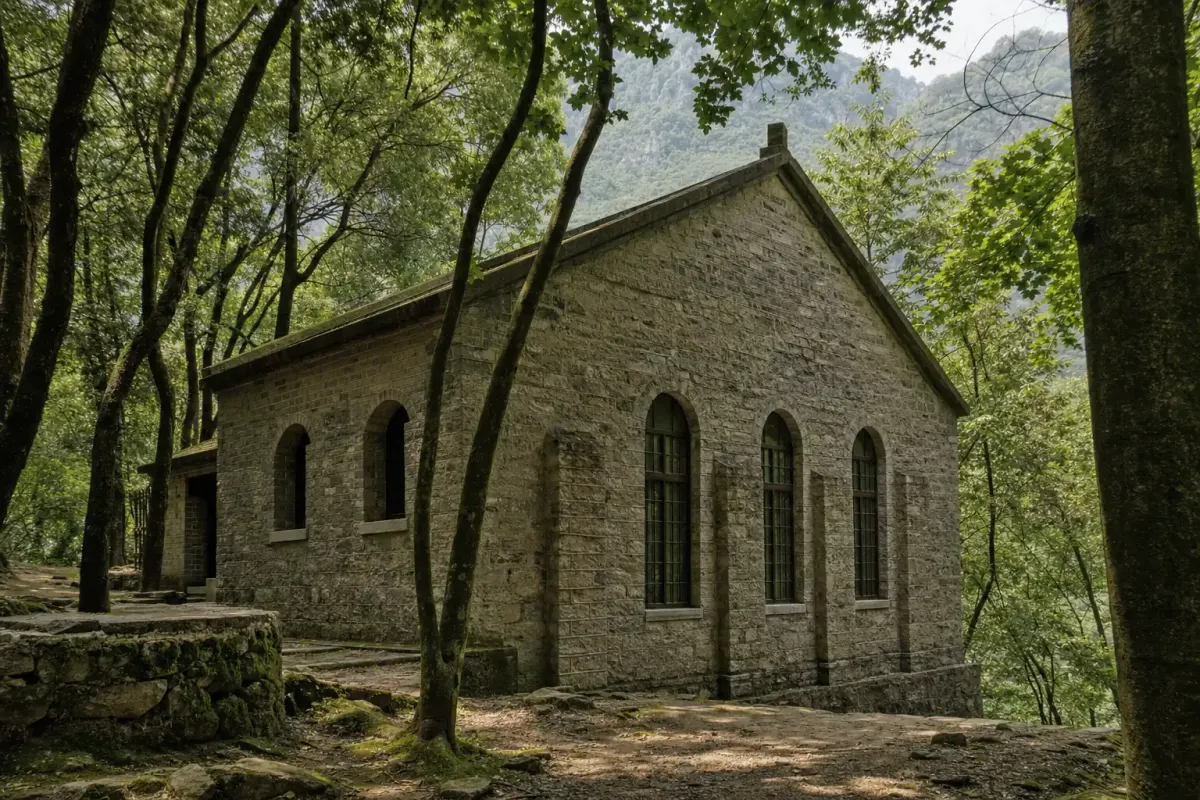
That last group is the one that matters. Three hundred adults on holiday need beds and very little else. Add the children and the requirement changes shape, and the mountain answered it: churches went up, and public halls.
Hayley Keon, “A Peaceful Place: Raising Imperial Children at China’s Moganshan Hill Station,” Journal of Imperial and Commonwealth History, published online 9 January 2026.
Keon reads Moganshan as a place where foreign families raised foreign children at a distance from Chinese cities. On that reading the churches and the halls stop being amenities. They are the equipment of a society that intended to reproduce itself, in the plainest sense, on a hill in Zhejiang. The tennis court of 1901 belongs on the same list, and the journal has it down as a piece of its own.
You commit to a church once you have decided that your children will be spending their Augusts here, and that their children probably will too.
What a committee is for, and what we cannot claim
This is where an honest piece has to slow down.
It would be easy to write a paragraph here about the association allocating land, cutting roads and approving building plans. Committees elsewhere did that sort of work, the inference is comfortable, and it would read well. No source records any of it at Moganshan.
What we have is the body itself: a name, a founding year, a meeting date. That is thin, and it is still enough, because the argument does not rest on what the association did. It rests on somebody having gone to the trouble of creating one.
The alternative is easy to picture. A dozen foreign families with houses on a Chinese mountain could have come up each July and gone home in September. Nobody needs a constitution for that. The residents took the other road within a few seasons of arriving, and you do not do that for one summer, or for five.
There is a case against all this, and it deserves a hearing.
| The skeptical version | What weighs against it |
|---|---|
| Rules can be a short-term device. Families competing for the same few flat sites on a steep mountain might write some in year two and expect to be gone by year twelve | What the same people put up next. Churches and public halls serve a population over years, and both are slow and expensive |
| An annual meeting is a social fixture, not a government | The word the record uses is “constituted”, and constituting something is a step people take in front of the law |
The association also left no address. You can stand in front of the villas and photograph them. There is nothing here to stand in front of, which is part of why the houses get written about and the committee does not.
The scale says it too, and that part needs no inference. By the 1920s the mountain carried 154 Western-style villas: a town on a ridge that empties in September. The villa page has the ownership figures behind that total.
Western-style villa count for the 1920s, BeyondBorder Group Ltd primary research, 1 to 5 August 2026.
1928, and the end of the committee
Whatever the association was, something came along and took the administration off it. That year is on the record.
In 1928 the Moganshan Management Bureau was established, and Chinese administrative control returned to the mountain.
That is the closing date for this story. Whatever authority the association had held, the Bureau held instead. The residents themselves stayed on for another two decades, and the last of them went in 1949. What ended in 1928 was self-government.
Read the two names in sequence and they sit oddly together. One body called itself an association. The one that replaced it was a management bureau.
The arithmetic is neat enough to set out plainly.
| Marker | Year |
|---|---|
| Site identified by E. N. Fletcher | 1891 to 1894, disputed |
| First Western villas | 1896 to 1898, first builder disputed |
| Summer Resort Association constituted | 1898 |
| Management Bureau takes administration | 1928 |
| Last foreign residents leave | 1949 |
| Span of resident self-government | about 30 years |
They had built for a span measured in generations. They got one generation and a bit.
Establishment of the Moganshan Management Bureau in 1928, and the departure of the foreign residents in 1949, BeyondBorder Group Ltd primary research, 1 to 5 August 2026.
Where the rest of it lives
This piece pulls one thread and leaves the others alone. Moganshan’s hill station is the short account of the whole colonial period, and the longer history runs the chronology past 1949. If you would rather look at the evidence than read about it, the walking tour puts the surviving houses into an order that works on foot.
Dates and figures here follow the fact base compiled 1 to 5 August 2026, last checked 7 August 2026. Where published sources disagree, the range is printed rather than a single figure.
Last checked 9 August 2026 by Cyril Drouin. Prices, timetables and entry rules on this mountain move without notice, so confirm anything you are booking around.
Photographs on this site are representative illustrations, not documentary images of the specific building, property or service described.