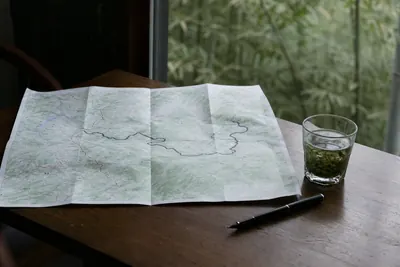
Moganshan sits 60 km north of Hangzhou and 200 to 240 km from Shanghai, in Deqing County, part of Huzhou prefecture, in Zhejiang Province, China. The M50 art district on Moganshan Road in Putuo, Shanghai, is a different address entirely.
The question people ask first is how many days in Moganshan. Our answer is two nights, which is not what most want to hear, since it means paying for a room.
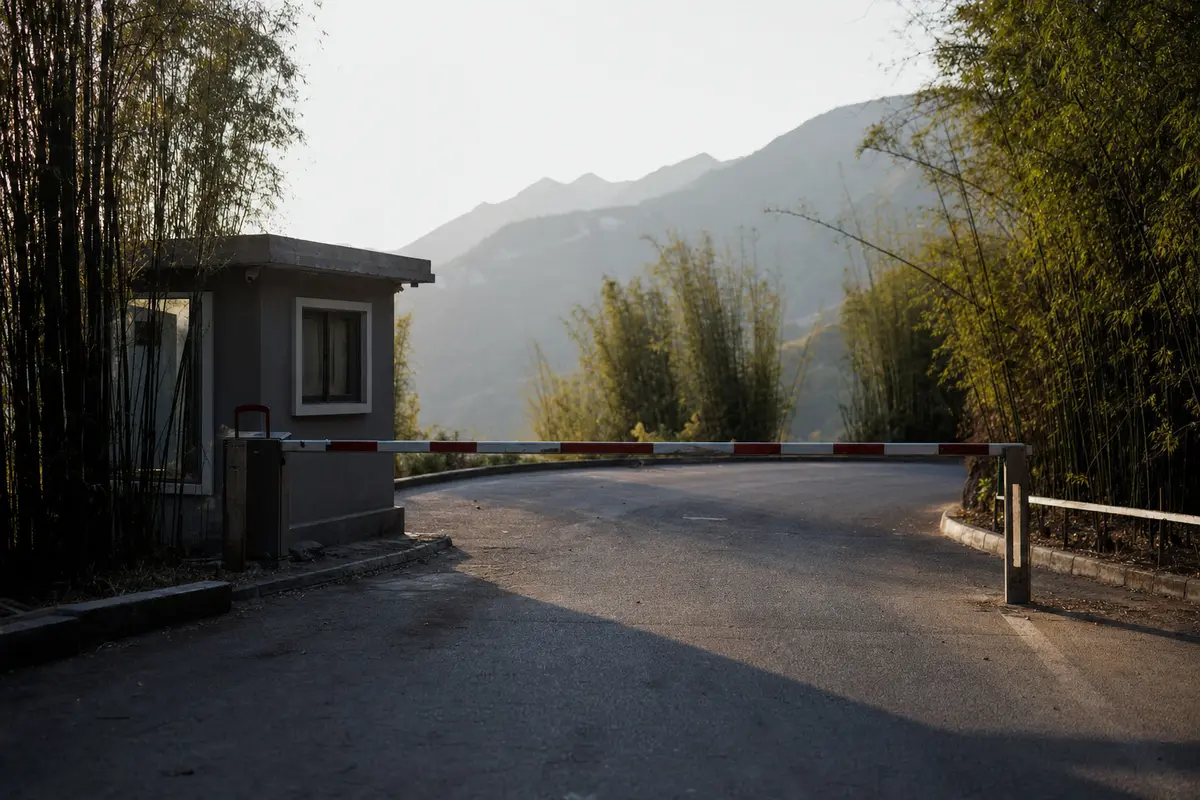
The reason is a rule most guides leave out. Private vehicles cannot drive inside the scenic area, and the transfer centers you have to change at run 08:00 to 18:00. Your day on the mountain is not the gap between your trains. It is that ten-hour window, minus the part you spent traveling into it.
How long do you need in Moganshan?
The hours below are our estimates, not published figures. Treat them as rough.
| Trip length | Hours on the mountain | Best for | The catch |
|---|---|---|---|
| Day trip | 4 to 5 | One spare weekday | 5h30 to 7h of travel in one day |
| One night | About 14 waking hours | A Saturday to Sunday escape | Both days are travel days |
| Two nights | About 30 waking hours | Most travelers | Peak weekend rooms from RMB 1,000 |
| Three nights | About 46 waking hours | Summer heat, or a second visit | Very little to do after dark |
| Inside a Shanghai and Hangzhou trip | About 30 waking hours | First China trips | Costs two nights of the trip |
The two clocks that shape every plan
Two things set those hours, and your itinerary is not one of them. Travel time is the first clock. These are door-to-door estimates, and they include the last leg from Deqing station.
| From | Door to door |
|---|---|
| Central Shanghai by car | 2h30 to 3h15 |
| Shanghai Hongqiao by rail | 2h45 to 3h30 |
| Shanghai Pudong by rail | 4h00 to 4h45 |
| Central Hangzhou by car | 1h20 to 1h45 |
| Hangzhou Xiaoshan by car | 1h45 to 2h15 |
The trains are the easy part. It is the last 30 km that almost nobody plans in advance.
| The leg | What it runs to |
|---|---|
| Shanghai Hongqiao to Deqing | 63 to 80 minutes, 13 direct services a day |
| Hangzhou East to Deqing | 13 to 17 minutes, 16 a day |
| Y1 shuttle, Deqing to Moganshan town | 30 to 40 minutes, RMB 10, seven a day, nothing between 10:40 and 13:00 |
| Taxi or van, same trip | About 30 minutes, about RMB 100 |
Neither the shuttle nor the taxi drops you inside the scenic area. Both stop in the town.
The second clock starts there. Yucun, Fatou and Houwu are the three transfer centers, all running 08:00 to 18:00. English-language sources almost never print this. It decides your last hour on the mountain.
Door-to-door estimates, rail frequencies, shuttle times and transfer-center hours, BeyondBorder Group Ltd primary research, 1 to 5 August 2026.
Both clocks push you toward staying over, and rooms have a price.
| What it costs | Typical |
|---|---|
| Mid-range room, off-season | RMB 300 to 500 |
| Mid-range room, peak weekend | RMB 1,000 and up |
| Scenic-area ticket | RMB 50 to 130, and sources conflict |
Route detail for every approach is on getting to Moganshan.
One day: what the day trip really buys
A day trip from Shanghai works. It does not work well. Travel eats 5 hours 30 minutes to 7 hours, and you reach the mountain around 10:15 at the earliest, after the good light has gone. From Pudong it runs 4 hours to 4 hours 45 minutes each way, and we would not attempt it.
From Hangzhou the same day is comfortable, at 1 hour 20 minutes to 1 hour 45 minutes by car. The hour-by-hour version is on the Moganshan day trip page.
A day trip is a look, not a visit. It is enough to decide whether to come back.
One night, the cheapest upgrade there is
A night fixes most of that. One night is a big jump for a small cost. It adds little daylight, but it puts you inside the 08:00 to 18:00 window before the day visitors arrive, which is the whole difference. Both days are still travel days.
Two nights: our recommended Moganshan itinerary
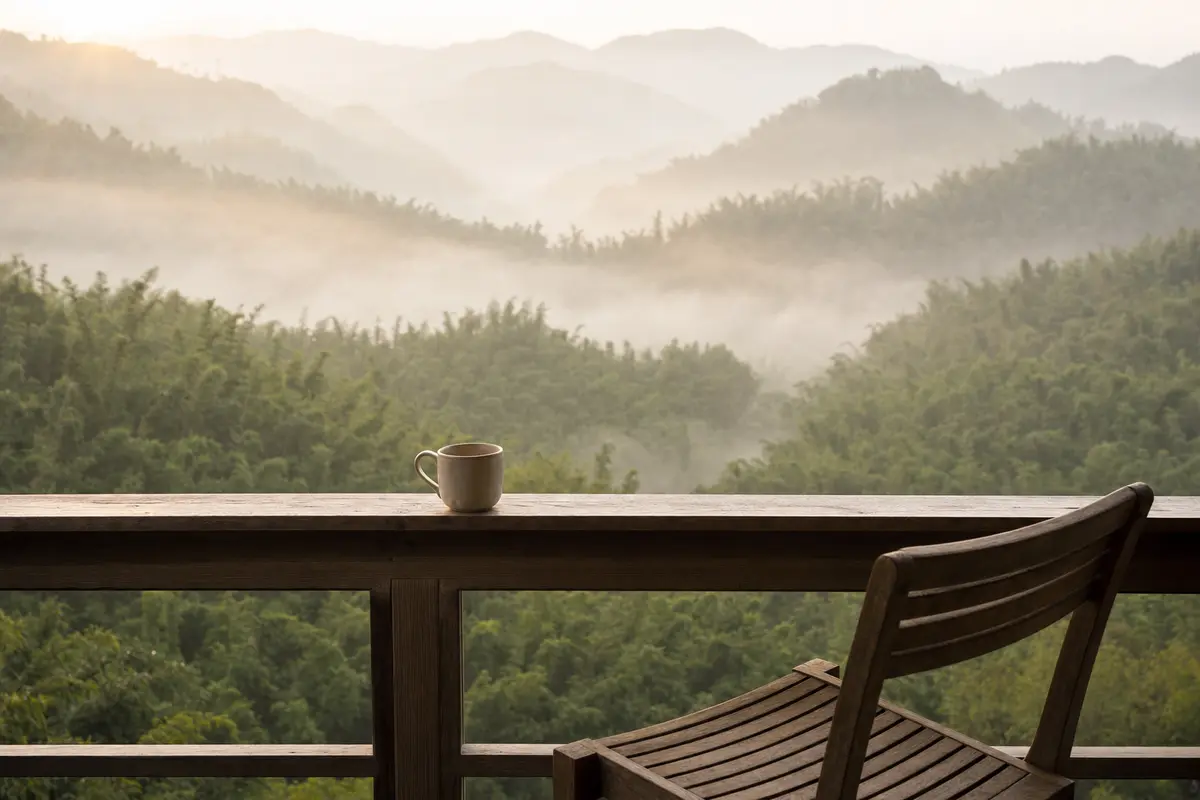
Two nights costs the same total travel as a day trip, spread over three days. Call it a two-day itinerary with a travel day at each end. You get two mornings, and mornings are when the bamboo paths are worth walking. Forest cover runs over 92 percent, nearly all moso bamboo, grown and cut as a crop.
| Day | Morning | Rest of the day |
|---|---|---|
| One | Travel from Shanghai or Hangzhou | Check in, then the villa streets and Sword Pond |
| Two | Early bamboo walk, before the centers get busy | Luhuadang Park or Dakeng, a second village, or the Bai and Yun Art Museum |
| Three | One more early walk | Out on a late-morning train |
It also opens up the map. A day trip reaches one village; two nights can reach three.
| Village | Where it is | What is there |
|---|---|---|
| Yucun | Foot of the hill | Main gateway, square, market, 1932 culture park |
| Xiantan | North side | About 135 guesthouses in a village under 2,000 people |
| Laoling | South | A reservoir, with kayaking and cycling |
| Houwu | 30 minutes west of Yucun | Quiet. One of the three transfer centers |
If that is your Saturday and Sunday, the weekend from Shanghai page has it. Picking a village is covered on where to stay.
Three nights: when the extra day pays
The named sights run out before a third day does, so the extra night is for something else. It is for walking, and for villages further out like Dazaowu, the most remote, with rice paddies and the Dadouwu reservoir.
The other reason is summer. Mean temperature in July and August is 24.1 °C, some 6 to 7 °C cooler than Shanghai and Hangzhou. American Protestant missionaries came here in the 1890s for exactly that, and about 250 of their villas survive. If you are running from a Yangtze delta August, that is where Moganshan stops being a sight and becomes a rest.
Summer and January mean temperatures, forest cover and surviving villa count, BeyondBorder Group Ltd primary research, 1 to 5 August 2026.
Three nights suits families and walkers, and hardly anyone in January, when the mean is 1.4 °C. When to go has the detail.
The evenings are the part to square with yourself. Chinese reporting records no evening economy in the villages and almost no late-night food, so three nights means three quiet ones.
Absence of an evening economy, Chinese domestic reporting, BeyondBorder Group Ltd primary research, 1 to 5 August 2026.
Moganshan inside a Shanghai and Hangzhou trip
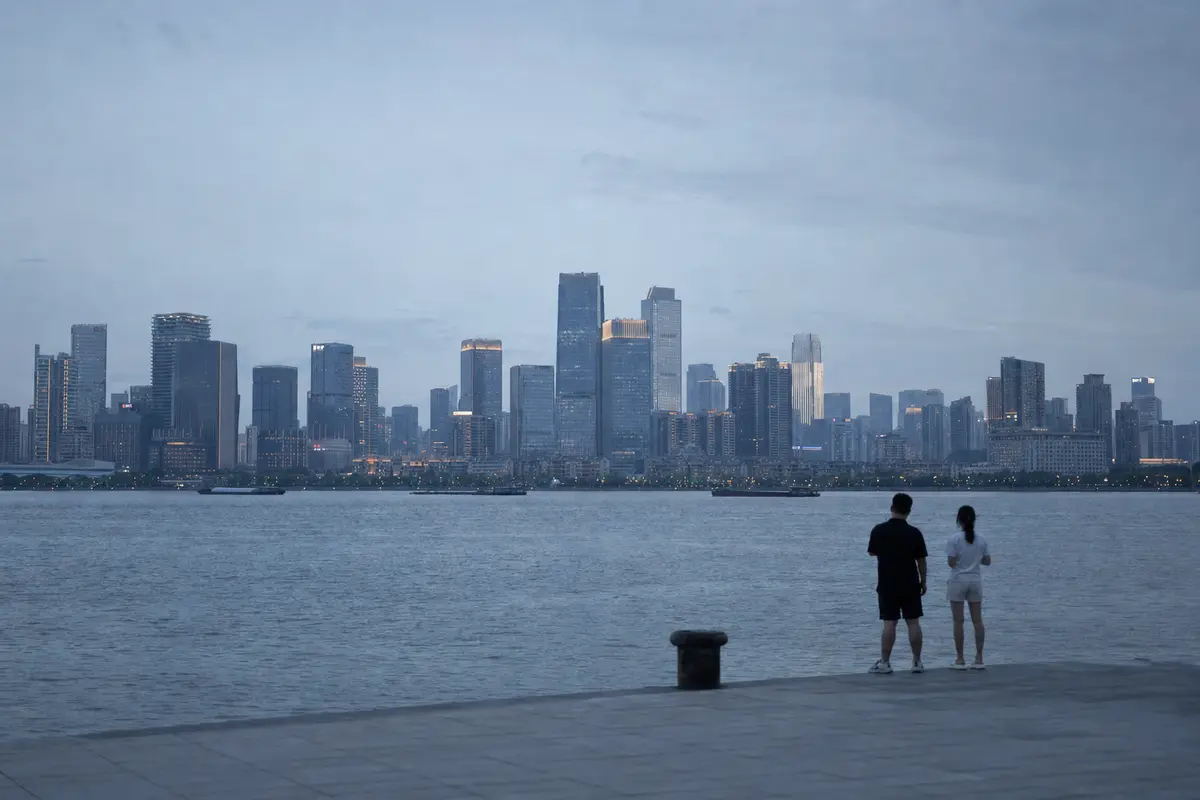
Moganshan is rarely the reason for the trip. It goes into the middle of something bigger, and direct trains reach Deqing from both cities. Shanghai, then Moganshan, then Hangzhou is the standard first-timer route. Reverse it if you fly into Xiaoshan. Do not double back to Shanghai in between; that costs two extra hours of train. Both orders are laid out on the Shanghai, Hangzhou and Moganshan page.
Which days to pick
Weekends and holidays drive the crowding, and the gap between Saturday and Monday is severe.
| When | What to expect |
|---|---|
| Saturday | The busiest day. If it is your only one, start early |
| Sunday to Tuesday | The quiet window. Arrive Sunday, leave Tuesday. Mondays are notably quiet |
| Golden Weeks | High-end occupancy hit 94 percent over the May 2024 holiday |
| National Day 2025 | Yucun footfall ran 30 to 40 percent above normal |
Occupancy and footfall figures, BeyondBorder Group Ltd primary research, 1 to 5 August 2026.
Both holiday figures were checked on 5 August 2026. Rates follow the same curve, so two shoulder-season nights can cost less than one peak Saturday. Given the choice, we take the shoulder season.
Last checked 7 August 2026 by Echo Peng. Prices, timetables and entry rules on this mountain move without notice, so confirm anything you are booking around.
Photographs on this site are representative illustrations, not documentary images of the specific building, property or service described.