Yellow tea is the class most visitors have never knowingly drunk. Chinese practice sorts tea into six, and green, black and oolong are the three that travel. Most people who hear “yellow” assume it means green tea gone a bit pale. That gets it backward. It is a separate class with a step in it green tea never gets.
The tea attached to this mountain is a yellow bud tea, huangya. Moganshan is in Deqing County, part of Huzhou prefecture in Zhejiang Province, about 60 km north of Hangzhou and 200 to 240 km from Shanghai. Zhejiang is famous for a green tea, Longjing, grown by West Lake in Hangzhou, so a yellow tea an hour up the road is the quieter story. (Moganshan Road is a Shanghai art district, 200 km off, and it owns the search results.)
One thing to say up front. This is not a mountain with a visitor tea farm at the end of a signposted lane. The tea here is a small crop on ground the bamboo mostly owns, and finding it is a matter of asking the person who pours you a cup.
What yellow tea is
The six are not six flavours. They are six processing routes, and the leaf can come from the same plant.
| Class | Chinese | How it is made | One you may know |
|---|---|---|---|
| Green | 绿茶 | Heated early to stop oxidation | Longjing, from Hangzhou |
| Yellow | 黄茶 | The green method, plus a smothering step | Huangya, “yellow bud” |
| White | 白茶 | Withered and dried, barely handled | Silver Needle |
| Oolong | 乌龙茶 | Partly oxidised, then roasted | Tieguanyin |
| Black | 红茶 | Fully oxidised. Chinese calls it red tea | Keemun |
| Dark | 黑茶 | Aged, with microbial fermentation | Pu-erh |
The step that makes yellow tea yellow is menhuang (闷黄), roughly “sealing yellow”. After the leaf is heated to stop it oxidising, exactly as green tea is, it gets wrapped or piled while still warm and damp, then left alone for hours. In that trapped heat it yellows a little and the grassy edge comes off.
In the cup that reads as roundness. Beside a green tea off the same bush, the yellow is softer and sweeter, without the raw-vegetable note that puts people off green tea. The liquor is pale gold, not pale green.
Menhuang costs hours and is easy to ruin, which is why yellow is the smallest of the six by volume.
Moganshan huangya
That is the class. Now this mountain’s version of it.
The name is two halves. Mogan is the mountain, 莫干. Huangya, 黄芽, is the style: huang is yellow, ya is bud. Together they give 莫干黄芽.
Huangya is not a Moganshan word, which matters if you go searching. It labels a style made on several mountains.
| Yellow bud tea | Province |
|---|---|
| Huoshan Huangya | Anhui |
| Mengding Huangya | Sichuan |
| Junshan Yinzhen | Hunan |
Type huangya into a search box on its own and Anhui usually answers first.
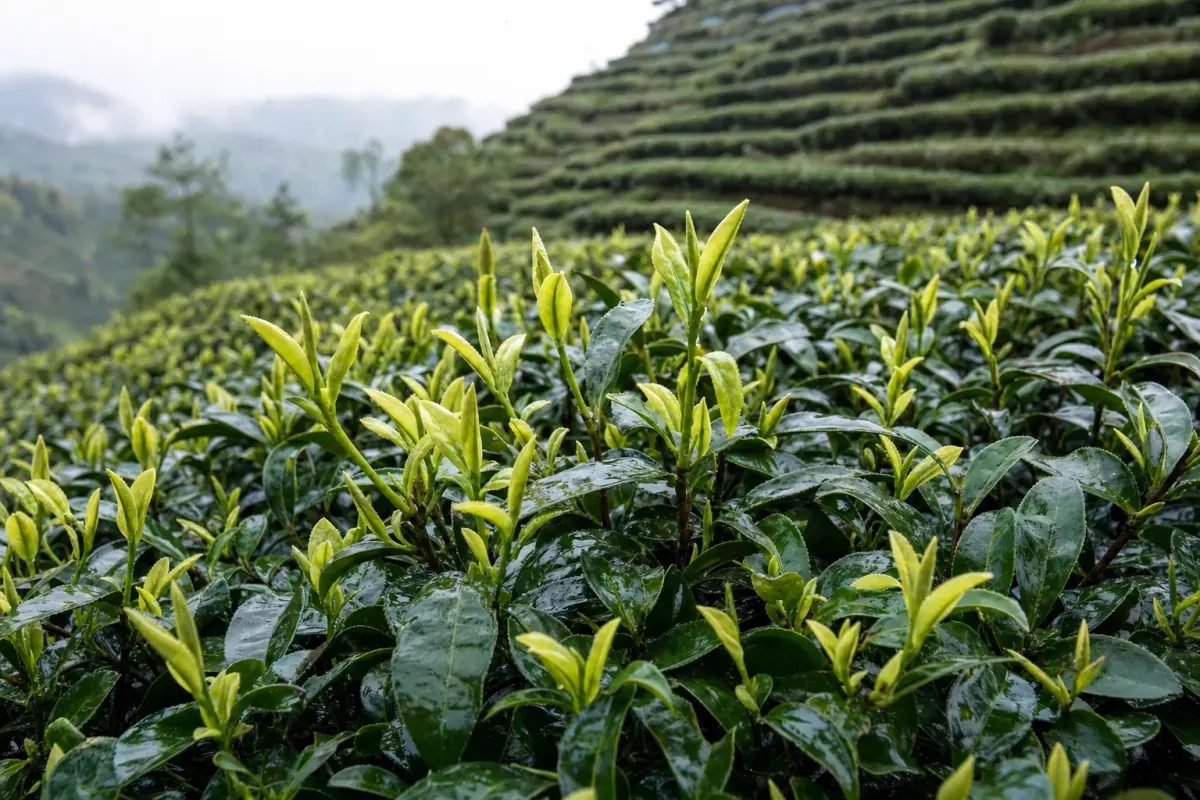
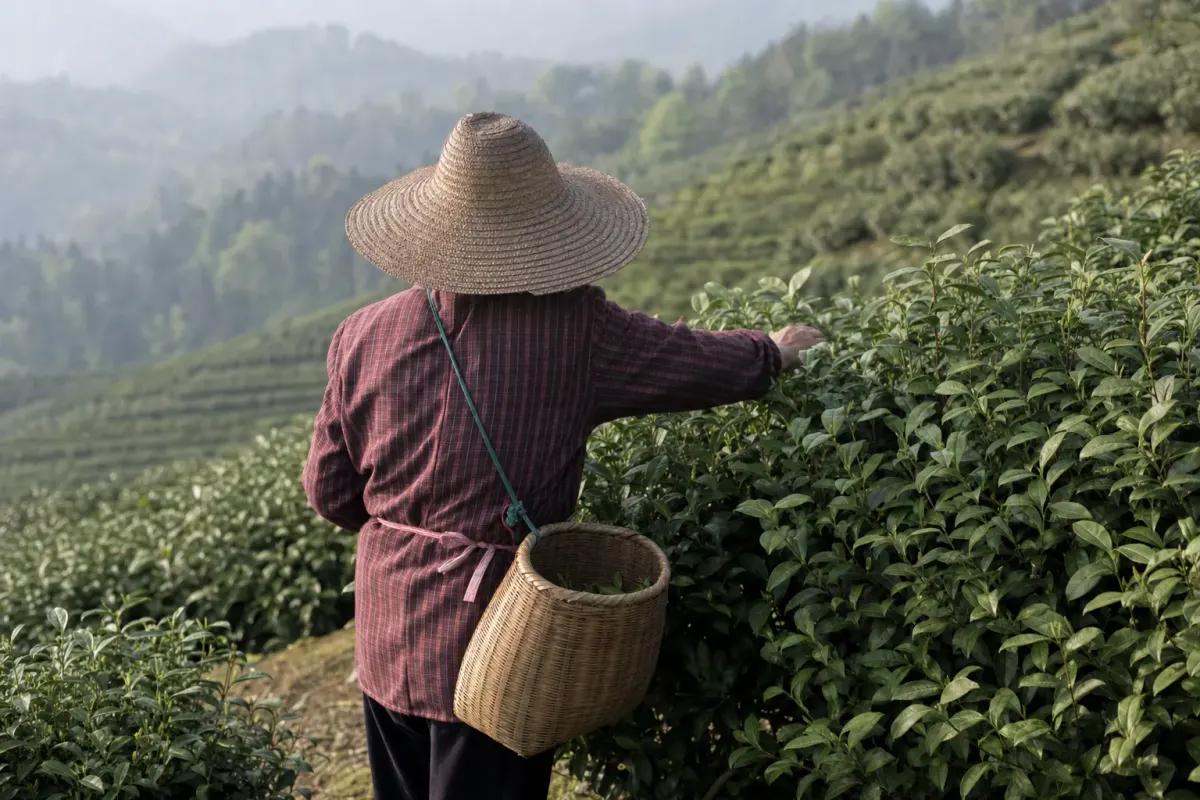
Bud is the other half of the name, and it describes the pick rather than the taste. Unopened buds, or a bud with one small leaf attached, instead of mature leaf. That is the top of the ladder in this style, and it is why bud teas cost what they do. A picker fills a basket slowly. So the phrase is not marketing. It names a processing route and a pick.
Where it grows
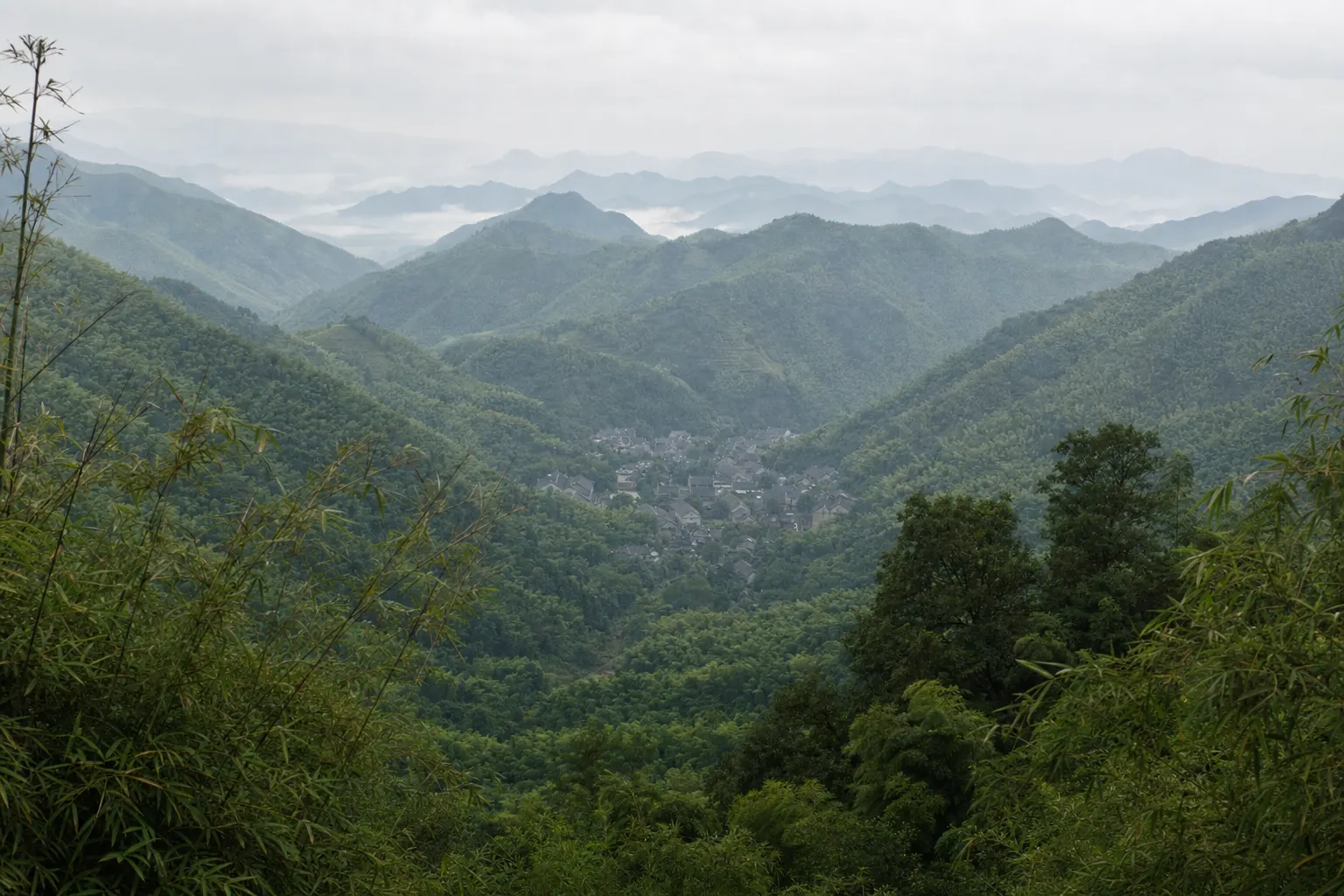
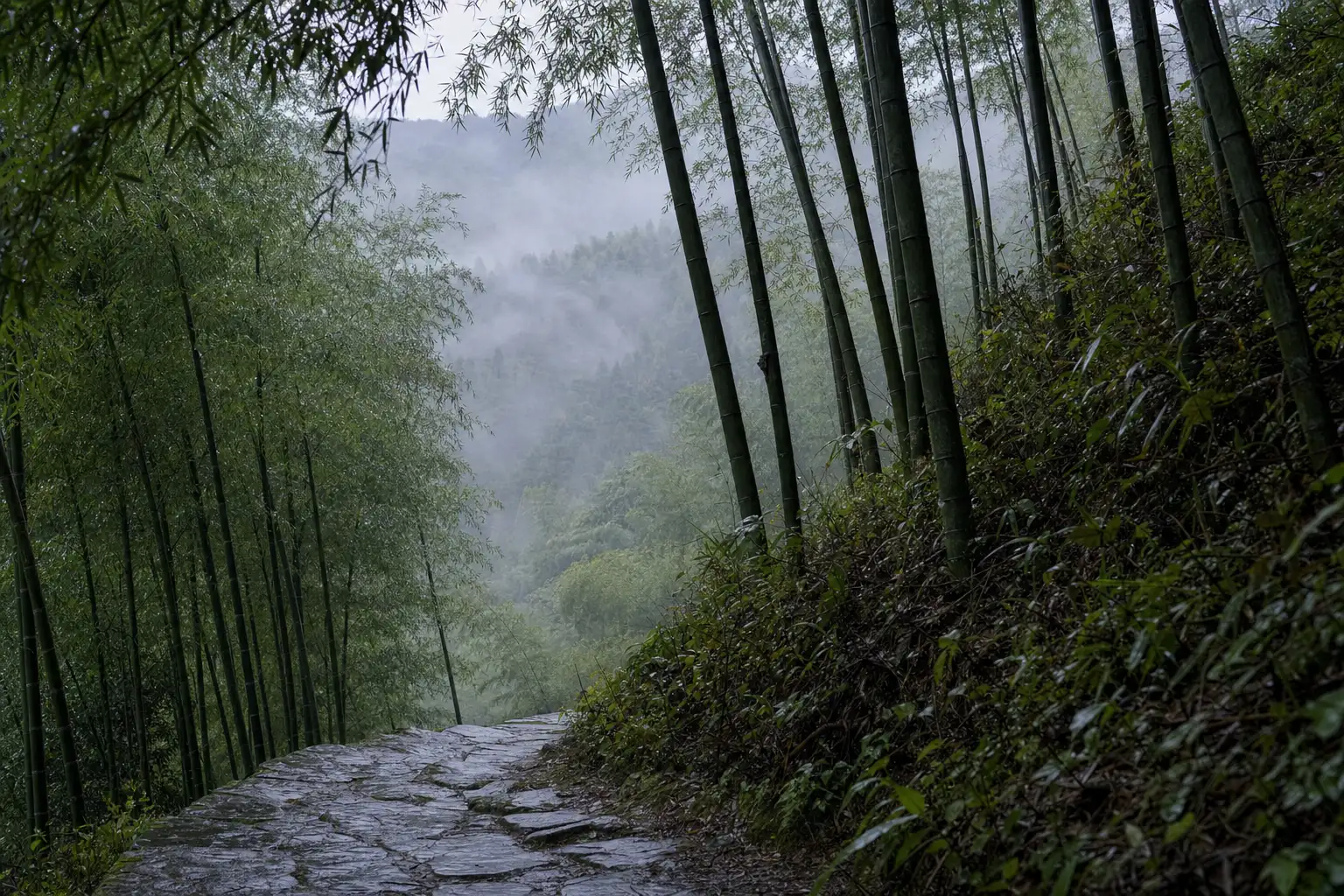
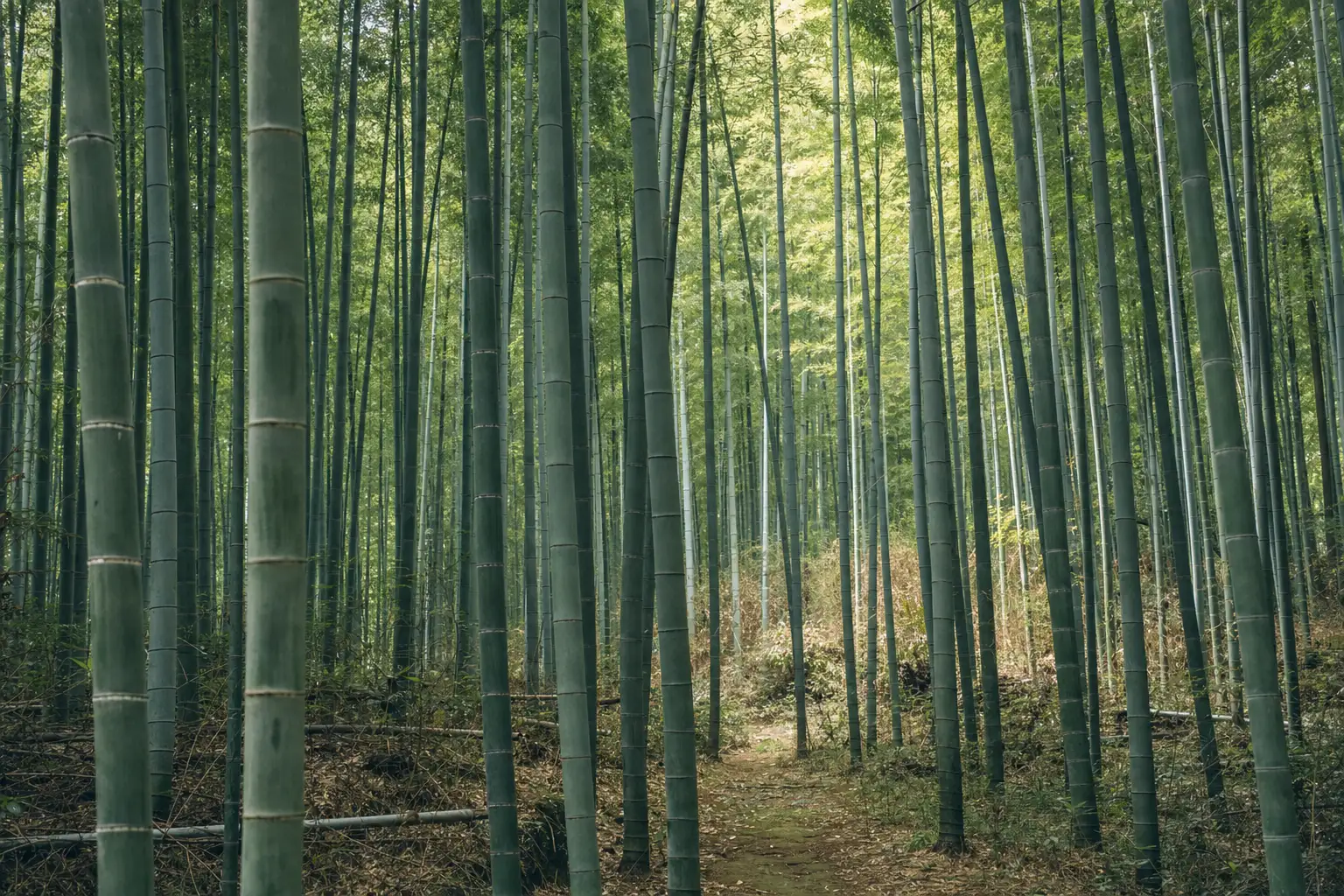
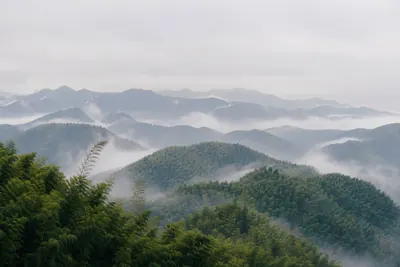
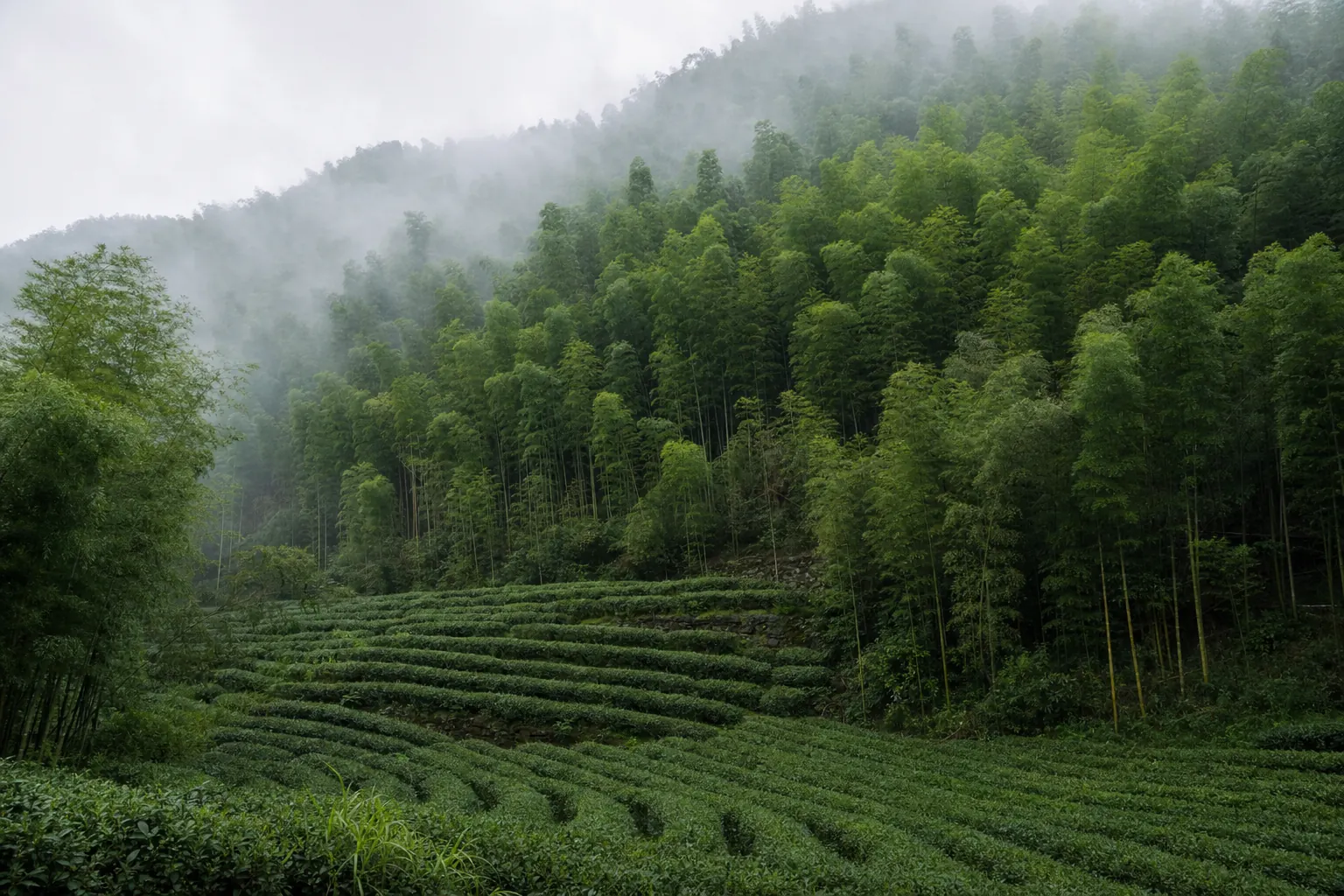
Start with what the mountain is covered in. Bamboo, overwhelmingly: forest runs to more than 92 percent of Moganshan, nearly all of it moso, grown and cut as a commercial crop rather than scenery. Tea is nowhere near the main thing growing here, and any garden is carved out of slopes the bamboo already owns, which caps how much of it this mountain can carry.
Height and climate put a ceiling on what a seller can claim.
| The measure | The figure | What it means for tea |
|---|---|---|
| Main peak, Tashan | 719 to 720 m | No high-mountain tea. Everything grows below about 720 m |
| Annual mean | 13.3 °C | A cool site, so a slow spring flush |
| July to August mean | 24.1 °C, 6 to 7 °C under Shanghai and Hangzhou | Cool nights, and mist is common on the ridge |
Tea generally does well with cool nights and diffuse light, on soil that drains. This mountain has the first two. Anyone selling you altitude here is selling a number Moganshan does not have.
Forest cover, peak elevation and temperature means, BeyondBorder Group Ltd primary research, 1 to 5 August 2026.
The bamboo forest page covers the crop that owns the rest of the ground.
The season
Bud teas are a spring crop, and the calendar marker in Chinese practice is Qingming, the tomb-sweeping festival that falls around 4 or 5 April.
| Pick | Chinese | When | What it costs |
|---|---|---|---|
| Mingqian | 明前 | Before Qingming, about 4 to 5 April | The premium pick, priced like it |
| Yuqian | 雨前 | Before Guyu, about 20 April | Still spring leaf, noticeably cheaper |
| After Guyu | 谷雨后 | After about 20 April | Now picked for the wider yellow tea range, at prices that have held roughly steady |
The local window moves with the weather rather than the calendar, so a cold March pushes everything back a week or two.
The calendar itself is changing. Most tea sold as 莫干黄芽 has in fact been made as a green tea, because the menhuang step is slow and easy to ruin. Growers are now making more of it as a yellow tea, picking from before Qingming to past Guyu, and selling four teas beyond the single bud, among them Zhichun (知春) and Qiubai (秋白). The county tea association says output has doubled while prices have stayed roughly where they were.
德清新闻网 (Deqing News), 22 September 2026, tier 2. https://dqnews.zjol.com.cn/dqnews/system/2026/09/22/035296333.shtml
All of which points at April, a good month here for reasons unrelated to tea: mid-range rooms at RMB 300 to 500 outside the holiday week, and bamboo shoots on every guesthouse menu. Dodge the first week of May, the May Day holiday, when high-end occupancy has run as high as 94 percent. The seasons guide has the rest of the year.
Spring room rates and May Day occupancy, BeyondBorder Group Ltd primary research, 1 to 5 August 2026.
Tea gets poured here in every month. What the season changes is whether the cup in front of you is this year’s leaf.
Where to drink it
There is no tea house here in the sense a visitor expects, with a door, an opening time and a menu. If another page hands you a name, check whether it gives a street and an opening time too. Most do not.
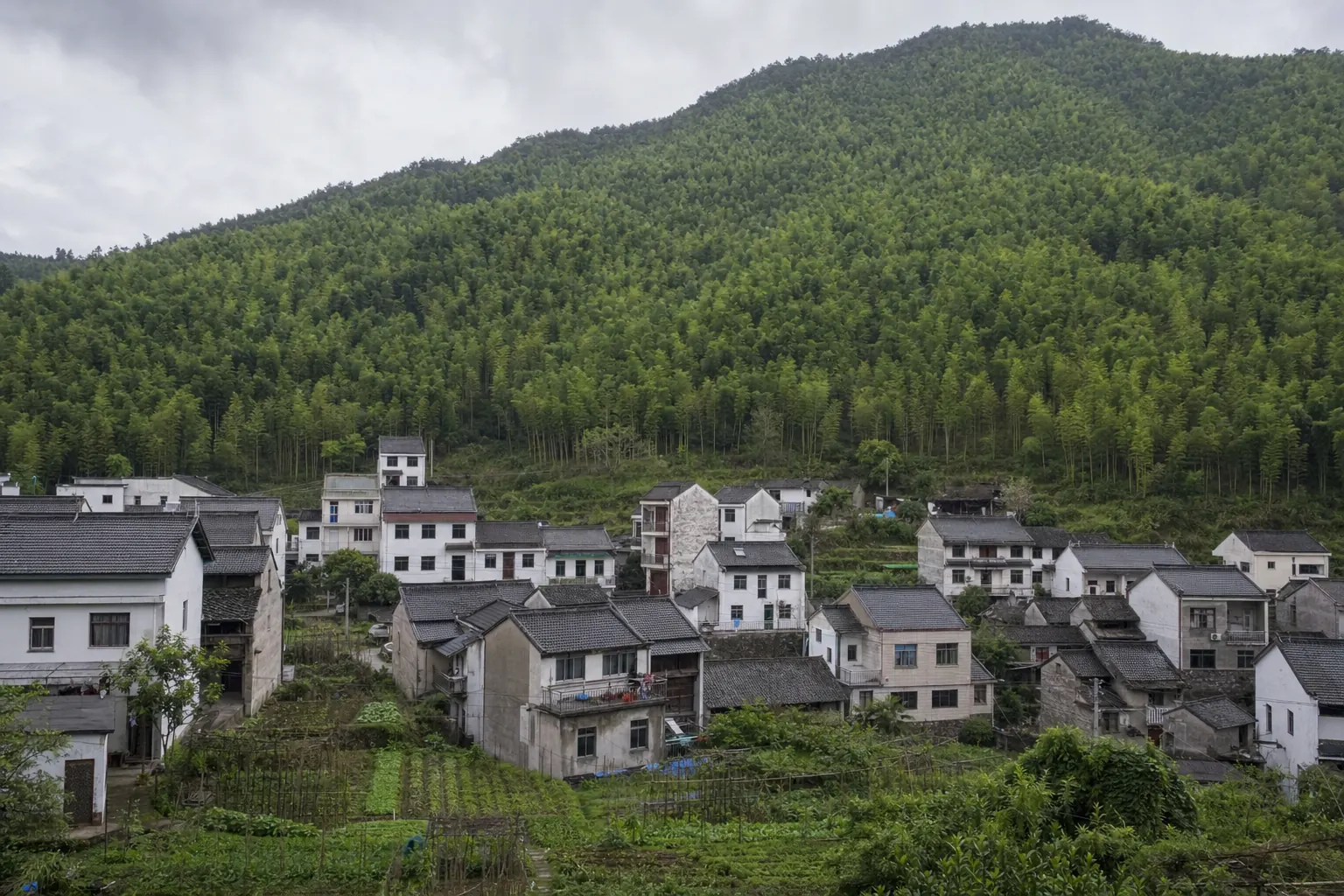
Your guesthouse is the answer that works. About 1,000 of them ring the foot of the mountain, roughly 80 percent individually owned, and tea gets poured on arrival at almost all of them. The person pouring it is your best source here.
So ask. Five questions, most useful first.
| Ask | Why it matters |
|---|---|
| Is this local tea? 这是本地茶吗? | Guesthouse tea is whatever the owner buys, not always from this mountain |
| Is it Mogan huangya? 这是莫干黄芽吗? | The claim worth testing, and the reason you are asking at all |
| Which year is it? | Spring bud tea is dated. Last year’s is a different thing at a different price |
| Where do you buy it? | The question that finds you a shop, and the one nobody asks |
| Can you write the name down? | So you can show it at a counter instead of pronouncing it |
If the answer to the first two is no, that is useful rather than a failure. The cup in your hand is ordinary Chinese tea, poured because pouring tea is what a host does.
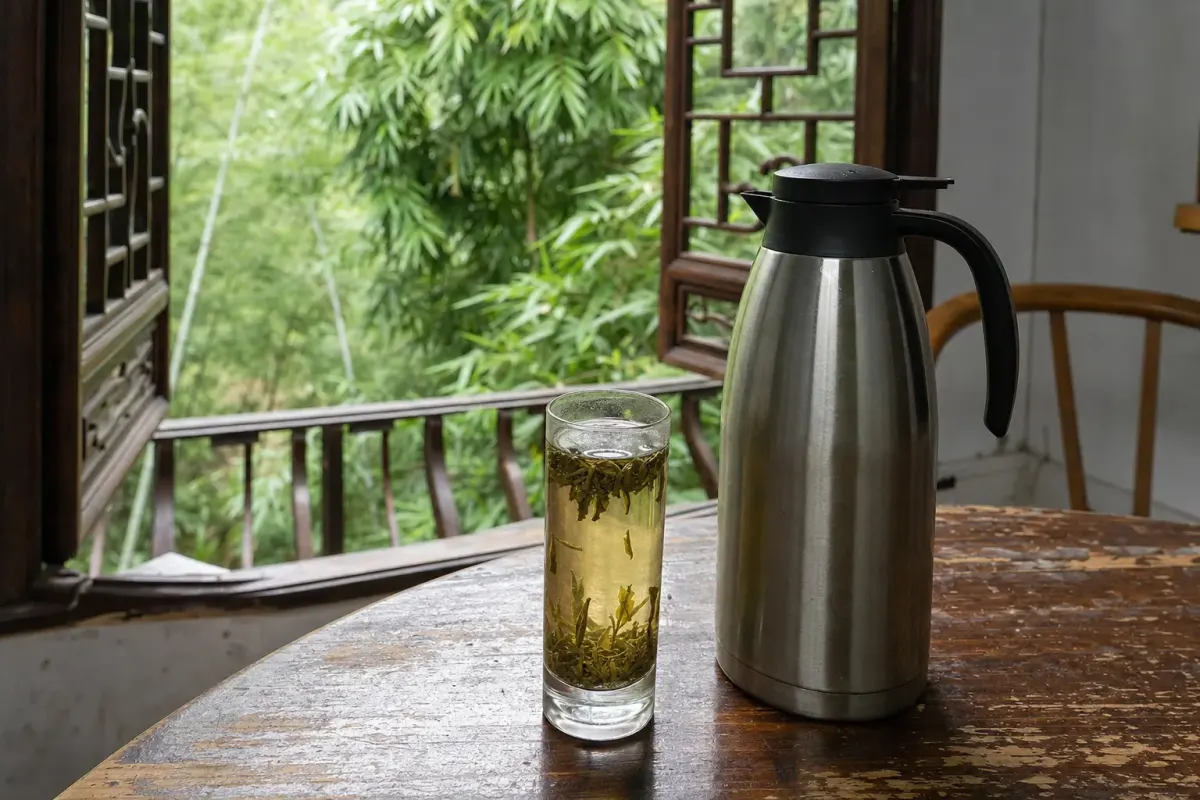
Expect a tall glass rather than a pot, the leaf left sitting in the water, and somebody refilling it from a thermos all afternoon. You do not order a second one, and nothing goes in it.
Day visitors have a harder time, since the guesthouse route is closed to them. Yucun is the place to try, and where a day trip lands anyway: the square, the market, the restaurants, the scenic area gateway. It is the likeliest spot on this mountain to find tea sold and poured, and it is a matter of walking the square rather than following an address. The villages guide covers what each village has.
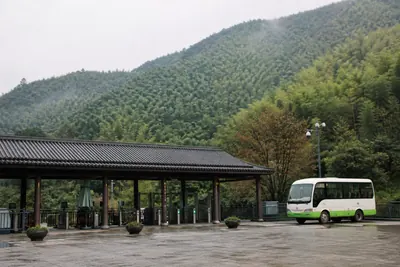
Timing is the other constraint. Private vehicles cannot enter the scenic area, and the three transfer centres run 08:00 to 18:00. The villages have no evening economy either. So tea outdoors is a daytime thing, and after dark it happens in your guesthouse or not at all.
One warning. Booking platforms sell tea ceremonies and picking experiences all over China, and the Moganshan listings of that kind are thinly run at best. Book them through your property on arrival rather than prepaying from home.
Guesthouse numbers, ownership share, transfer centre hours and the absence of an evening economy, BeyondBorder Group Ltd primary research, 1 to 5 August 2026.
Buying it without being fleeced
Say you liked it enough to take some home. Two counters can sell this tea at very different prices, and the difference is usually the pick. Grades run downward from the bud.
- All bud, no leaf. The top pick, slowest to harvest, most expensive
- One bud, one leaf
- One bud, two leaves
- Below that you are into leaf, a different product at a different price
A tourist-grade box is easy to spot once somebody points it out. Big carton, heavy packaging, a small net weight printed on the back, no harvest year, no producer name, sold at a gate or a gift counter. The box is most of what you are paying for, which holds at every Chinese scenic site.
| Check | What a good answer looks like |
|---|---|
| Net weight | Printed in grams on the pack, so you can divide the price by it |
| Harvest year | Stated on the pack. Spring tea is dated |
| Packaging | Sealed foil, not a loose scoop into a paper bag |
| Price basis | Quoted per 50 g or per jin (斤, 500 g), never per box |
Prices for a small yellow tea swing with the year, the grade and the counter, so the useful protection is not a number to compare against. It is the question: per gram and per year, not per box. Ask it that way and you get a different answer, and usually a better price.
If the mountain itself is your open question, start with what and where Moganshan is, and things to do has the rest of the list.
Tea processing and grading, and the Qingming calendar, are standard reference rather than our own research. Room rates, temperature means and holiday occupancy were last checked on 5 August 2026.
Last checked 24 September 2026 by Liyan Ye. Prices, timetables and entry rules on this mountain move without notice, so confirm anything you are booking around.
Photographs on this site are representative illustrations, not documentary images of the specific building, property or service described.