Mark Kitto took a lease on this mountain in 2003. He was British, a former magazine publisher, and he later wrote a memoir called China Cuckoo. What he opened was Moganshan Lodge, and the line that has followed him ever since is that he was the first foreigner to live up here in modern times.
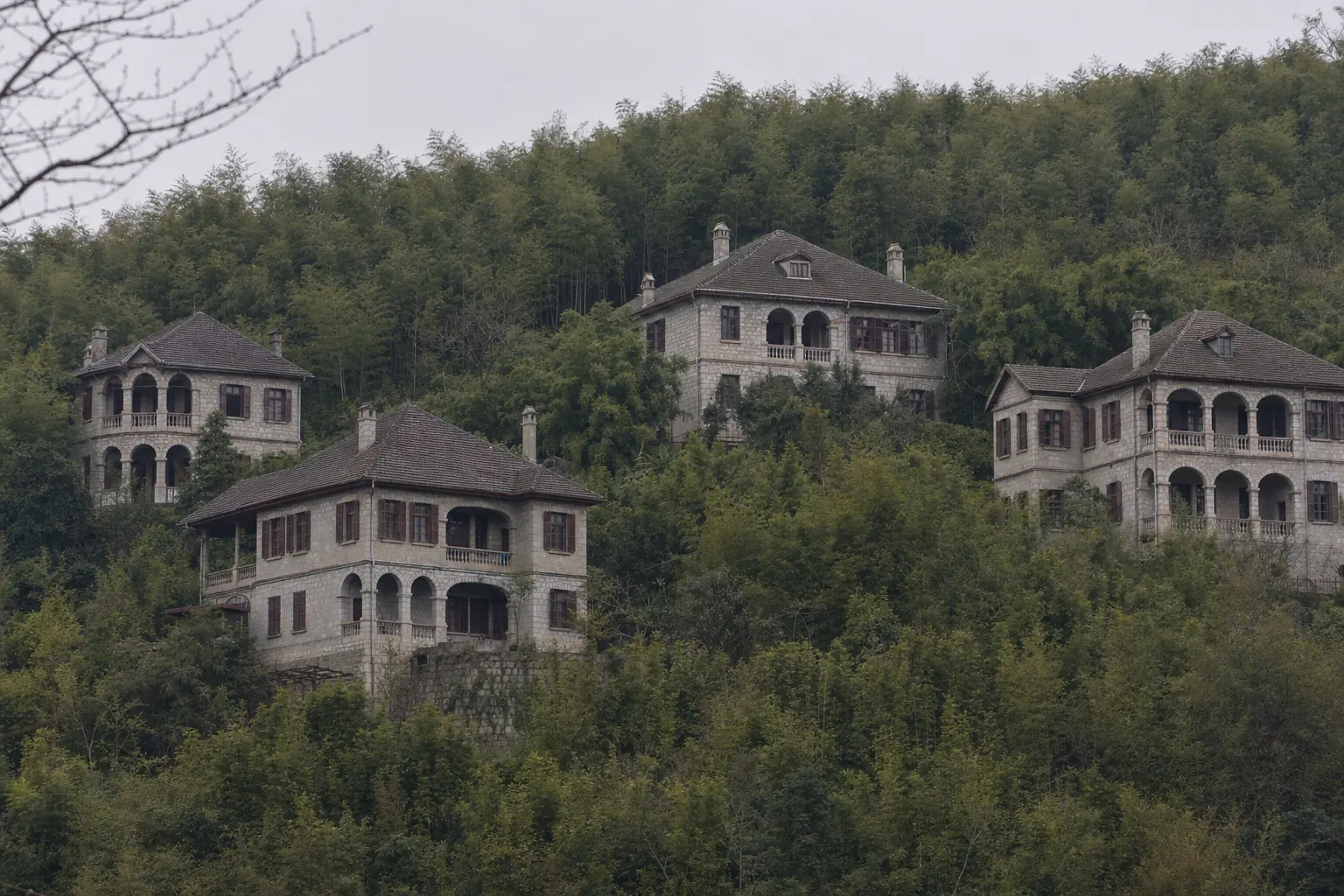
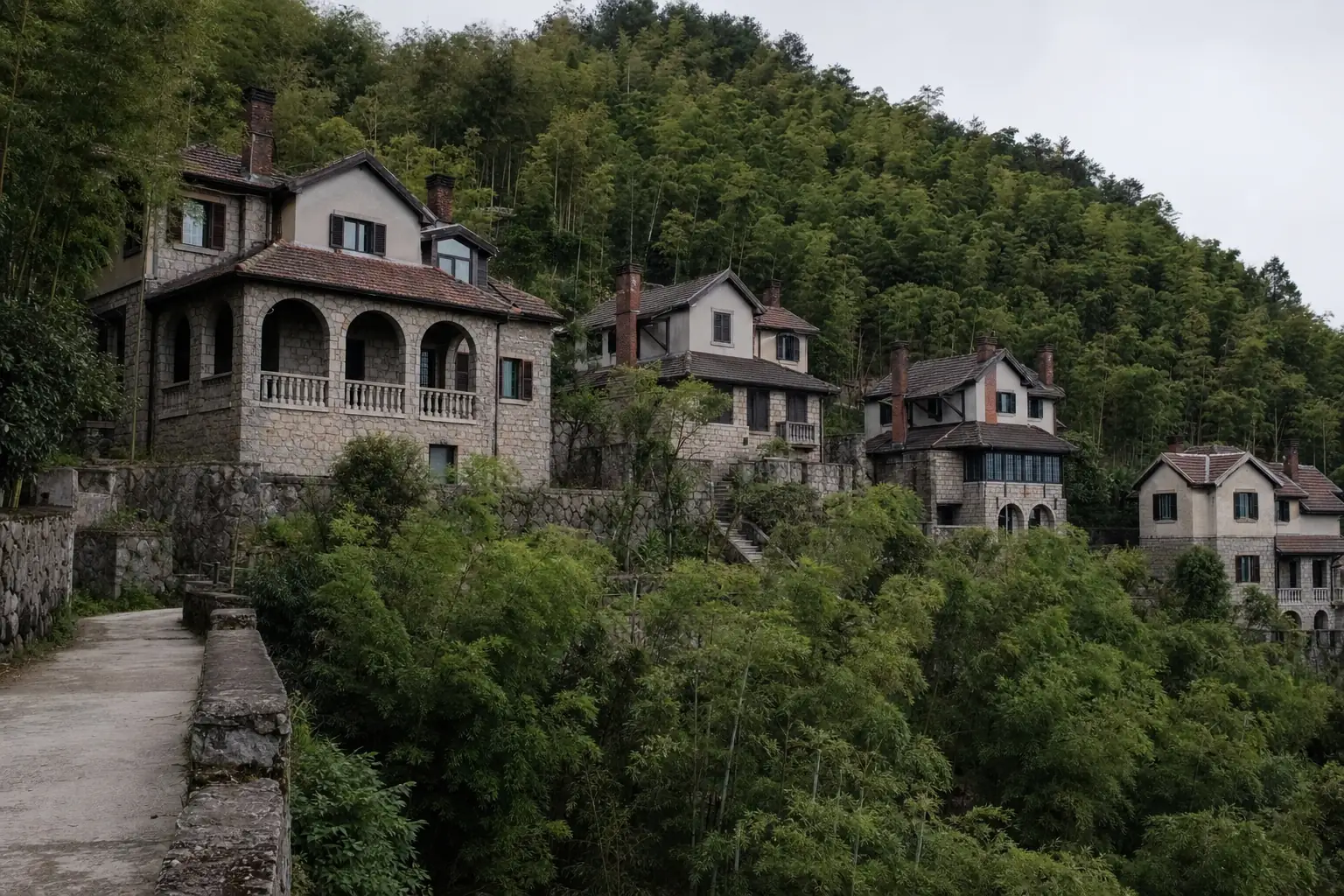
The mountain he moved onto had been foreign before. From the 1890s, Moganshan (Deqing County, in Huzhou prefecture, Zhejiang Province, about 60 km north of Hangzhou) ran as a summer town for American and British families. They left in 1949. Their stone houses stayed.
So the lease was the start of a second opening, and it ran the opposite way from the first. The first brought foreigners up here for foreigners. The second brought foreigners up here to sell rooms to Chinese guests. By September 2025 the mountain held about a thousand guesthouses, four in five of them owned by private individuals. The trade is still filed under a word that means foreigners.
Eight years, three firsts
| Year | Who | What opened | What it established |
|---|---|---|---|
| 2003 | Mark Kitto, British | Moganshan Lodge, on a lease | A foreigner living on the mountain again |
| 2007 | Grant Horsfield, South African | naked Xiang, also called naked Home Village, at Sanjiuwu | The first yangjiale (洋家乐), a foreigner’s farmstay |
| 2011 | The same group | naked Stables Private Reserve | The first LEED Platinum certified resort in mainland China |
The 2003, 2007 and 2011 openings and the yangjiale label, BeyondBorder Group Ltd primary research, 1 to 5 August 2026.
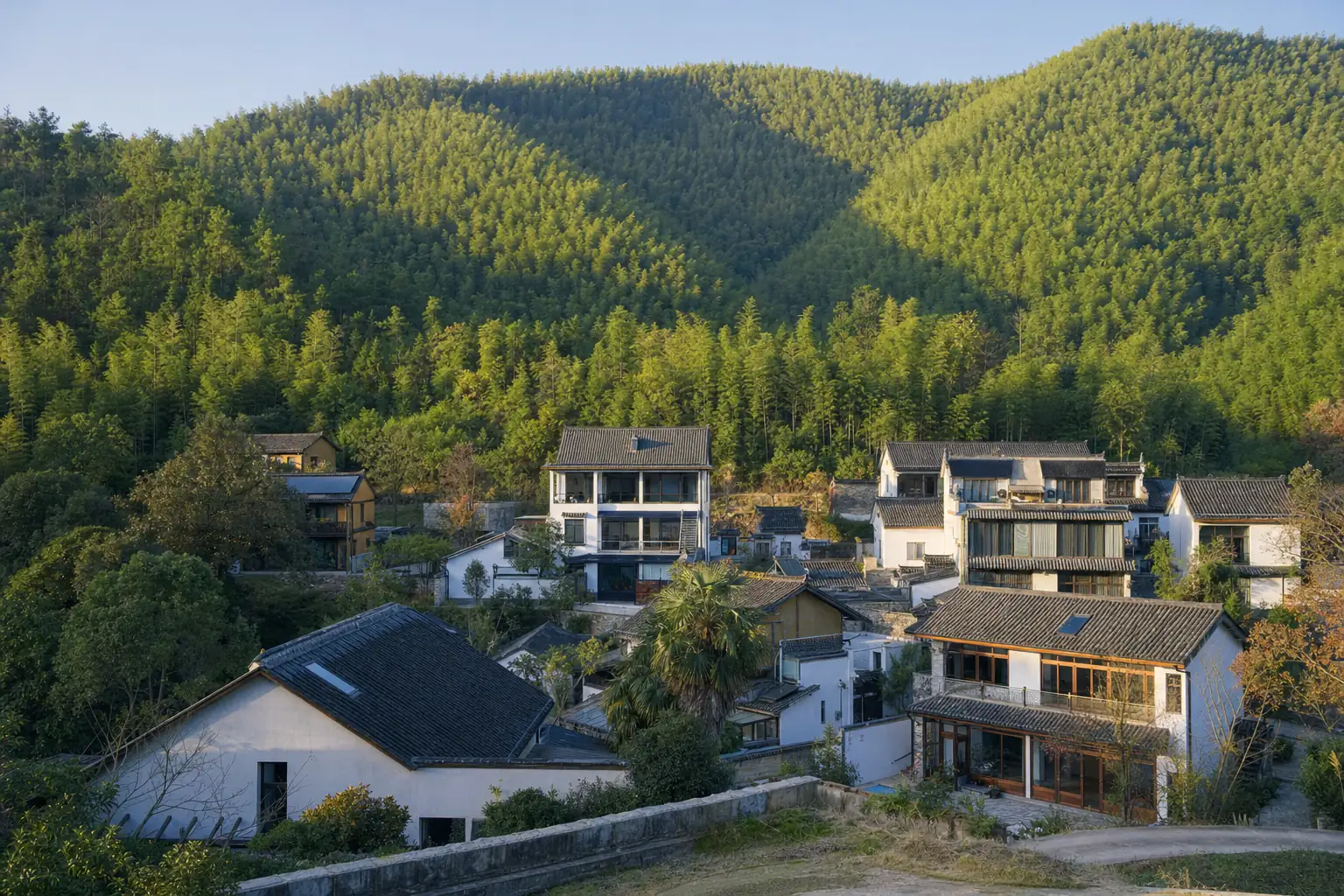
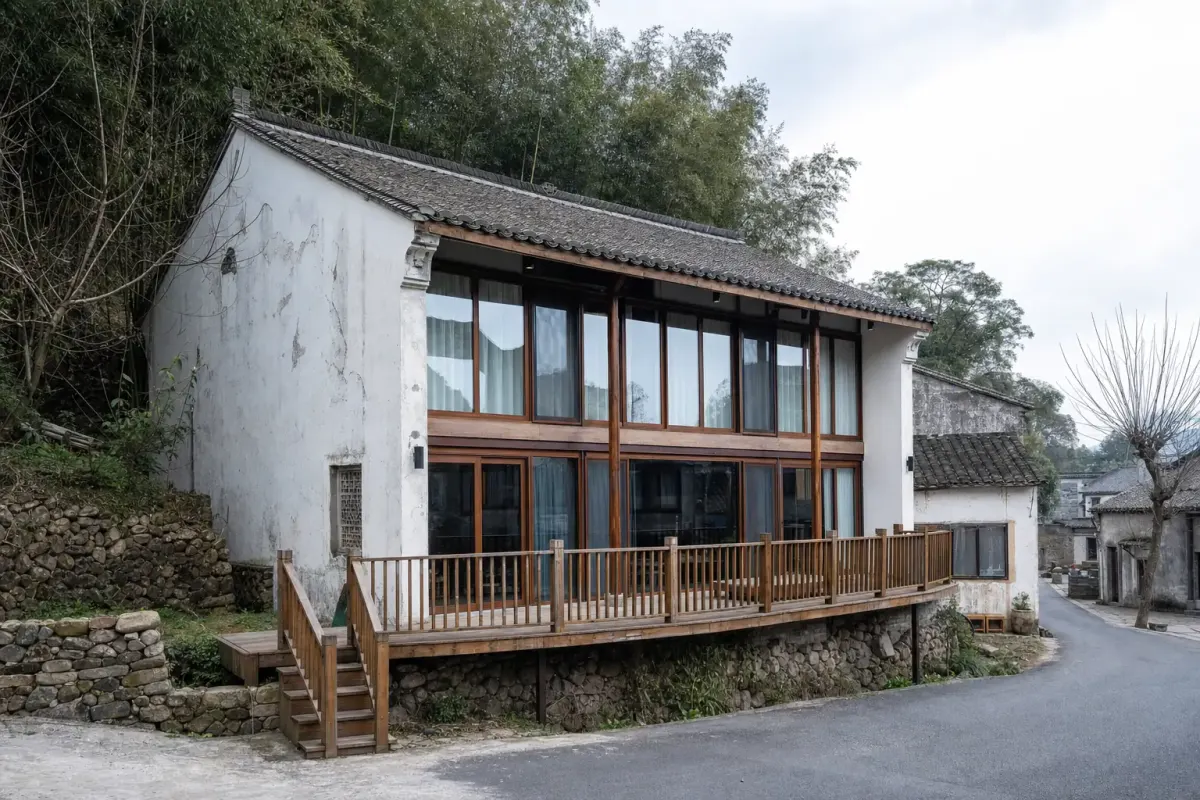
Kitto came up on his own account. Horsfield arrived at Sanjiuwu four years later with something a village can copy: ordinary houses turned into paid rooms. The local word came out of that. Yangjiale means a farmstay in foreign hands, and it was coined for a thing, not a person.
Four years after that, naked Stables put a certificate on the model and a price band under it. It runs about 121 keys, and naked Retreats, the group Horsfield built around it, later took naked Castle into a villa a Scottish physician-missionary named Maitland put up in 1910. In that one case, the second opening moved into the first opening’s buildings literally.
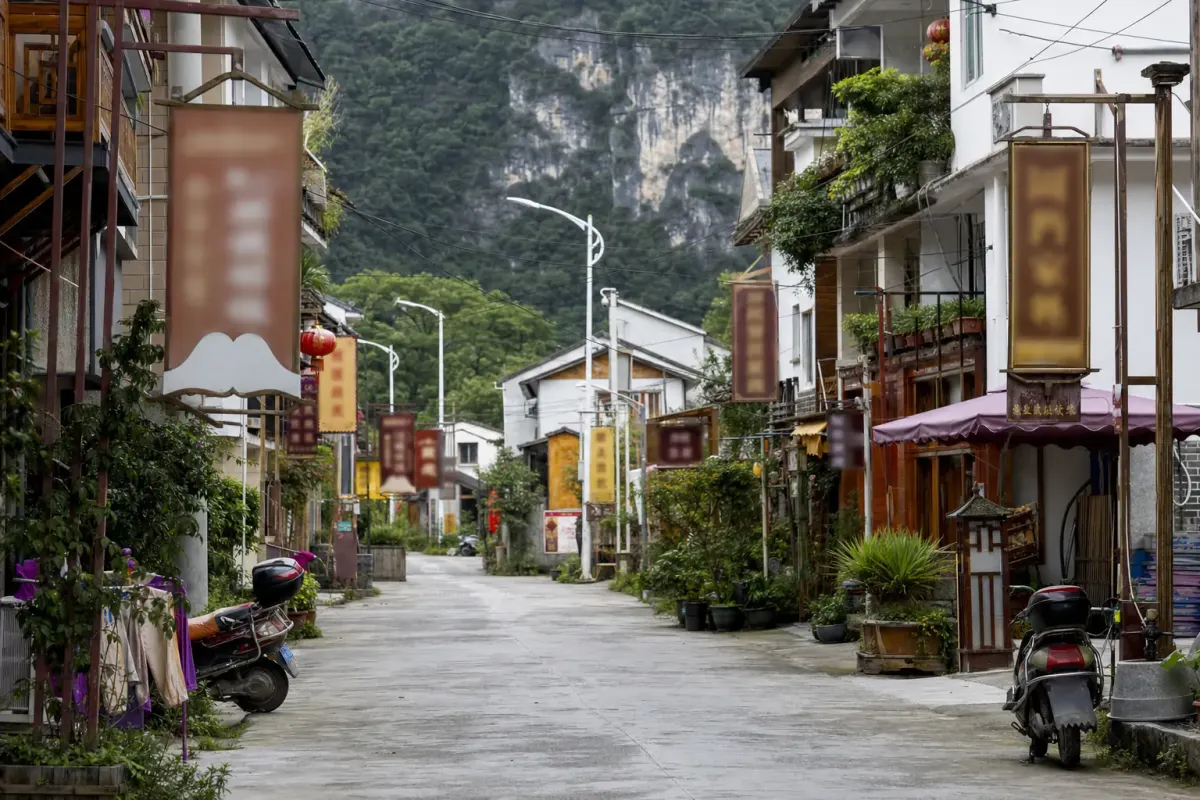
Sanjiuwu itself is small, and most visitors drive through without noticing that anything started there. The villages page sets it beside the others.
The category outgrew the people it was named for
The count, year by year, as far as it can be followed.
| Year | Guesthouses | What that year adds |
|---|---|---|
| 2002 | 1 | Five years before the word yangjiale existed |
| 2013 | 70 | Six years after Sanjiuwu, still a village-scale trade |
| 2014 | about 200 | The count roughly triples in a year |
| 2015 | 400+ | And doubles again |
| 2016 | 550+ | |
| 2018 | 700+ | About 10,000 beds, which is also the cap set in late 2017 |
| 2024 | 800+ | The climb flattens, though both figures are floors |
| March 2025 | 850+ | |
| September 2025 | about 1,000 | The first count given as a round thousand |
Guesthouse counts from 2002 to September 2025, BeyondBorder Group Ltd primary research, 1 to 5 August 2026.
Read that table with a warning on it. Four of the counts are floors, written as 700+ or 850+, so the gaps between them cannot be subtracted into a rate, and no method note is attached to any of them. The jump to about 1,000 in 2025 may say more about who was counting than about who was building.
Foreign operators followed Horsfield: owners from France, the UK, Belgium, Denmark, the Netherlands, South Korea and Russia. Investors in Moganshan guesthouses now come from 18 countries.
The volume sits somewhere else. About 80 percent of properties are individually owned. Xiantan alone holds around 135 in a village of fewer than 2,000 people, and roughly 90 percent of those are run by locals. The general Chinese word for the format is minsu (民宿), a small guesthouse the owner usually lives in or near, and what a minsu is covers the practical differences for a guest.
Nobody publishes a count of how many properties here are foreign-owned or foreign-run today, and the 18-country figure covers investors rather than operators. What the ownership share does show is that four houses in five belong to one household, which is not a foreign-dominated trade by any reading.
Yangjiale names a whole category after the people who opened the first one, and the naming stuck while the ownership moved out from under it. A Moganshan minsu boom of about a thousand properties is a domestic business wearing a foreign label.
Why it took hold when it did
A count tells you that something happened and nothing about why.
Part of it is easy. The selling point has not changed since the 1890s. Missionaries came up here because Shanghai was unbearable in July, and July is still the core season. The supporting numbers have not moved either.
- Mean temperature in July and August: 24.1 °C, six to seven degrees cooler than Shanghai and Hangzhou
- Shanghai: 200 to 240 km, two to three hours by road
- Hangzhou: about 60 km, about an hour and a half
Nobody had to invent the demand. It was already sitting in two cities down the road, as it had been in the 1890s.
What 2007 added was a way to sell an old village house to a guest who would not otherwise have slept in one. Solving that is a design job more than a hospitality one, and once it was solved the answer was visible from the road to anybody who owned a house.
No policy paper or land-use decision is dated to the years the count climbed fastest, which makes it hard to argue the state pushed this rather than allowed it.
The one dated intervention on record cuts against the growth. In late 2017 the local government capped bed capacity at about 10,000 and tightened approvals, which is a brake, not an accelerator. The stock went past it anyway.
Then it worked too well
Growth that fast has a bill attached, and it came due in the 2020s. Start with the size. Deqing’s minsu sector takes more than 7 million guests a year and turns over more than RMB 3 billion.
Deqing minsu guest volume and sector revenue, BeyondBorder Group Ltd primary research, 1 to 5 August 2026.
That is the good news. Now the other column.
| Measure | Then | Now |
|---|---|---|
| Occupancy | about 70 percent before 2021 | about 55 percent in 2024 |
| High-end occupancy | not held for the earlier period | 68 percent in 2025 |
| Payback on an investment | 3 to 5 years | 5 to 8 years |
| Labor as a share of revenue | not held for the earlier period | 30 to 40 percent |
Occupancy, payback periods and labor costs, BeyondBorder Group Ltd primary research, 1 to 5 August 2026.
Fifteen points of occupancy lands hardest on the four in five owners who are private individuals, because a private owner has one property and nothing else to carry it. Payback stretching from a 3 to 5 year range out to 5 to 8 does the same damage more slowly. Labor takes 30 to 40 percent of revenue either way.
An annual figure also hides how it arrives. The weekday and weekend split here is severe, holidays spike hard, and Mondays are notably quiet. Nobody on 55 percent a year is half full every night.
The market has split more than it has shrunk. Rooms above RMB 1,500 grew 42 percent year on year. In March 2025, Trip.com took 67.04 percent of Dalezhiye, a group of 28 properties and 556 rooms at an average rate of about RMB 1,300. A booking platform buying an operator is not what the first yangjiale looked like.
Chinese reporting keeps returning to one more problem, and English-language coverage almost never picks it up. The villages have no evening economy. There is no night market and little food once the guesthouse kitchens close, which leaves a guest with nowhere to spend anything after dinner. Where to stay sets out what that means for a two-night trip.
What the second opening left
Set the two openings side by side and the second one comes off oddly light.
| The first opening | The second | |
|---|---|---|
| Ran | 1890s to 1949 | 2003 onward |
| Started by | American and British missionary families | A British lease-holder, then a South African developer |
| Guests | themselves and each other | Chinese city visitors |
| Left standing | about 250 stone villas | about 1,000 guesthouses |
| Left on paper | an association, a villa register, ownership counts for the 1920s and 1929 | almost nothing we can date |
Surviving historic villa count and the 1890s to 1949 settlement, BeyondBorder Group Ltd primary research, 1 to 5 August 2026.
The hill station walks through the villas. The bottom row is the problem.
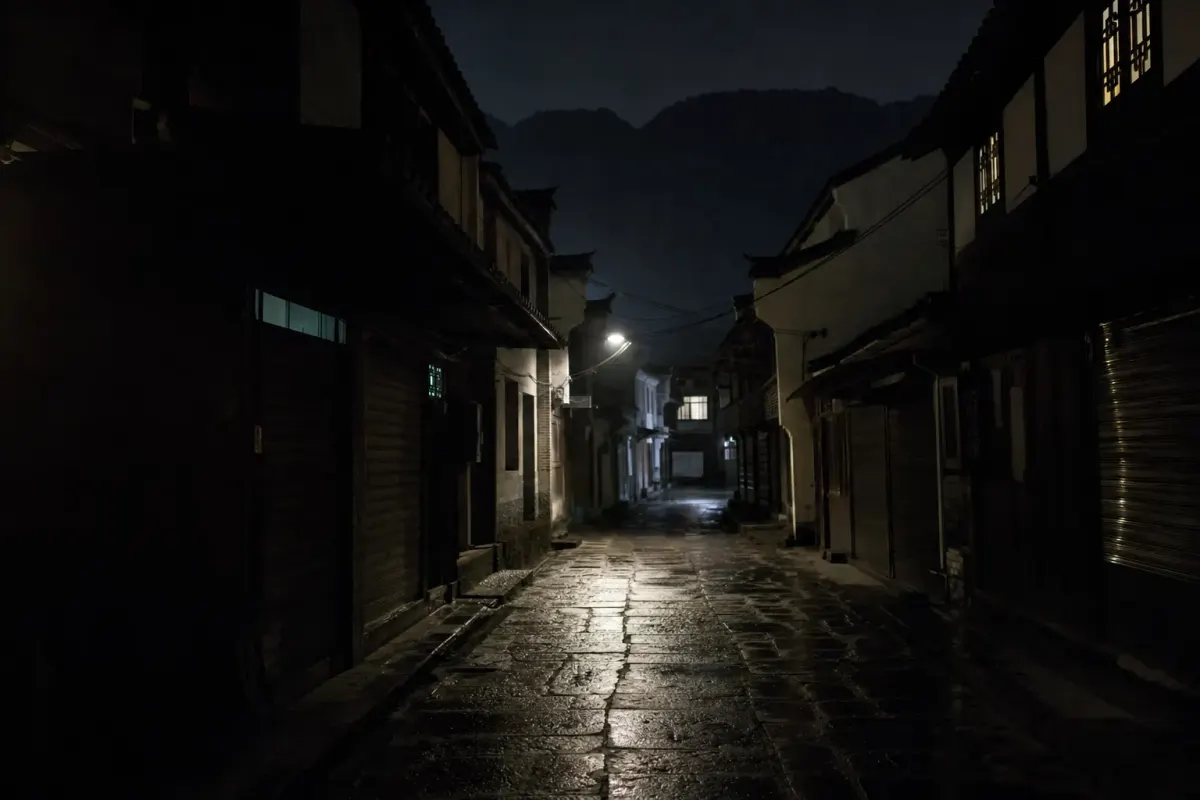
Nothing on record establishes whether Moganshan Lodge is still trading, or when it stopped if it did. Its old web address lapsed and now carries an unrelated gambling site, which is why no link to it appears anywhere on this site.
That is a record-keeping problem, not an ending. A summer community of about 300 foreign households in 1910 left paperwork a researcher can still argue with. A trade that began in 2003 has not left us a date for the closure of its first business. Twenty-three years should not be long enough for a record to vanish. This one has.
The next arrival is announced and it is a chain. Four Seasons has given 2030 for a 90-key resort here, and the journal takes that up separately.
It will not be the thing the second opening was. Two foreigners put businesses into old buildings on a mountain that had been shut to outsiders for fifty years. What they worked out was cheap enough to copy. The people already living there copied it, and they kept the name they had given it.
Figures follow the fact base compiled 1 to 5 August 2026, last checked 7 August 2026. Guesthouse counts, occupancy and payback periods move.
Last checked 8 August 2026 by Cyril Drouin. Prices, timetables and entry rules on this mountain move without notice, so confirm anything you are booking around.
Photographs on this site are representative illustrations, not documentary images of the specific building, property or service described.