Moganshan sunrise does not fit a day visitor’s timetable. The sun comes up over the mountain at about 04:57 in mid June and 06:58 in mid January. The first coach up from the transfer centre (换乘中心) leaves at 08:00. Whatever the season, anyone who sleeps below the gate arrives one to three hours late.
The fix is old and unglamorous. Sleep inside the gate. This page sets out the clock, the rule behind it, what a bed up there buys and what it doesn’t, and why the sea of clouds (云海) in the photographs should never be the reason you book.
Moganshan (莫干山) is a bamboo mountain and former hill station in Deqing County (德清县), Huzhou (湖州), Zhejiang Province, about 60 km north of Hangzhou and 200 to 240 km from Shanghai. The sunrise viewpoint, Xuguang terrace (旭光台), stands inside the ticketed scenic area at the top. Almost every guesthouse sits below it. The scenic area page draws the line.
The clock: Moganshan sunrise against the first coach
The table gives the middle of each month. First light is civil twilight, when the sky is bright enough to see a path without a torch.
| Mid month | First light | Sunrise | Sunset | Sunrise to the 08:00 coach |
|---|---|---|---|---|
| January | 06:32 | 06:58 | 17:20 | 1 hr 2 min |
| February | 06:17 | 06:42 | 17:47 | 1 hr 18 min |
| March | 05:48 | 06:12 | 18:08 | 1 hr 48 min |
| April | 05:09 | 05:34 | 18:27 | 2 hr 26 min |
| May | 04:40 | 05:06 | 18:47 | 2 hr 54 min |
| June | 04:30 | 04:57 | 19:04 | 3 hr 3 min |
| July | 04:41 | 05:08 | 19:05 | 2 hr 52 min |
| August | 05:01 | 05:27 | 18:44 | 2 hr 33 min |
| September | 05:20 | 05:44 | 18:08 | 2 hr 16 min |
| October | 05:38 | 06:02 | 17:30 | 1 hr 58 min |
| November | 06:01 | 06:26 | 17:04 | 1 hr 34 min |
| December | 06:24 | 06:50 | 17:01 | 1 hr 10 min |
We worked these out ourselves and checked them against a second, independent calculator. The two agreed to the minute. They assume a flat horizon, so where hills stand to the east the sun clears them a few minutes later. China keeps one time zone and no summer time, so nothing shifts in spring or autumn.
Sunrise, first light and sunset at 30.61° N, 119.87° E, China Standard Time, BeyondBorder Group Ltd calculation from the NOAA solar equations, 6 November 2026, cross checked against the sunrise-sunset.org calculator.
First coach up 08:00 and last coach down 17:00 at the transfer centre, Huzhou Bendibao (湖州本地宝), 21 September 2023, tier 3. http://huzhou.bendibao.com/tour/2021123/3560.shtm
Winter can be worse than the table suggests. In December 2025 the board at the Houwu (后坞) transfer point gave 08:30 for the first coach, an hour and 40 minutes after mid December sunrise.
Coaches at Houwu run 08:30 to 17:00, last up 16:30, last down 17:00, Tide News (潮新闻), 4 December 2025, tier 2. https://tidenews.com.cn/news.html?id=3315585
The gap is widest in June. Summer is when people come for the cool air (the historic season and still the main one), and it is when the coach timetable does most to keep them from the sunrise.
Why the gate decides it
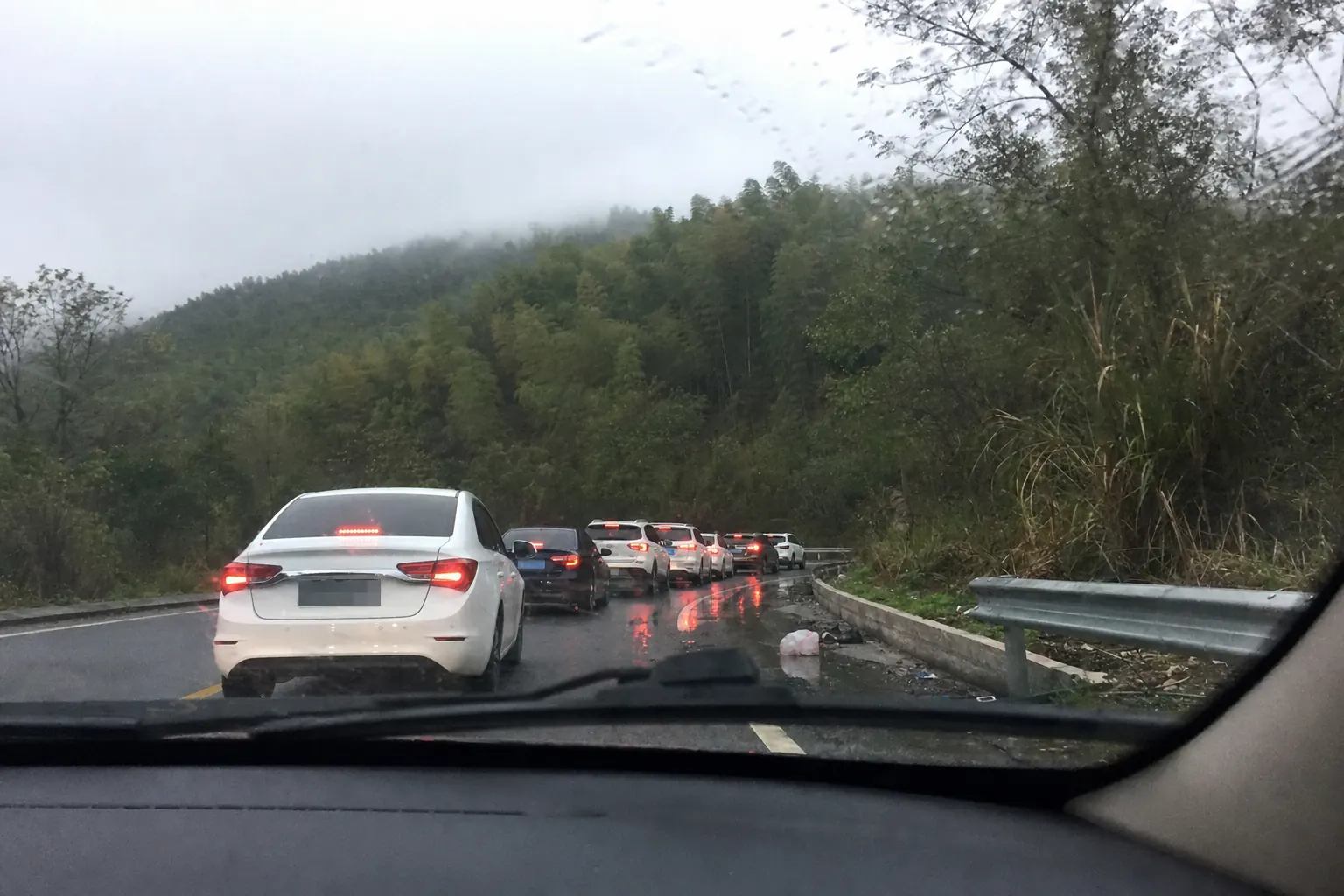
Since 30 November 2018 private cars may not drive into the scenic area between 08:00 and 17:30. Visitors who are not staying inside change to the coach at a transfer centre. The same report has staff saying the road is free to come and go before 08:00 and after 17:30.
Private cars change to the coach between 08:00 and 17:30 since 30 November 2018, free entry before 08:00 and after 17:30, Tide News (潮新闻), 4 December 2025, tier 2. https://tidenews.com.cn/news.html?id=3315585
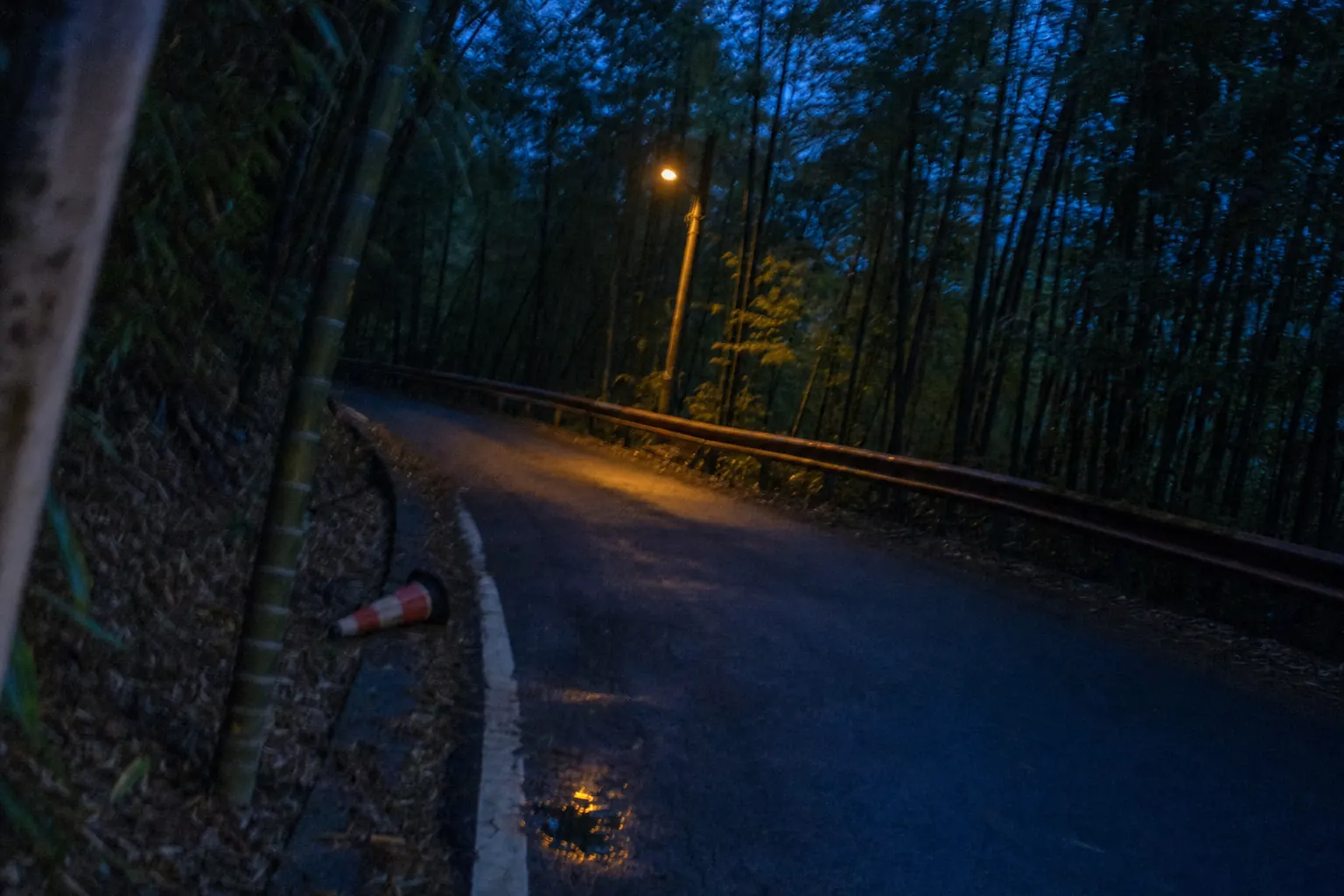
So the road at dawn is not shut. That is easy to miss, and it still doesn’t rescue a day visitor. You need a car at the foot of the mountain before first light, 04:30 in June, a driver willing to climb the hairpins in the dark and come back for you, and an answer to a question no dated source we found settles: whether the gate sells or checks tickets at that hour. Getting a car back down shows why the return is the hard half.
A bed inside the line removes all of it.
What a bed inside the gate buys
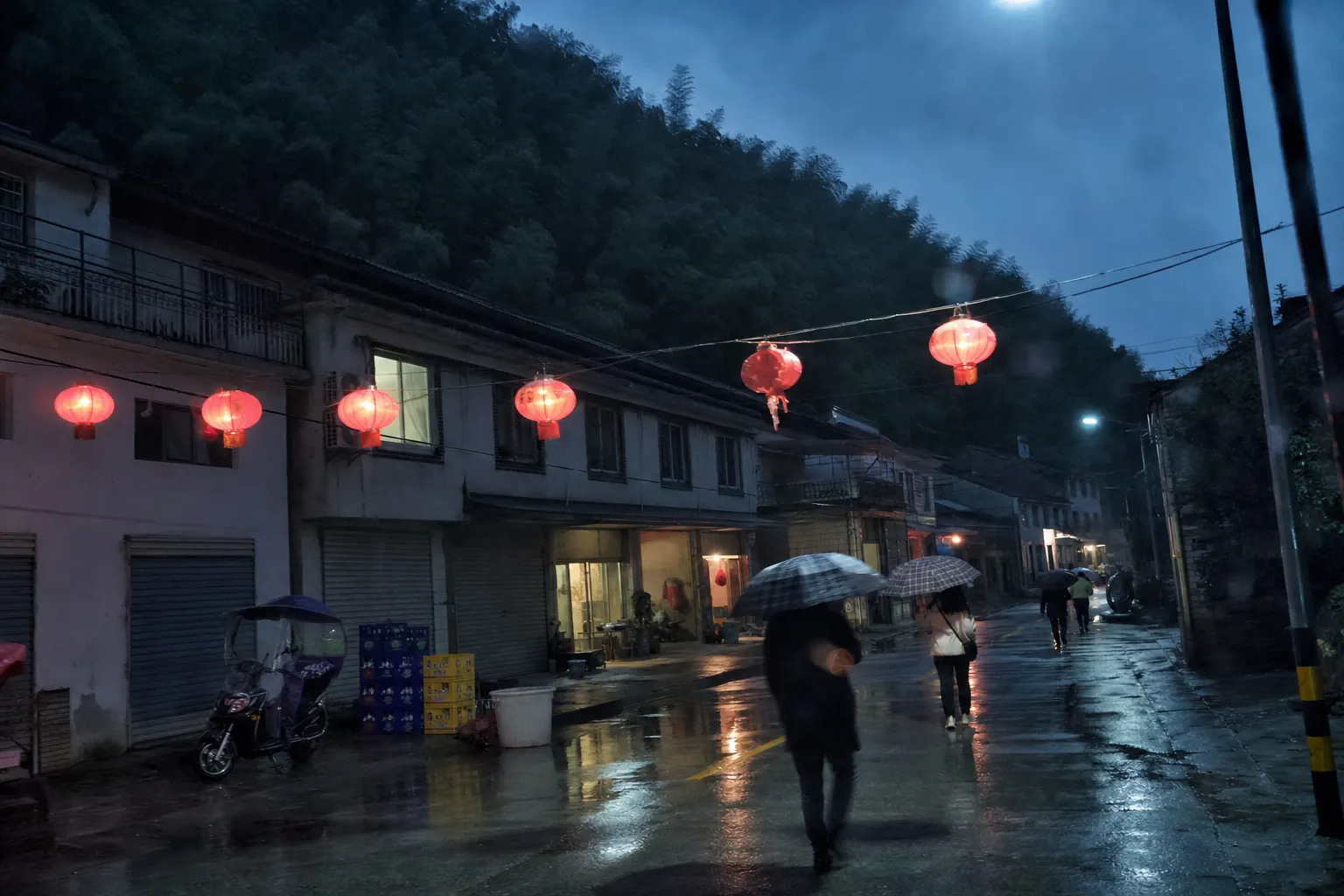
Yinshan Street (荫山街), where the coach sets visitors down, is the old hill station’s high street, at about 600 m. In summer 2025 the scenic area’s night programme ran from a stage there out to five featured hotels around it. Those hotels, and the villa rooms scattered over the top, are the beds inside the line.
Yinshan Street at 600 m, and the night programme reaching out to five featured hotels, Deqing News (德清新闻网), reporter 陈明月, 15 July 2025, tier 2. https://dqnews.zjol.com.cn/dqnews/system/2025/07/15/035006275.shtml
A room up there buys three things. You walk to the terrace in the dark, with no coach and no car. You see the hill station after the day visitors have gone down. And you can drive in at any hour, if the property registers your car: the booking plus a parking reservation (停车预约), in the 2025 report.
Guests booked inside may drive in at any time with the order and a parking reservation, Tide News (潮新闻), 4 December 2025, tier 2. https://tidenews.com.cn/news.html?id=3315585
It doesn’t buy everything. It isn’t the ticket: tickets and entry has what the gate costs and why it is a separate transaction. Nor is it a certain car pass. The same report quotes a visitor who heard from a friend that guest passes come in a fixed quota, used up on two fully booked days. Second hand, but in print. And it isn’t a view. Cloud decides that.
A listing whose title says “inside the scenic area” is the seller’s wording, not a map. Ask the property in writing, before you pay.
| Ask the property | Why |
|---|---|
| Which side of the scenic area line is the room on? | Only a room inside puts you on foot at the terrace |
| Can you register my car, and is there a quota? | The pass, not the booking, gets a car past the barrier |
| How long is the walk to Xuguang terrace? | No walking time is published in a source we could use |
| Does anyone check tickets at the gate before 08:00? | Nobody has written it down |
Xuguang terrace and the other east facing spots
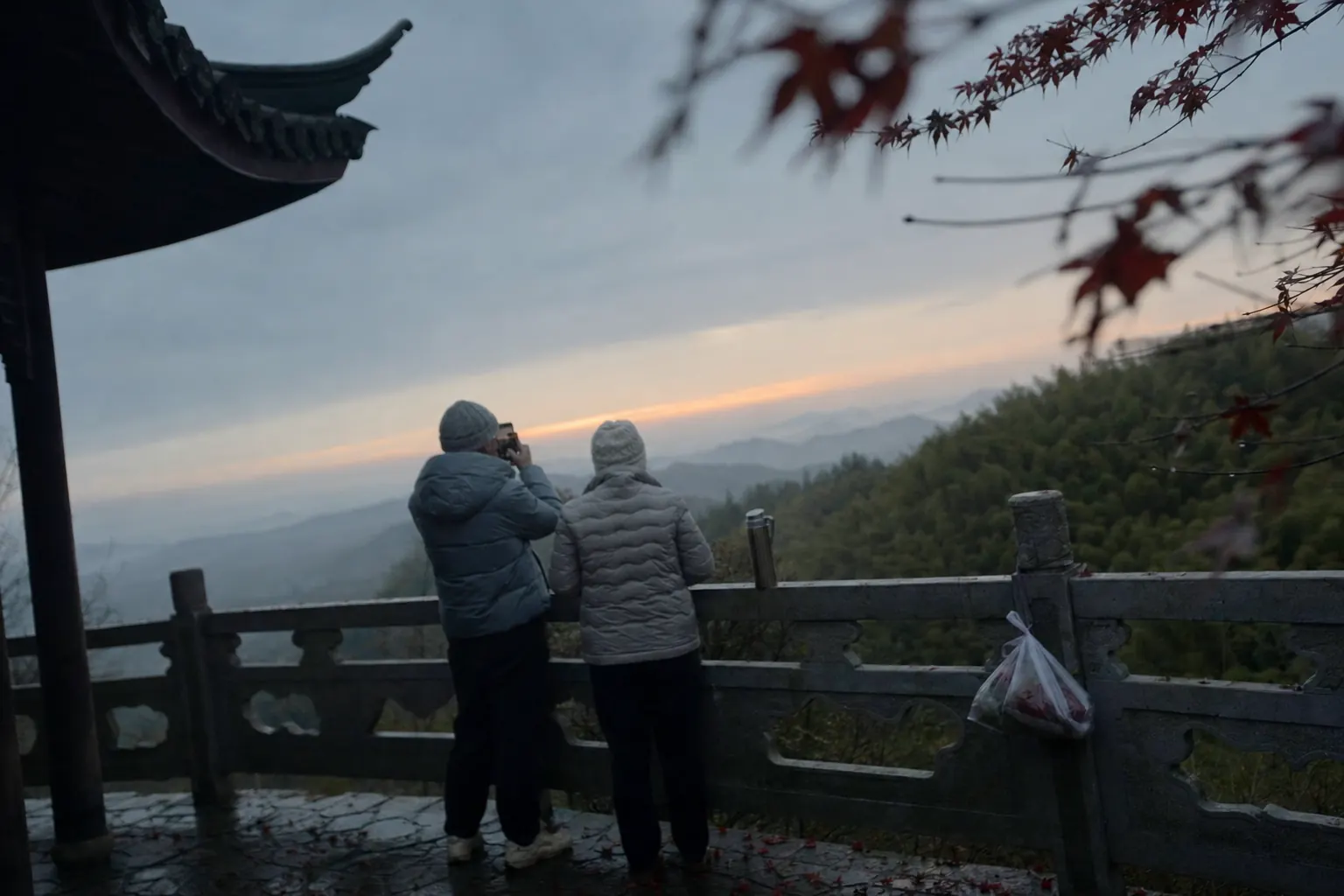
The terrace is a raised platform with pavilions on a summit. The Chinese press was calling it the mountain’s best sunrise point by 2014.
Xuguang terrace stands on a summit with pavilions and is the best point on Moganshan to watch the sunrise, People’s Daily Overseas Edition (人民日报海外版), 23 May 2014, page 15, tier 2. http://paper.people.com.cn/rmrbhwb/html/2014-05/23/content_1431926.htm
It isn’t the only one. A summer guide that the Shanghai government’s publicity account put out in 2024 named four: the terrace; the big terrace of the Queen’s Hotel (皇后饭店); the first floor terrace at Moganshan Shanzhuang (莫干山庄), which the Chinese text calls the second floor; and Guaishijiao (怪石角), a rock outcrop. It described the way up as a summer night climb from Yinshan Street on the ring path (环山步道), which keeps walkers apart from cars.
Four sunrise points and the night walk from Yinshan Street, Shanghai Release (上海发布) on People’s Daily Online Shanghai (人民网上海频道), 26 August 2024, tier 4, as promoted. http://sh.people.com.cn/n2/2024/0826/c134768-40956467.html
Take that as a tip, not a route card. Nobody from this site has walked it. First light comes 24 to 27 minutes before sunrise in every month of the table, so be on the path by first light at the latest, and earlier if you want the colour before the sun.
In November the terrace does double duty. The 2024 red maple festival made it one of the check in points, and mid November sunrise, at about 06:26, is late enough to reach without an alarm in the small hours. The red leaves guide has the trees.
Xuguang terrace among the check in points of the second red maple festival, opened 12 November 2024, Deqing News (德清新闻网), reporter 陈明月, 13 November 2024, tier 2. https://dqnews.zjol.com.cn/dqnews/system/2024/11/13/034801734.shtml
The Moganshan cloud sea: a bonus, never the booking
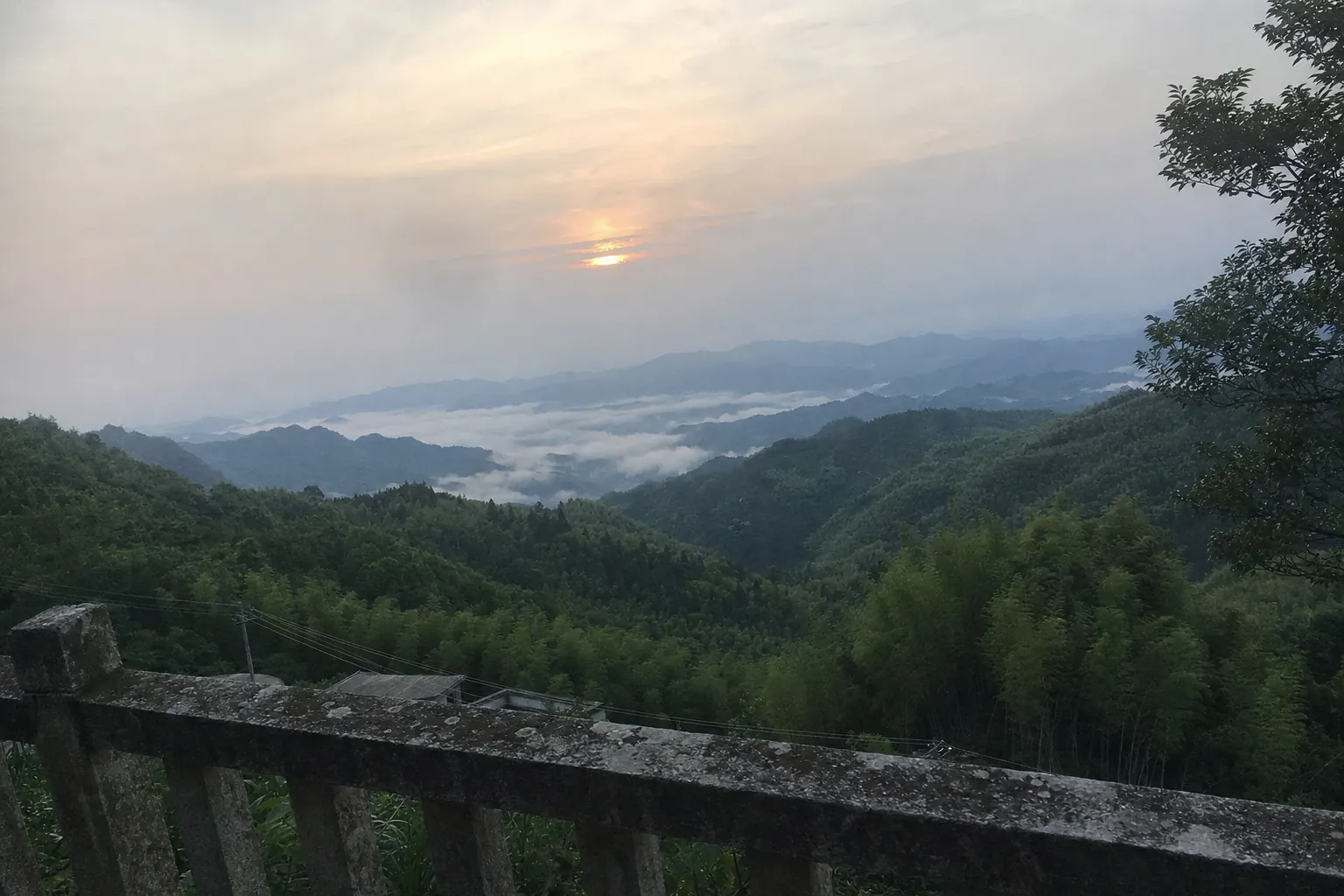
The photographs are real. On the morning of 21 June 2021, after rain cleared overnight, a photographer for Zhejiang Online caught the sun coming up over a sea of clouds on Moganshan.
Sunrise over a sea of clouds on the morning of 21 June 2021, after rain gave way to clear sky, Zhejiang Online (浙江在线), photograph by 谢尚国, 21 June 2021, tier 2. https://zjnews.zjol.com.cn/202106/t20210621_22702495.shtml
The other dated records we found are on the winter page, under Cloud seas: do not book for one. They are May and June mornings too, one of them after showers. Nobody publishes a forecast for the mountain or a count of cloud sea mornings. The written record supports something weak: late spring and early summer, the morning after rain.
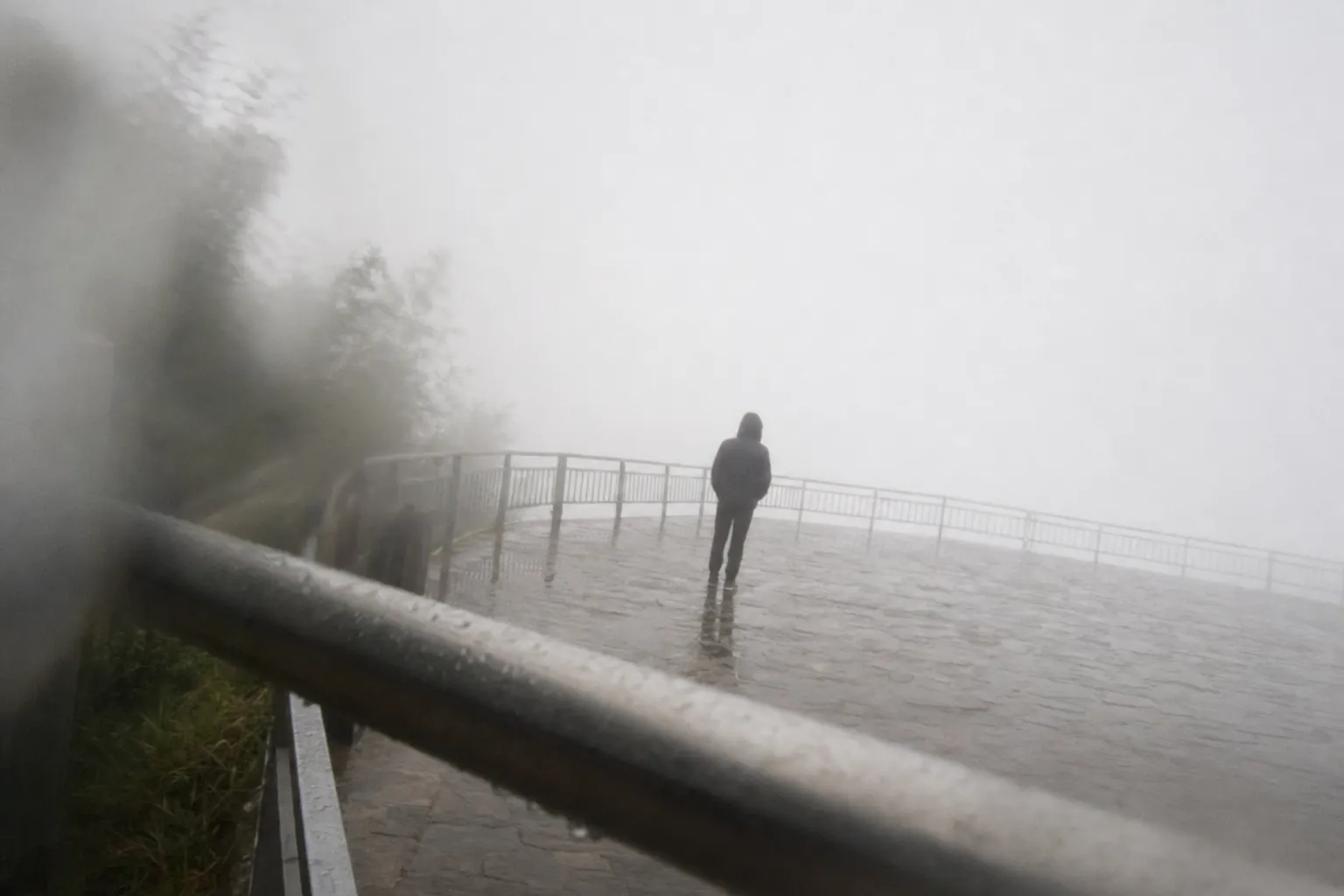
Here is the catch. The weather that makes a cloud sea also hides it. A wooded ridge at this height spends a lot of mornings inside the cloud rather than above it, and from inside you see grey. The weather page has the months. If the sunrise is the point of the trip, book two nights. That’s two mornings at the terrace instead of one.
Sunset is easier, but not by much
Sunset falls between 17:01 in mid December and 19:05 in mid July. The last coach down leaves at 17:00. In winter a day visitor chooses between the sunset and the coach. From April to August it comes an hour and a half to two hours after the last coach has gone.
After 17:30 the road opens again, so a car could in principle come for you. Finding one on the mountain after dark is another matter, and getting a car back down is about exactly that. A bed inside the gate settles this end of the day as well, which is the strongest case for it: one night gives you both the sunset and the sunrise.
Booking the bed
Most of the mountain’s beds are below the line, in Yucun (庾村), Xiantan (仙潭), Laoling (劳岭) and Houwu, and none of them puts you on the terrace at dawn without a long climb in the dark. Where to stay explains the kinds of room on the mountain. Trip.com’s list of hotels in the Moganshan resort zone covers both sides of the line, so put the four questions to the property before you pay. If you’d rather not queue at the gate, Trip.com also sells the scenic area ticket.
Last checked 7 November 2026 by Liyan Ye. Prices, timetables and entry rules on this mountain move without notice, so confirm anything you are booking around.
Photographs on this site are representative illustrations, not documentary images of the specific building, property or service described.