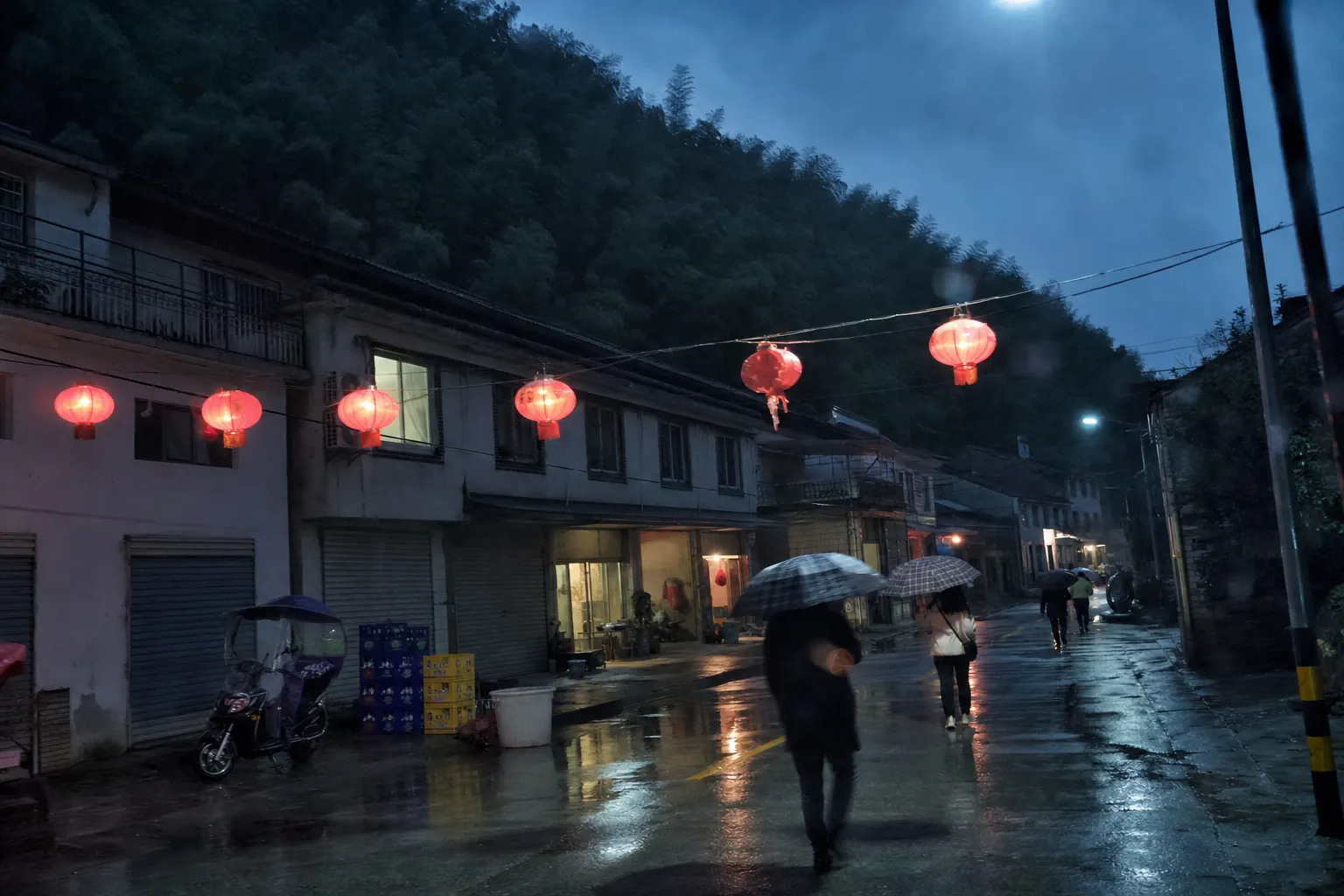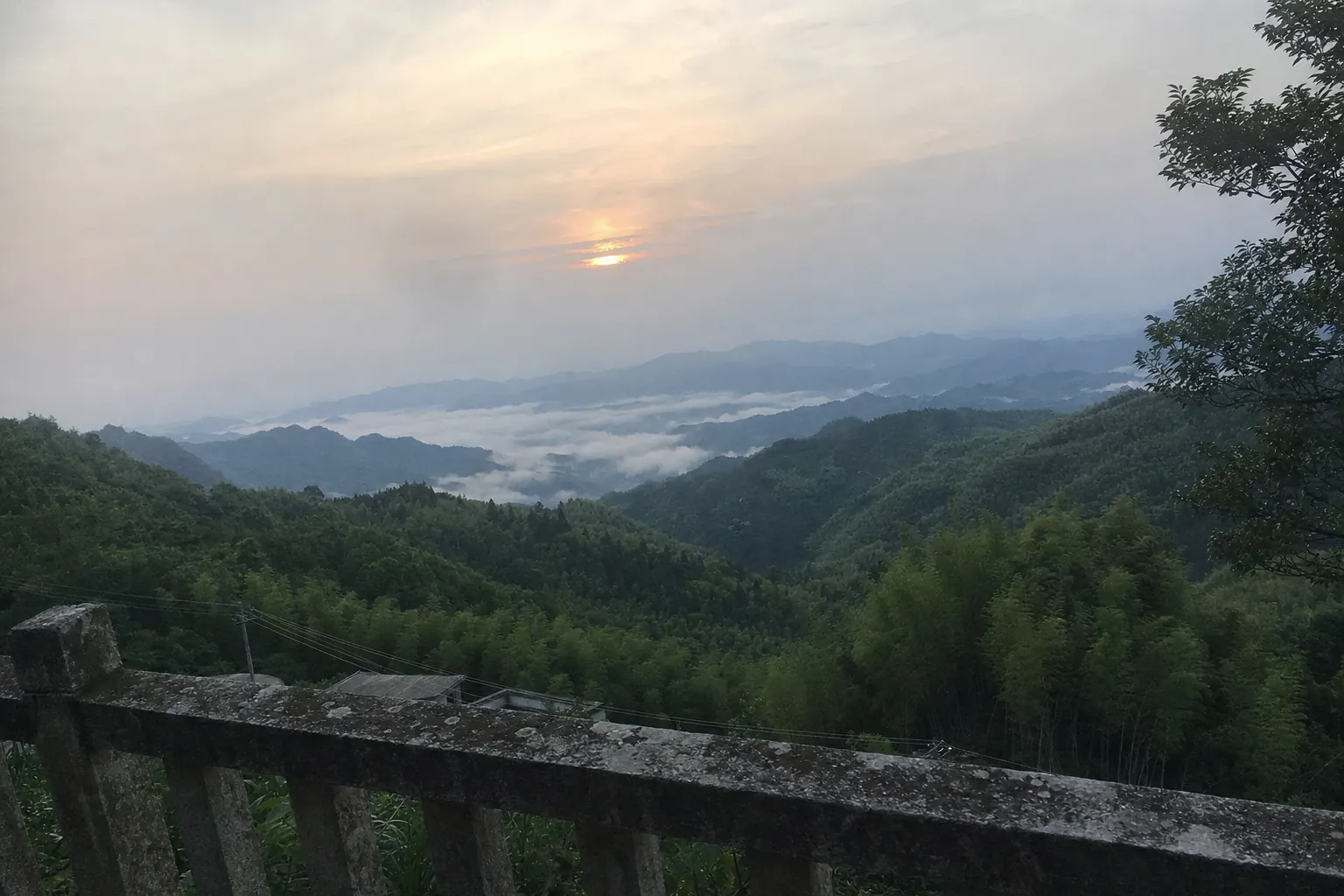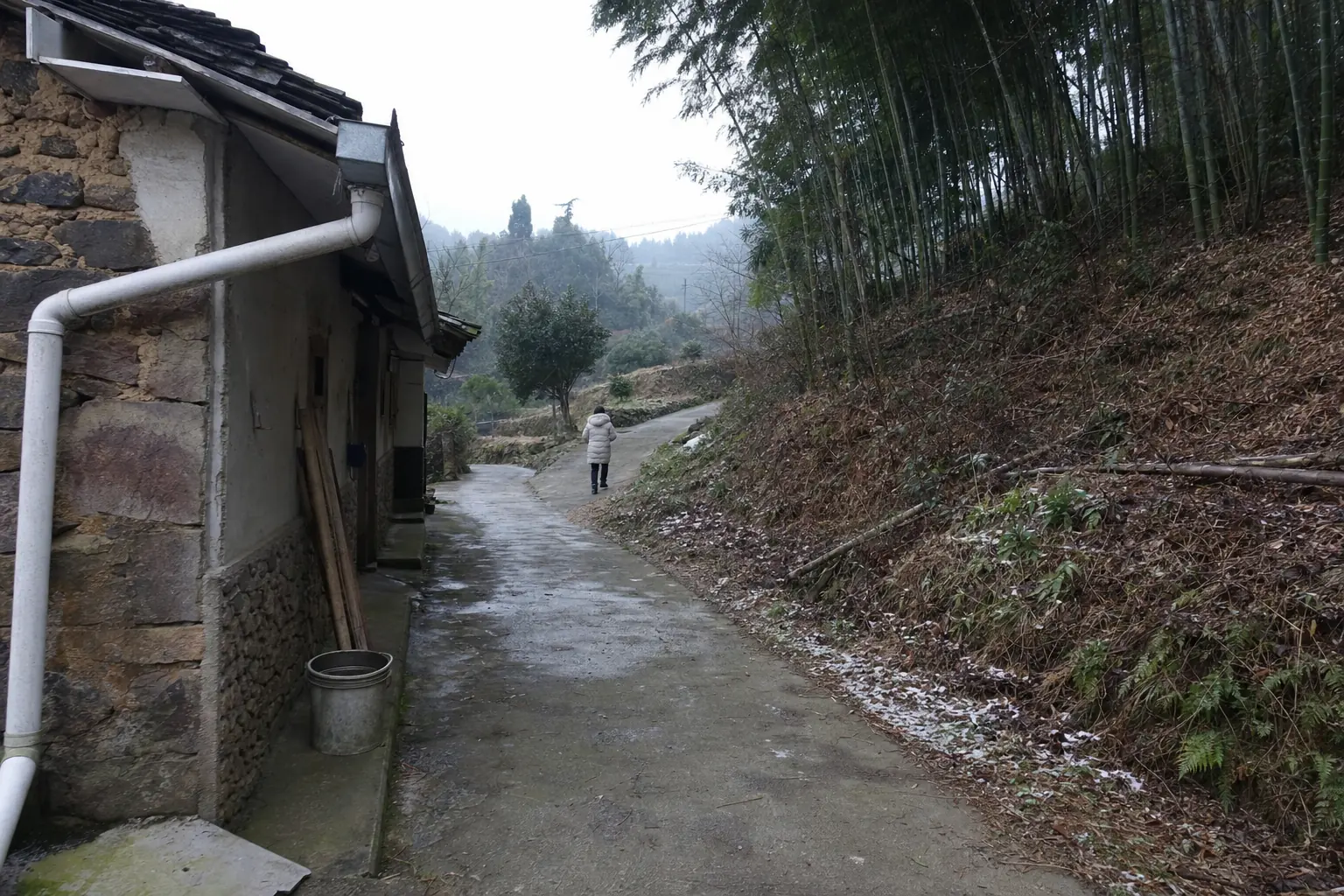
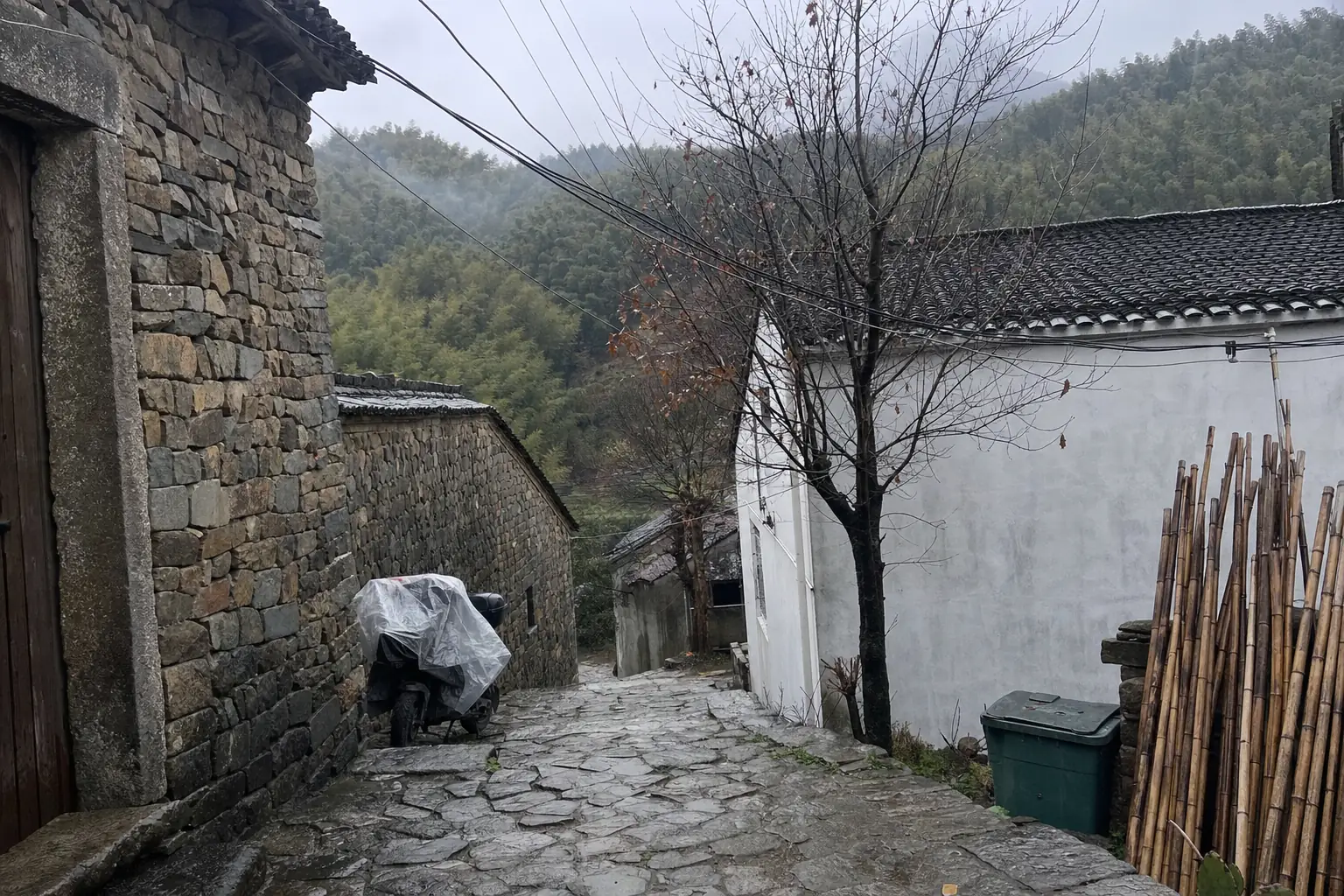
The usual advice, ours included, is to come to Moganshan in autumn and skip winter. That lumps three different months together. December still has the tail of the maple crowd, and February usually has Spring Festival. January has neither, which makes Moganshan in January the one low season month that is actually low.
It is not a secret bargain. It is cold and the days are short. Nobody can promise you snow, or a sea of cloud either. What it does give you is listed below, with the evidence for each line and what it costs.
Moganshan (莫干山) is a mountain and old hill station in Deqing County (德清县), Huzhou (湖州), Zhejiang (浙江), about 60 km north of Hangzhou and 200 to 240 km from Shanghai. Moganshan Road in Shanghai, home of the M50 art district, is a different place. For winter as a whole, start with the winter guide; this page makes the case for one month of it.
| What January gives | What it costs | How firm the evidence is |
|---|---|---|
| No national holiday after 3 January in 2026; the 2027 lunar new year is in February | Nothing | Firm: the published calendar |
| Rooms at the bottom of the band, RMB 300 to 500 midrange | Popular houses still fill at weekends | Our dated research, not a quote |
| Winter bamboo shoots in village kitchens | A dry winter means fewer of them | One dated report in the county paper |
| Quiet paths | A January mean of 1.4 °C, last bus down at 17:00 | Nobody counts walkers by month; the costs are dated |
| A sea of cloud or snow | Not promised | Weak: no dated January cloud record |
Why Moganshan in January, not December or February
The calendar does most of the work. In 2026 the State Council gave the country 1 to 3 January off for New Year and 15 to 23 February for Spring Festival. The rest of January was ordinary working weeks.
2026 holidays: New Year 1 to 3 January, Spring Festival 15 to 23 February, State Council General Office (国务院办公厅), 4 November 2025, tier 1. https://www.gov.cn/zhengce/content/202511/content_7047090.htm
In 2027 the lunar new year falls on Saturday 6 February, so the Spring Festival week lands in February again. The exact days off come from the State Council the autumn before; the 2026 notice came out on 4 November 2025. Read the 2027 notice before you fix dates near either holiday. Chinese New Year on Moganshan covers that week.
Lunar new year 2027 on 6 February, Hong Kong Observatory (香港天文台), Gregorian and lunar calendar table for 2027, tier 1. https://www.hko.gov.hk/tc/gts/time/calendar/text/files/T2027c.txt
The holiday does show on the mountain. On the third day of Spring Festival 2026, Deqing News found visitors at the Moganshan transfer centre before 09:00 and New Year events running on Mogan Yujie (莫干庾街), a shopping street in the wider tourist area.
Spring Festival visitors and street activities, Deqing News (德清新闻网), 24 February 2026, tier 2. https://dqnews.zjol.com.cn/dqnews/system/2026/02/24/035157936.shtml
December has a different draw. The red maples on the old hill station were at their best into December in 2025, and the season ran to mid month. The red leaves guide has the dates. If you go in December, you go with the leaf crowd.
Maples at their best into December, season to mid December 2025, Hangzhou Net (杭州网), from Tide News, 5 December 2025, tier 2. https://travel.hangzhou.com.cn/lyzx/content/2025-12/05/content_9138035.html
What a Moganshan low season room is worth
Our August research put a midrange room in the low season at RMB 300 to 500 a night, against about RMB 1,000 in July and August. Treat that as a band for budgeting. Any one house on any one night will quote its own price.
Low season and peak room bands, BeyondBorder Group Ltd primary research, 1 to 5 August 2026.
The market behind the band is soft. Xinhua reported in March 2025 that Moganshan guesthouse occupancy had fallen from about 70 per cent before 2021 to about 55 per cent in 2024, and that owners had been cutting prices since 2024. Xinhua names no source for the occupancy figures, so they are its reporting and we print them that way.
Occupancy about 70 per cent before 2021 and about 55 per cent in 2024, price cutting since 2024, Xinhua Daily Telegraph (新华每日电讯), 19 March 2025, tier 2. http://www.news.cn/local/20250319/6f3d6119568c45df9f68e7585d6a97c8/c.html
That softness has limits. In October 2026 a new pet friendly hotel told Tide News its weekend rooms were booked into January 2027. One guesthouse owner in the same report put her year round occupancy at 65 per cent. A low season average hides the houses people book months ahead.
Weekend rooms booked to January 2027, and 65 per cent year round occupancy at one guesthouse, Deqing News carrying Tide News (潮新闻), 8 October 2026, tier 2. https://dqnews.zjol.com.cn/dqnews/system/2026/10/08/035307938.shtml
The hotel in that report was full at weekends, so look midweek for the low season price. Ask for the weekday rate in writing, and ask what heats the bedroom while you’re at it. Sources disagree on whether the gate ticket drops in winter at all; tickets and entry prints every figure rather than picking one.
Winter shoots, the one thing only winter has
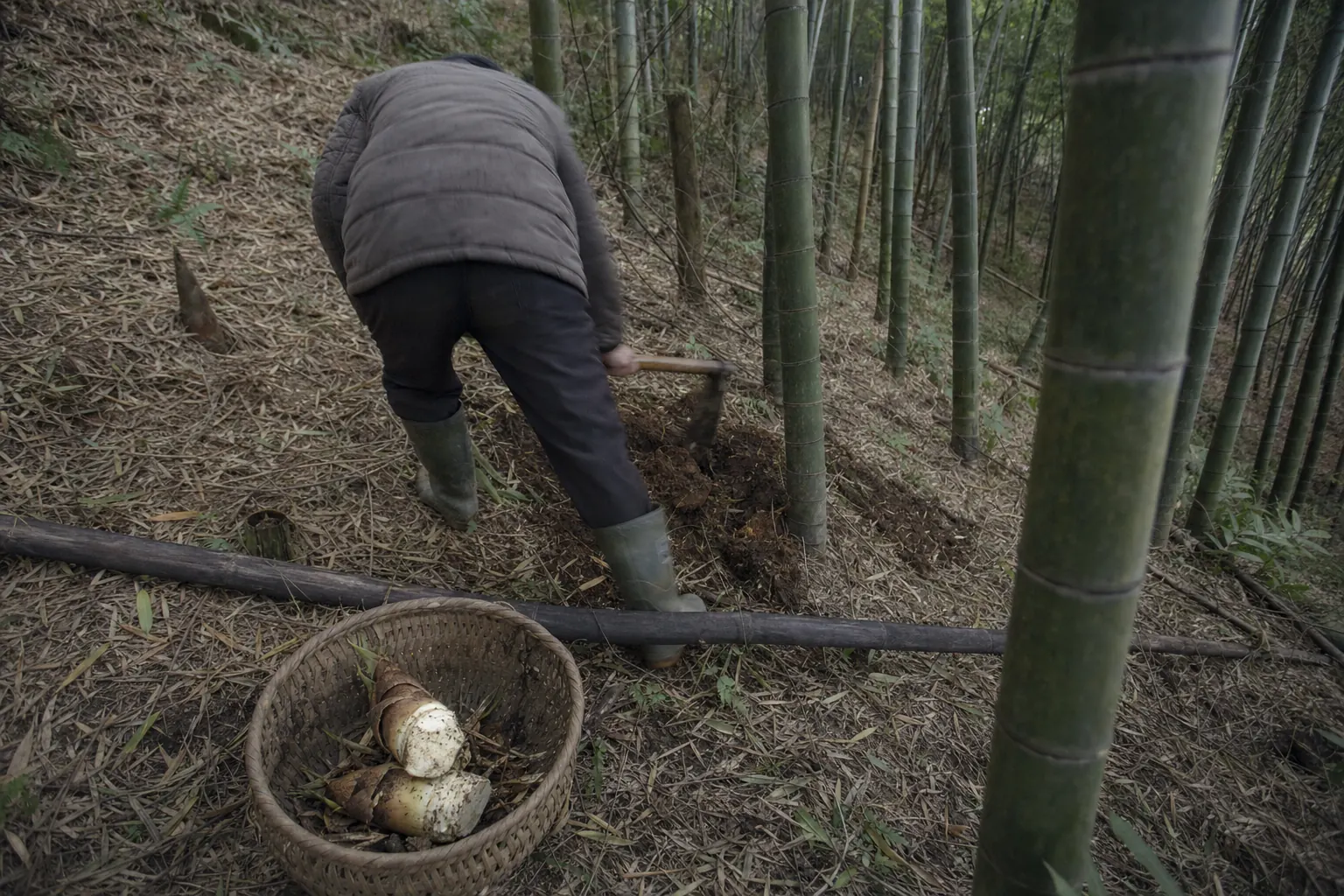
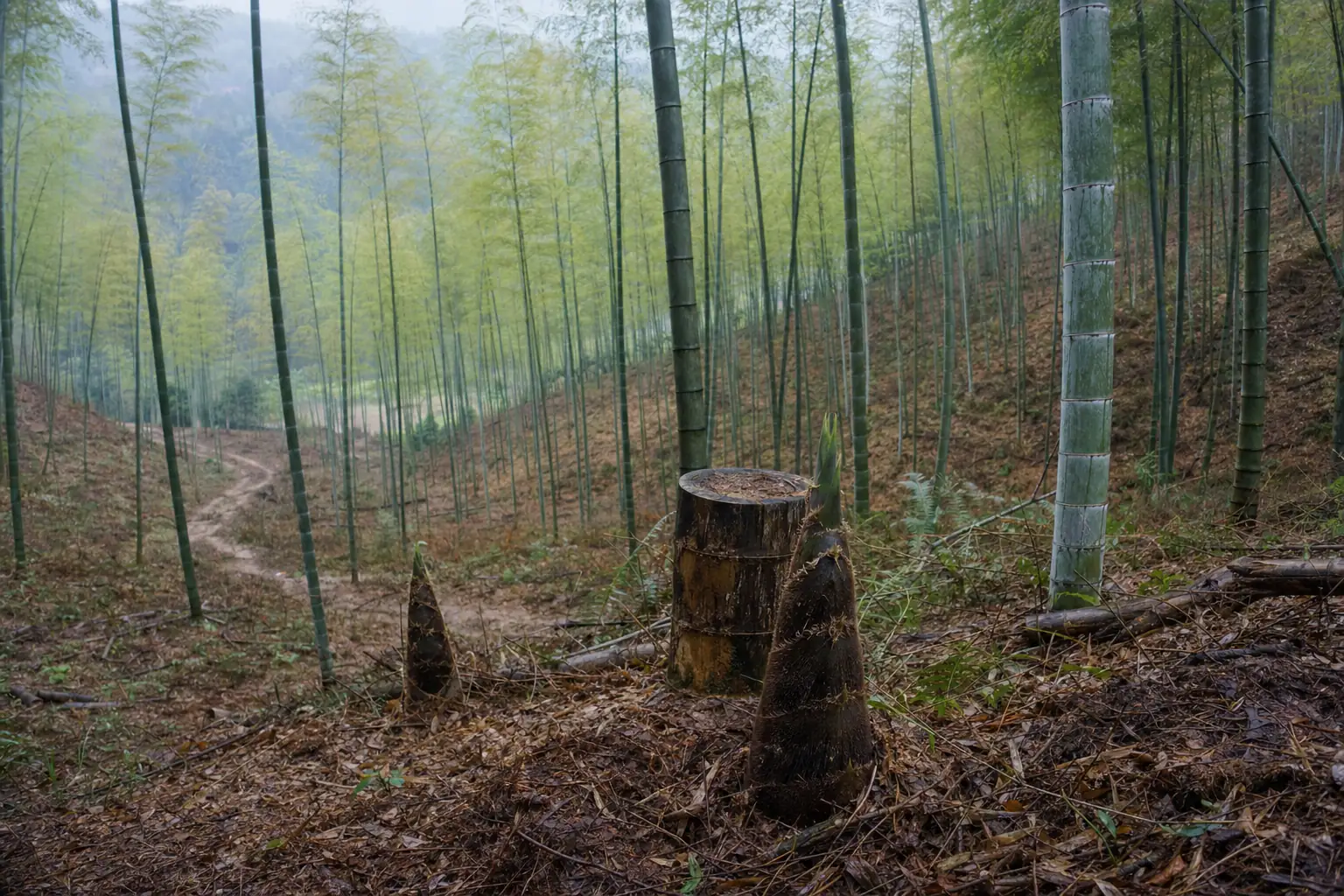
Winter shoots (冬笋) are bamboo shoots dug in winter while they are still underground. Deqing News calls them the tender stem the bamboo grows below the soil in the cold months. Spring shoots, which do break the surface, are the other crop.
In December 2023 Deqing News followed a villager in Ziling (紫岭村), a village in Moganshan town, up the slope with a hoe. It took her more than ten minutes to find one or two shoots. She reads the soil for a raised hump with a crack in it. The price had fallen from RMB 15 a kilo early in the season to RMB 10 as the shoots came in. She said a dry year had cut the crop.
Winter shoots at RMB 15 then RMB 10 a kilo, Ziling village, dry year yield, Deqing News (德清新闻网), 11 December 2023, tier 2. https://dqnews.zjol.com.cn/dqnews/system/2023/12/11/034467879.shtml
The detail that matters to a visitor is the last one in the report. She runs a guesthouse. Her shoots go to its kitchen, and guests order them to take home. That is how most visitors will meet a winter shoot: braised or in a soup at dinner in the house they are staying in. It is also a good reason to book dinner in.
Prices in that report are 2023 market prices for raw shoots. They are not menu prices, and nobody has published a winter shoot dish at a fixed price here.
Cloud seas: do not book for one
The pictures of Moganshan floating in cloud are real. The dated ones we found are not from January.
Zhejiang Online carried a cloud sea on the morning of 14 May 2021, and Tide News another in June 2023, “after showers”. We searched the Chinese press for a dated winter cloud sea on Moganshan and found none. That does not mean it never happens. It means nobody has written it down in a way we can cite.
Cloud sea on the morning of 14 May, Zhejiang Online (浙江在线), 26 May 2021, tier 2. http://epmap.zjol.com.cn/mgsxc/meitijujiao/202105/t20210526_22583730.shtml
Cloud sea after showers, Zhejiang Online carrying Tide News (潮新闻), 8 June 2023, tier 2. https://zjnews.zjol.com.cn/zjnews/202306/t20230608_25834882.shtml
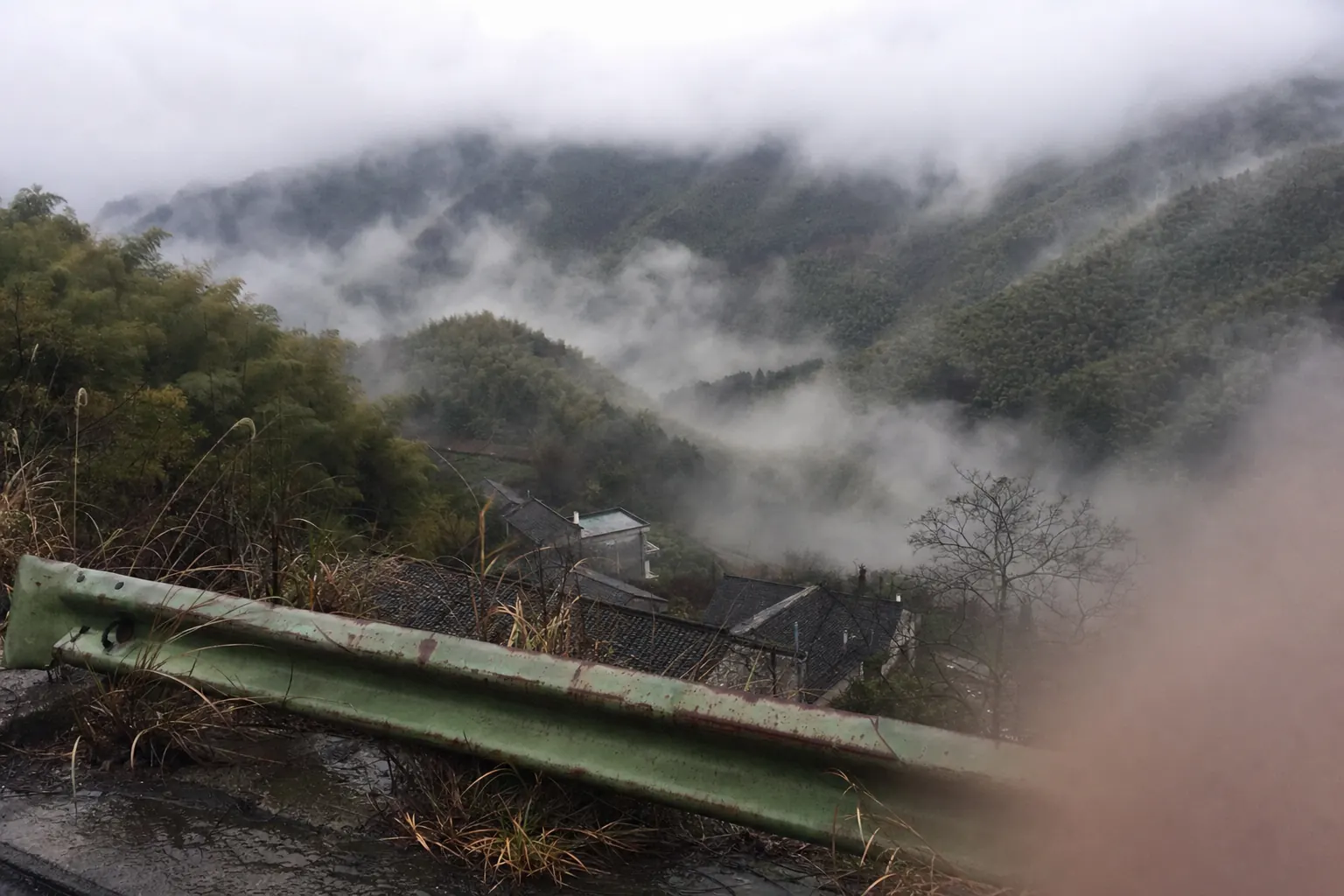
Rime (雾凇), the frost that furs every twig on a freezing foggy morning, is the winter sight the promoters push. A 2023 feature on Xinhua’s Zhejiang site, credited to a promotional account, named the Dakeng (大坑) area as the place to see it. Take that as a tip. It forecasts nothing.
Rime promoted as a winter sight, Dakeng named, Xinhua Zhejiang (新华网), 27 January 2023, material credited to 浙里好管家, tier 4. http://zj.news.cn/2023-01/27/c_1129313576.htm
Weather that makes rime also shuts roads. The scenic area closed on the evening of 30 January 2026 for road icing. When it reopened on 1 February, Dakeng and Sword Pond (剑池) were among the sights left out. What actually closes in winter goes through that record.
Closure on 30 January 2026 and reopening from 1 February with Dakeng and Sword Pond excluded, Tide News (潮新闻), 31 January 2026, tier 2. https://tidenews.com.cn/news.html?id=3360833
Empty paths, short days
This is the best reason to come, and the hardest to put a number on. Nobody counts walkers by the month.
What is counted is the network. When Moganshan town published its map of walking routes at the start of 2015, it came to eleven routes and about 50 km, most of them starting from Yucun (庾村). The man setting the waymarks described three kinds of path: old trade routes, village to village footpaths, and the work paths villagers wore cutting bamboo and digging winter shoots. In January you walk the third kind in the season it was made for.
Eleven walking routes, about 50 km, three kinds of path, Deqing News (德清新闻网), 4 January 2015, tier 2. https://dqnews.zjol.com.cn/dqnews/system/2015/01/04/018881662.shtml
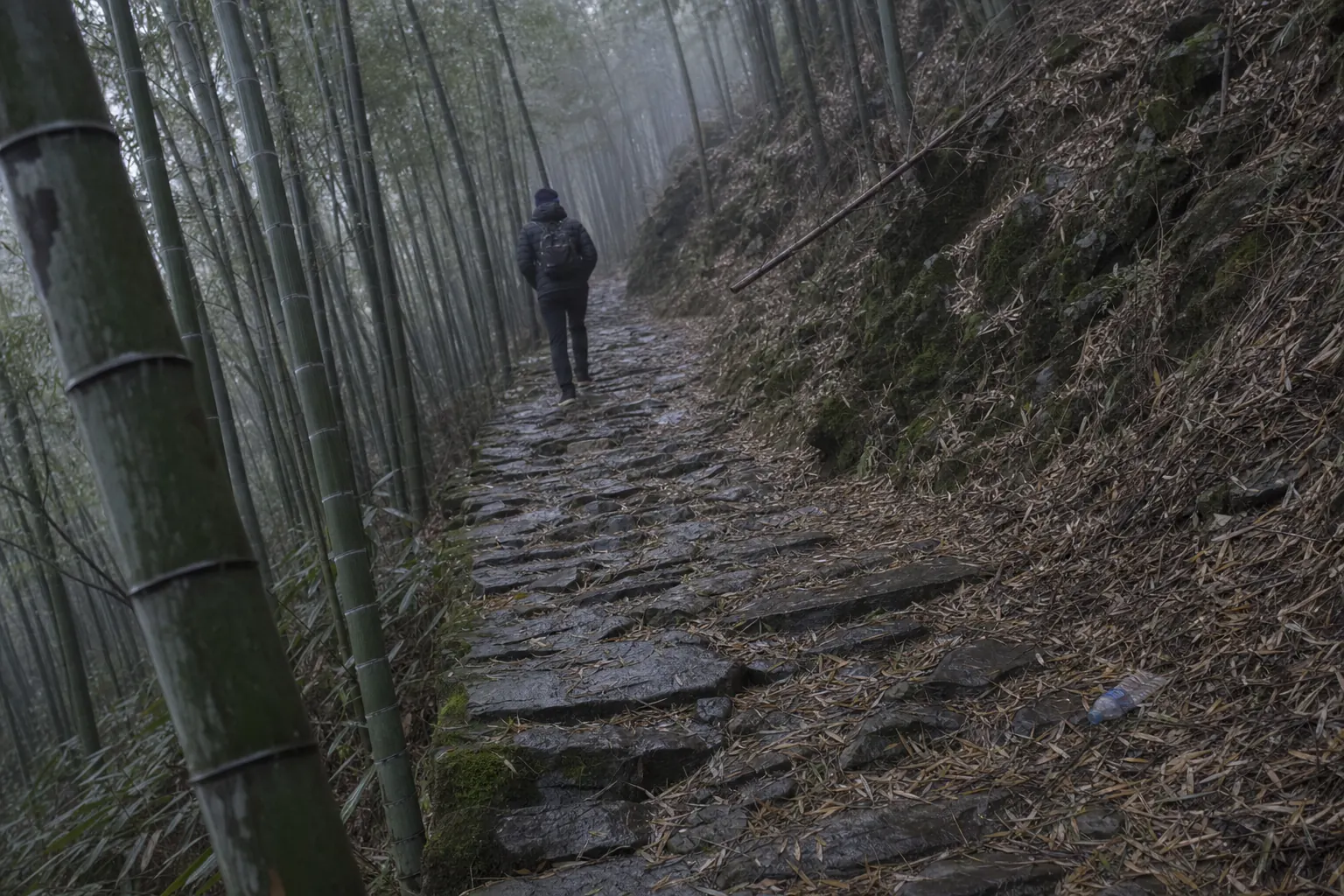
The bus day is the real limit. In December 2025 the buses at the Houwu (后坞) transfer point ran 08:30 to 17:00, last up at 16:30 and last down at 17:00. Miss the last one and you’re walking down. The shuttle guide has the services in full.
Houwu shuttle 08:30 to 17:00, last up 16:30, last down 17:00, Tide News (潮新闻), 4 December 2025, tier 2. https://tidenews.com.cn/news.html?id=3315585
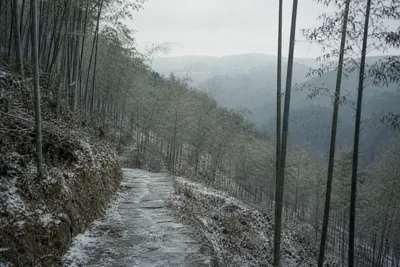
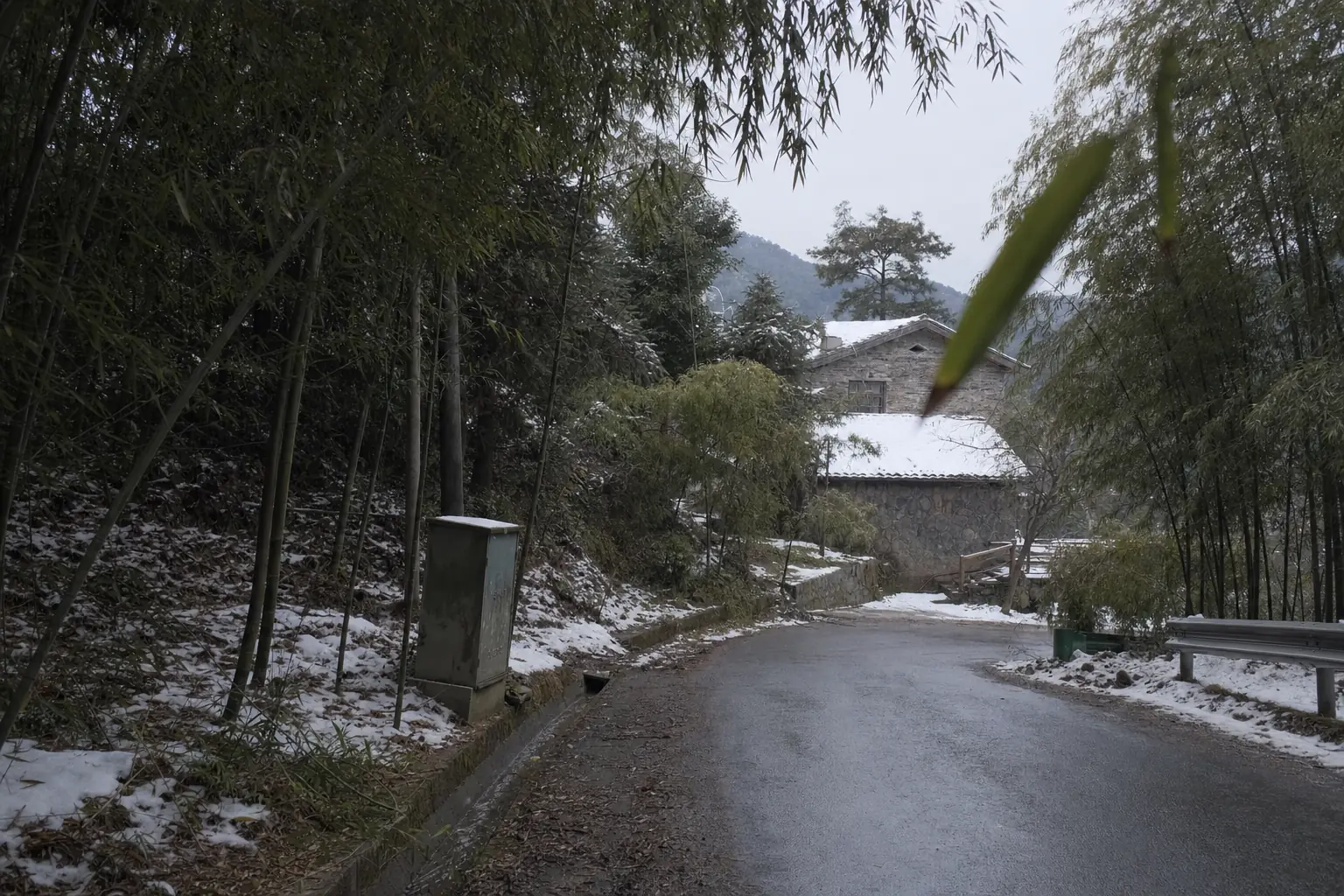
Dress for the colder number. Our research puts the January mean at 1.4 °C; the other published figure is about 3.5 °C. Snow is possible, not dependable. On 1 January 2026 there was 2 to 5 cm on the high ground at 08:40, while the village roads below had none. Moganshan in the snow covers what to check if snow is the point.
January mean, BeyondBorder Group Ltd primary research, 1 to 5 August 2026.
Snow of 2 to 5 cm on high ground and none on village roads at 08:40 on 1 January 2026, Deqing News (德清新闻网), 4 January 2026, tier 2. https://dqnews.zjol.com.cn/dqnews/system/2026/01/04/035125977.shtml
Who January is not for
| Skip January if | Because |
|---|---|
| This is your only trip to China | This site sends first visits to autumn |
| You want a pool or a terrace | Ask first; winter facilities vary by house |
| You need a guaranteed view | Snow, rime and cloud are luck |
| Anyone with you hates the cold | 1.4 °C is the month’s average, not its low |
| You can only come at a weekend | Weekends are when the good houses fill |
If none of that rules you out, book a weekday in the middle of January. Pick a house you’d be happy to sit in all afternoon, book dinner there, and ask for the shoots. Compare Moganshan stays once you know what the house needs to have.
Last checked 31 October 2026 by Liyan Ye. Prices, timetables and entry rules on this mountain move without notice, so confirm anything you are booking around.
Photographs on this site are representative illustrations, not documentary images of the specific building, property or service described.