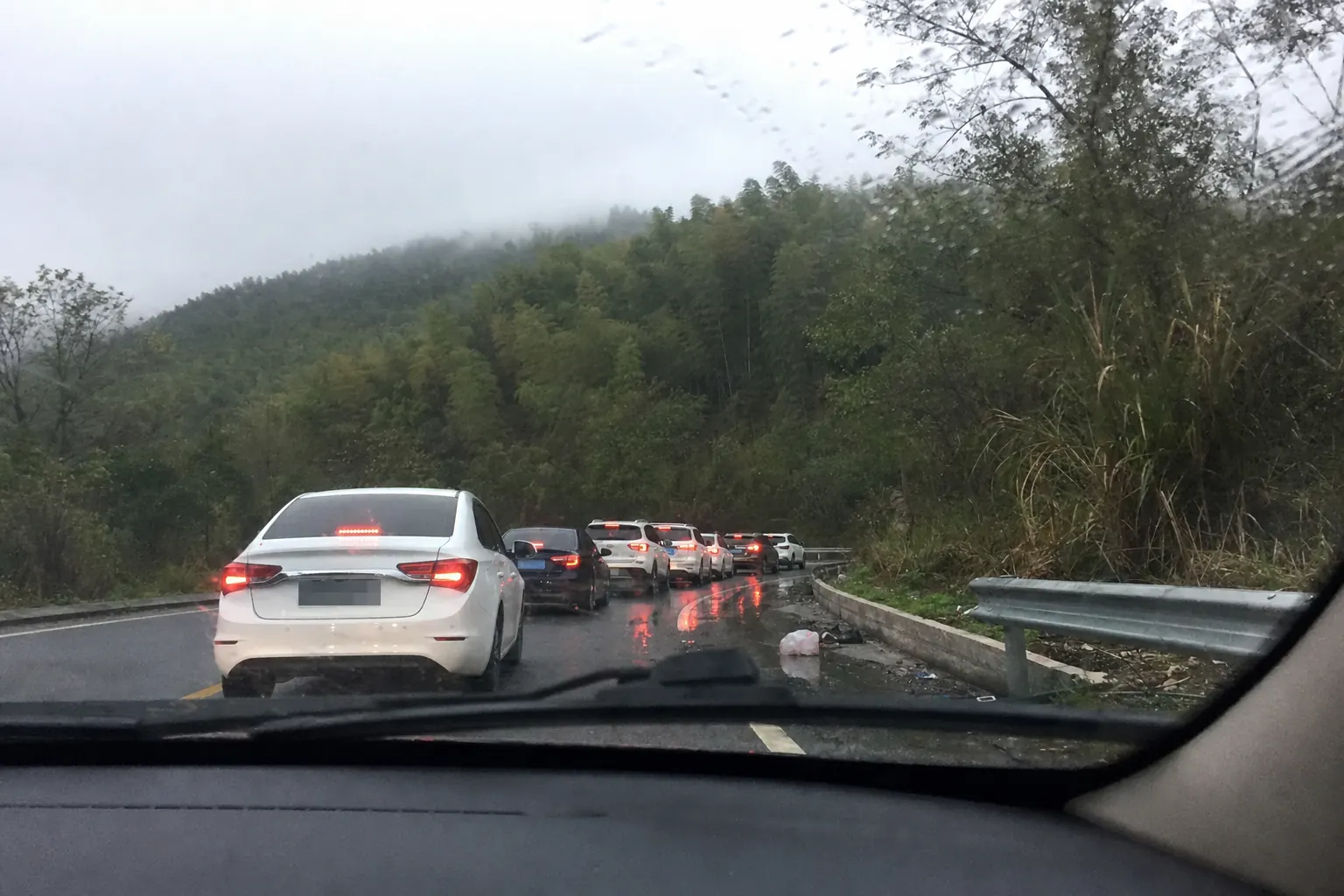
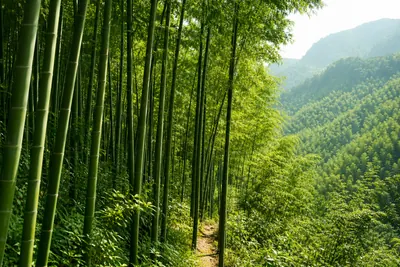
Summer is the season Moganshan was invented for. It is also the season that is hardest to enjoy. A July trip goes better if you know both before you book.
Moganshan is in Deqing County, which belongs to Huzhou prefecture, in Zhejiang Province, China. It is 60 km from Hangzhou, and 200 to 240 km from the Shanghai heat people come up here to escape. Its main peak, Tashan, tops out at 719 to 720 meters.
July and August average 24.1 °C on the mountain, 6 to 7 °C below Shanghai and Hangzhou over the same weeks. (One source puts the gap nearer 5 °C, so treat 6 to 7 as a working figure.) American missionaries built a hill station up here in the 1890s for that gap. For the other three seasons, see the seasons guide.
The cool air, and its limits
Written down, six degrees sounds like nothing. What it buys is the night. In a Shanghai August you lie awake. Up here at 24.1 °C you sleep, and that difference moved several hundred foreign families up a mountain every summer until 1949.
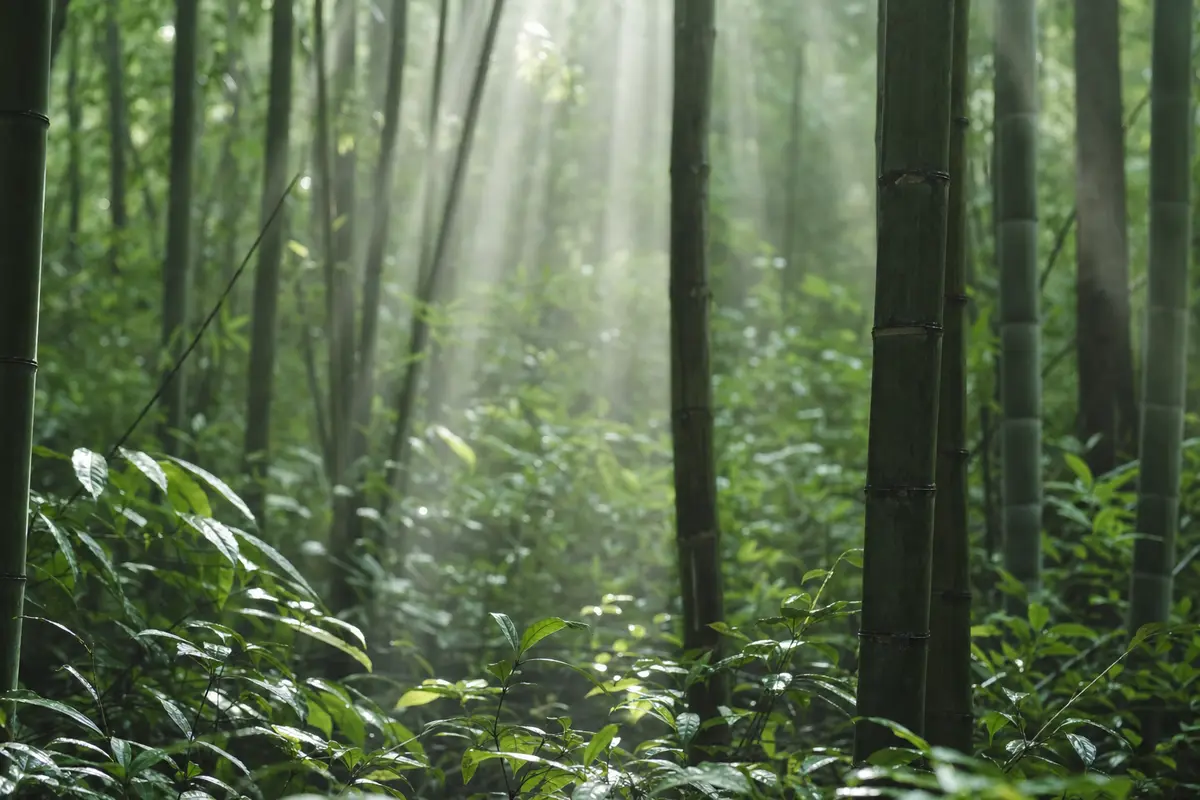
Be careful what you expect of the daytime. That mean averages day and night. Afternoons in open sun are warm and damp, and you will sweat walking uphill at two. The mountain does not cancel a Zhejiang July. It only takes the edge off. Moganshan weather has the month-by-month detail.
July and August mean temperature and the summer gap, BeyondBorder Group Ltd primary research, 1 to 5 August 2026.
The same season, 130 years running
American Protestant missionaries founded the hill station in the 1890s. Credit for finding it goes to E. N. Fletcher, an American Northern Baptist, somewhere between 1891 and 1894. The first Western villas date to 1896 to 1898.
The detail worth having is their calendar. In 1898 they constituted the Moganshan Summer Resort Association, whose annual meeting fell on the first Thursday of mid-August. Nobody schedules an annual meeting for a week when the town is empty. By 1910 about 300 foreigners held summer homes here, and the peak week of the Moganshan year has not moved since. The hill station history covers what they built.
What summer is good for
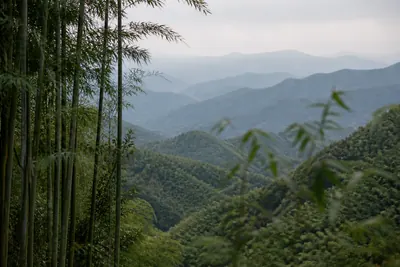
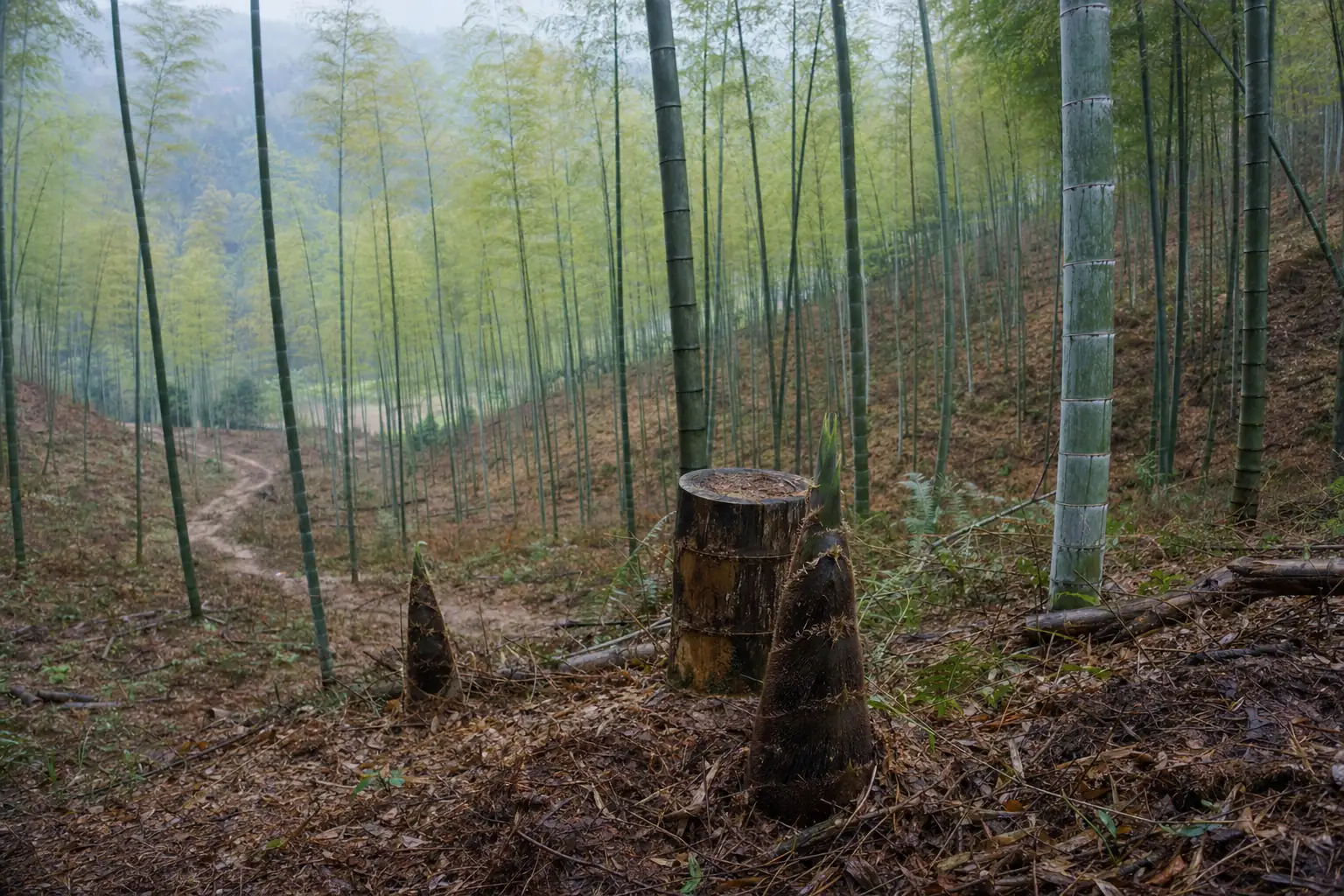
Forest covers more than 92 percent of the mountain, almost all of it moso bamboo, a working crop and not landscaping. Summer is when it stands under full leaf. Nearly everything the season offers comes with a condition attached.
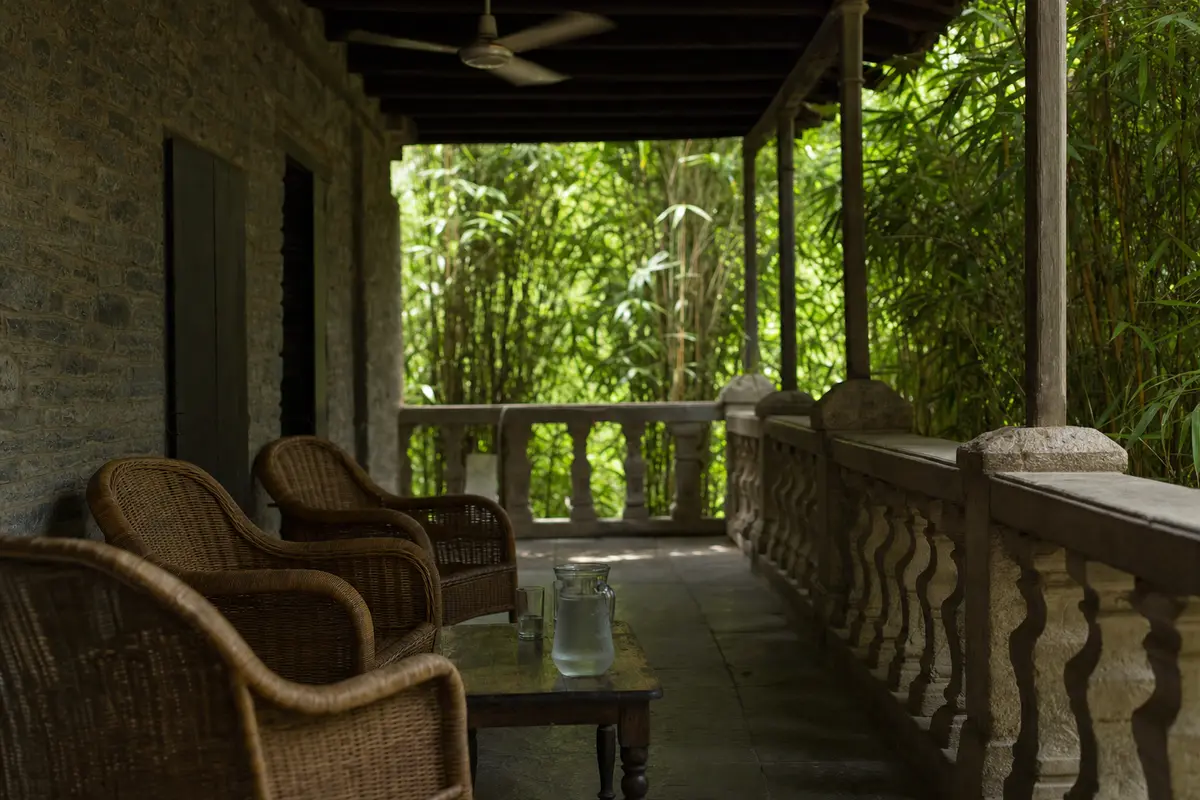
| What summer gives you | The catch |
|---|---|
| Bamboo under full leaf, and shade on the paths | All that growth closes down the long views |
| Evenings cool enough to sit outside | Very little to do with one |
| Mist that flatters the forest | It also takes the Xuguang sunrise view |
We have no measured fog record, so treat the mist rows as guidance.
What it costs
Peak means July and August, and the whole Yangtze delta knows it. June sits inside summer and outside the rush, which most people miss.
| Season | Mean temperature | Crowds | Mid-range room | Verdict against summer |
|---|---|---|---|---|
| Summer, Jun to Aug | 24.1 °C in July and August | Very high | RMB 1,000 or more | Come for the temperature and pay for it |
| Spring, Mar to May | Climbing. No published mean | Low, then extreme in week one of May | RMB 300 to 500 | Better value, and the only season with bamboo shoots |
| Autumn, Sep to Nov | Falling. No published mean | Extreme in week one of October, low by November | Peak in October, RMB 300 to 500 by late November | The best all-round trade, once the holiday clears |
| Winter, Dec to Feb | 1.4 °C in January | Very low | The low end of RMB 300 to 500 | Cheapest and emptiest, if you can take the cold |
The January mean, mid-range room rate bands and seasonal crowd patterns, BeyondBorder Group Ltd primary research, 1 to 5 August 2026.
Spring and autumn have no published mean, and the crowd column is our estimate rather than a gate count.
None of this argues against going. Just know the number first.
A mid-range room runs about RMB 300 to 500 off-season and clears RMB 1,000 at peak, double to triple the same room in March. High-end starts near RMB 1,500, and where to stay has the rest.
Supply is why rates hold. Local government capped bed capacity at about 10,000 in late 2017, and roughly 1,000 guesthouses split that stock. None need to discount in July.
Scenic-area tickets are a separate cost, and published prices disagree.
| Published range | What you pay in summer | Off-season or winter |
|---|---|---|
| The higher one | RMB 120 online, RMB 130 at the gate | Half price in winter |
| The lower one | RMB 80 at peak | RMB 50 off-season |
Budget for the higher line. Rates and tickets checked 5 August 2026.
The two Golden Weeks are worse than August
Before you decide August is the problem, look either side of it. High-end guesthouse occupancy reached 94 percent over the May 2024 holiday, and daily footfall in Yucun ran 30 to 40 percent above normal over National Day 2025. The baseline was about 55 percent in 2024.
Holiday occupancy and Yucun footfall, BeyondBorder Group Ltd primary research, 1 to 5 August 2026.
August never gets that sharp. It spreads that pressure across eight weeks instead of seven days, leaving no quiet Tuesday to duck into.
Weekends carry the crowd
Pick the wrong day of the week and it costs you more than the wrong month. Moganshan sits 2 to 3 hours from Shanghai by road and about 1.5 hours from Hangzhou, which makes it a weekend market all year. Mondays are notably quiet, in August as in November.
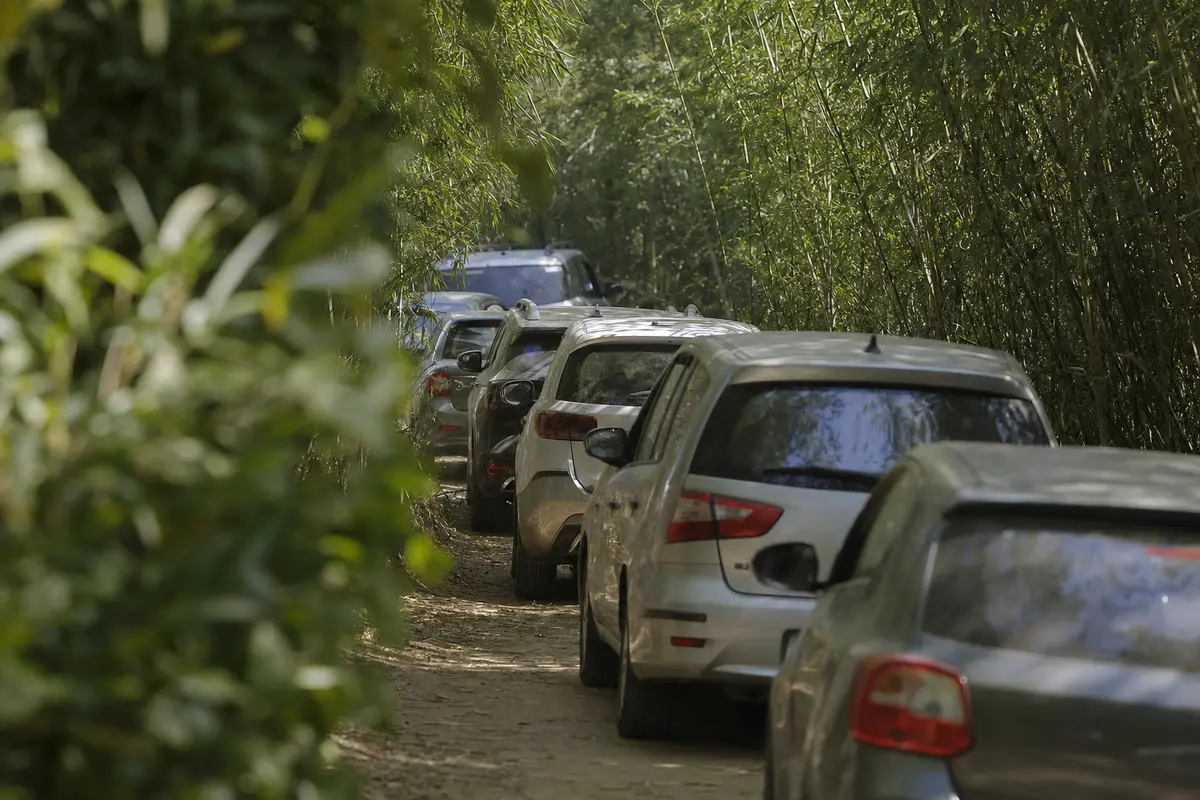
The heat and the rate card are the same either way. The queue is not. Private vehicles cannot drive inside the scenic area, so everyone changes at Yucun, Fatou or Houwu, between 08:00 and 18:00. Weekends fill them.
Arrival time matters too. The Y1 shuttle from Deqing station makes seven runs a day, the last at 16:00, for RMB 10. Miss it and a taxi runs about RMB 100. Getting here has the timetable.
Who should not come in summer
If your dates can move, they should. The shoulder months hand you most of the cool air at RMB 300 to 500 a night instead of RMB 1,000.
| Do not come in July or August if | Why |
|---|---|
| You came for the ridge view | Haze and morning cloud take it more often than autumn does |
| You are watching a budget | The dearest weeks of the year, at double to triple off-season |
| You want an empty path | July does not sell one at any price |
| You want a village awake after nine | No evening economy in any season: no night market, little food late |
| You cannot book months ahead | Guesthouses fill early and rates do not soften |
The last two rows are the ones first-timers get wrong, and neither is fixable on arrival.
If you are going anyway
Summer is still right for a family tied to Chinese school holidays, and for anyone already trapped in a Shanghai August. The best time to visit has the year in one verdict. If you only change one thing below, change the day of the week.
| Decision | What to do |
|---|---|
| Booking order | Room first, train second. Beds are scarcer than seats |
| Lead time | Months, not weeks |
| Day of week | Monday to Thursday. Costs leave days, saves the queue |
| Arrival | Early enough to clear a transfer center before 18:00 |
| Packing | Rain shell and shoes with tread. Stone steps in mist are slick |
Temperature means, occupancy figures and room rates last checked 5 August 2026. Published ticket prices conflict and change, so confirm at booking.
Last checked 8 August 2026 by Liyan Ye. Prices, timetables and entry rules on this mountain move without notice, so confirm anything you are booking around.
Photographs on this site are representative illustrations, not documentary images of the specific building, property or service described.