The English travel writing we have read gives the 1984 Moganshan Conference a line at most: a gathering of economists, in a hall, once. That undersells it. It ran for eight days, from 3 to 10 September 1984. Nobody was invited on rank. The 124 formal delegates were picked from more than 1,300 essays. And one of the reports they wrote on this mountain reached China’s premier ten days before the Communist Party adopted a decision calling price reform the key to the whole economic reform.
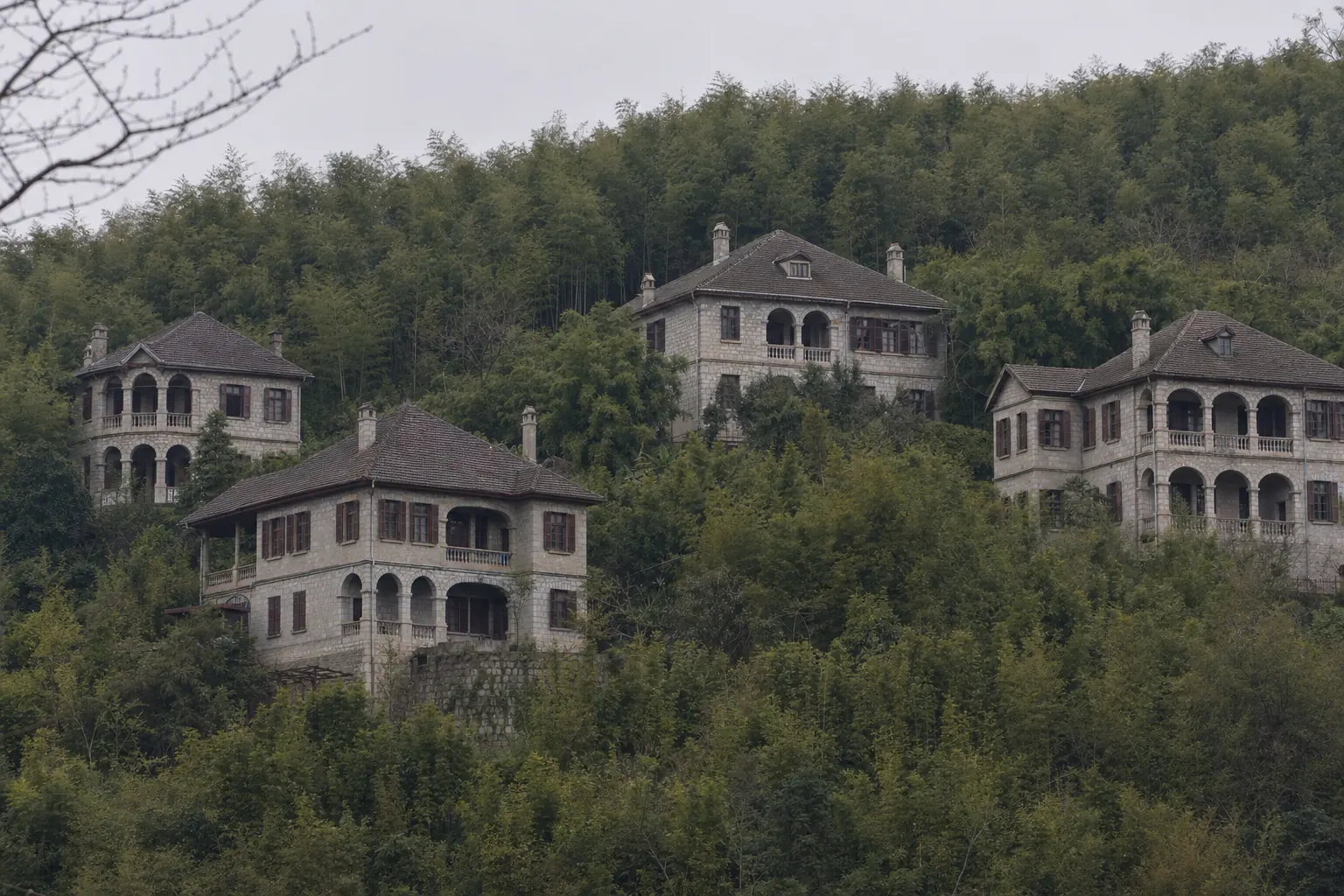
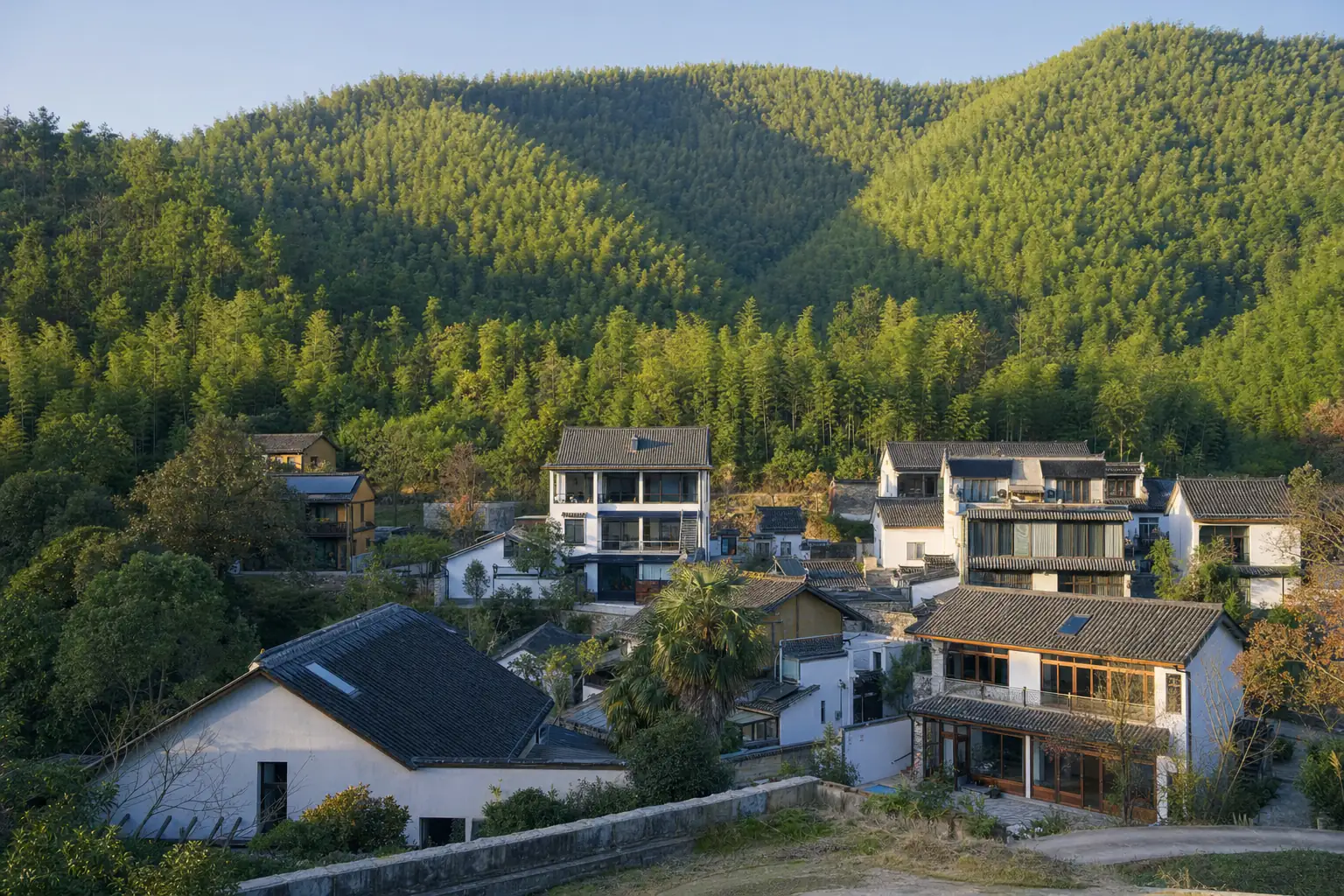
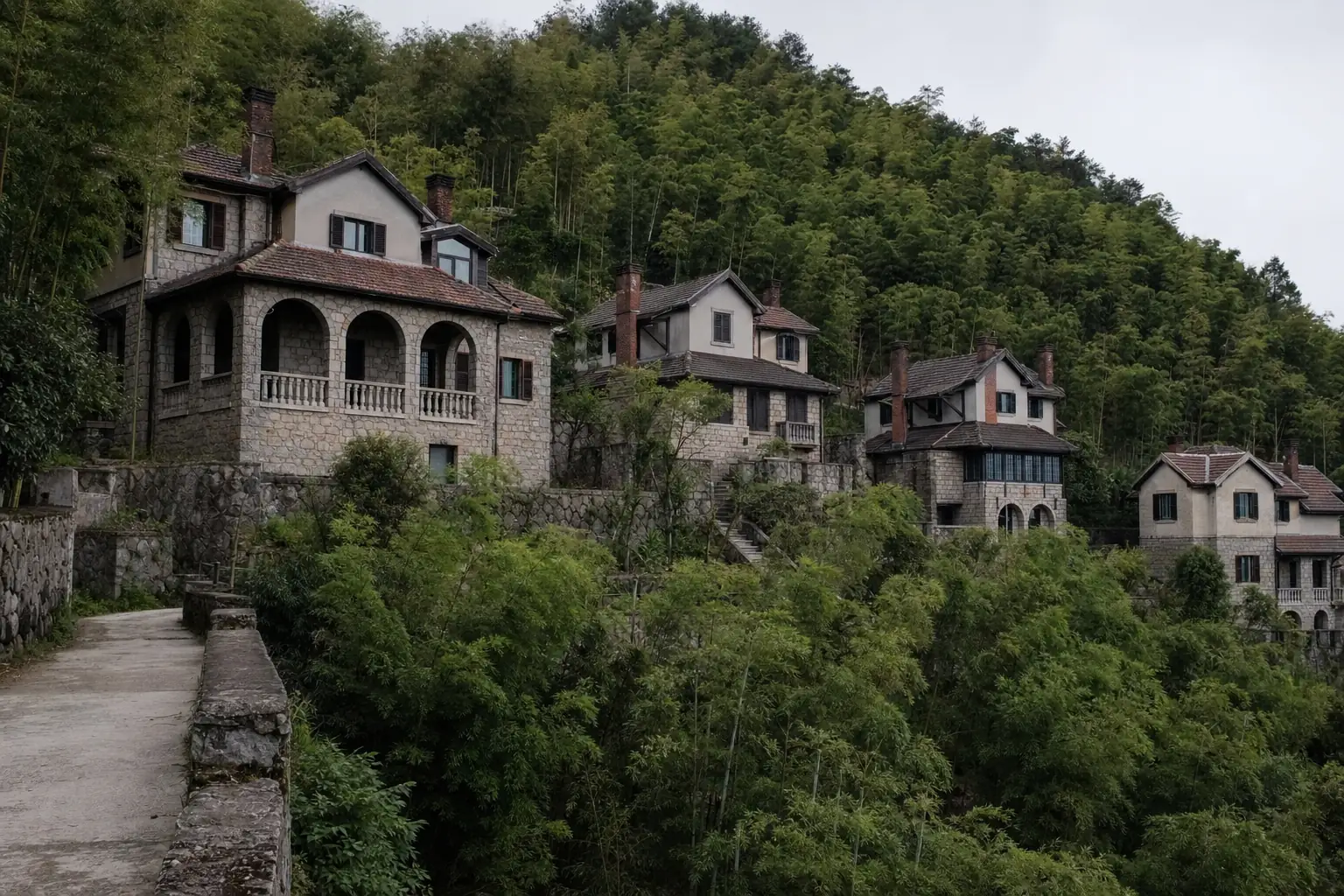
The mountain is Moganshan (莫干山), in Deqing County (德清县), Huzhou (湖州), Zhejiang Province, about 60 km north of Hangzhou and 200 to 240 km from Shanghai. It is not Moganshan Road in Shanghai, the M50 art district, which shares the name and none of this history.
Dates of the meeting and its standing name, Deqing News (德清新闻网), 10 July 2018, tier 2. http://dqnews.zjol.com.cn/dqnews/system/2018/07/10/031001043.shtml
What the 1984 Moganshan Conference was
Its formal name was the National Academic Symposium of Young and Middle Aged Economic Scientists (全国中青年经济科学工作者学术讨论会). History shortened it to the Moganshan Conference (莫干山会议), and the short name stuck.
The idea came from young economists, not from the state. Zhu Jiaming (朱嘉明) wrote in his diary that he proposed it and launched it with Liu Youcheng (刘佑成) and Huang Jiangnan (黄江南) in Hangzhou in March 1984. Zhang Gang (张钢) ran the secretariat. Ten bodies signed on as sponsors, led by the newspaper Economic Daily (经济日报) and including the World Economic Herald (世界经济导报), China Youth Daily (中国青年报), China National Radio and two Zhejiang research bodies. Chang Xiuze (常修泽), who helped organise it, later called the model “privately initiated, officially assisted” (民办官助).
The sponsors, the secretariat and “民办官助”, Chang Xiuze in the China Reform Database (中国改革信息库), 14 October 2012, tier 3. Zhu Jiaming’s diary, Liu Hong in the Economic Observer (经济观察报), 27 October 2008, tier 2. http://www.reformdata.org/2012/1014/9038.shtml http://www.eeo.com.cn/2008/1027/117818.shtml
Most of the figures are settled. Where they aren’t, each version gets a row.
| Item | Figure | Source | Tier | Note |
|---|---|---|---|---|
| Days | 3 to 10 September 1984 | Deqing News, 2018 | 2 | No source disagrees |
| Essays submitted | more than 1,300, from 29 provinces | Liu Hong, Economic Observer, 2008 | 2 | Chang Xiuze gives the same |
| Formal delegates | 124 | Chang Xiuze, 2012; Zhang Weiying, 2019 | 3 and 2 | Chang counts the organisers inside the 124 |
| Planned places | 150, of which 124 by essay | an organiser quoted by Liu Hong, 2008 | 2 | The other 26 were “already in the circle” |
| Papers formally accepted | 120 | Zhang Jun, ANU Press, 2018 | 3 | The minority figure; others give 124 |
| Everyone present | more than 180 | Chang Xiuze, 2012 | 3 | Adds 8 from central ministries and 19 Zhejiang guests |
The essay, delegate and attendance counts, Chang Xiuze in the China Reform Database (中国改革信息库), 14 October 2012, tier 3; Zhang Weiying in the Economic Observer (经济观察网), 27 June 2019, tier 2; Zhang Jun, ANU Press, 2018, tier 3. http://www.reformdata.org/2012/1014/9038.shtml http://www.eeo.com.cn/2019/0627/359724.shtml https://press-files.anu.edu.au/downloads/press/n4267/pdf/ch12.pdf
Chosen by essay, not by rank
The call for papers went out on 12 June 1984 and closed on 15 August. The rule was blunt. Post, title and connections were not to count. Delegates were chosen by their papers, “以文选人”.
That rule is much of why the meeting is remembered. A junior researcher with a good paper could sit in the same hall as the premier’s secretary, Li Xianglu (李湘鲁), and Kong Dan (孔丹), secretary to Zhang Jinfu (张劲夫) of the State Council. Both were on the mountain. Zhang Weiying (张维迎) went up the mountain as a delegate selected on his paper. Liu Hong’s account makes him the youngest participant, at 24.
The 124 were not all academics. Chang Xiuze’s breakdown shows a mix that reached well beyond the universities.
| Where the 124 delegates worked | Delegates |
|---|---|
| Universities | 38 |
| The Chinese Academy of Social Sciences and provincial academies | 30 |
| Party and state officials | 20 |
| Government research bodies | 18 |
| Enterprises | 12 |
| The press and others | 8 |
Beijing alone sent 53. The delegates split into seven working groups.
The call for papers, “以文选人”, the delegate breakdown and the seven groups, Chang Xiuze in the China Reform Database (中国改革信息库), 14 October 2012, tier 3. http://www.reformdata.org/2012/1014/9038.shtml
Zhang Weiying as a delegate selected by paper, Economic Observer (经济观察网), 27 June 2019, tier 2. Youngest participant at 24, and Li Xianglu and Kong Dan on the mountain, Liu Hong in the Economic Observer (经济观察报), 27 October 2008, tier 2. http://www.eeo.com.cn/2019/0627/359724.shtml http://www.eeo.com.cn/2008/1027/117818.shtml

The argument on the mountain: free prices or adjust them
The question in the hall was how to move from prices set by the plan to prices that meant something, without breaking the economy on the way.
Three camps formed. One group, with Tian Yuan (田源) as its best known voice, wanted the state to adjust prices in planned steps. Another, with Zhang Weiying as its voice, wanted prices freed. A third group, Hua Sheng (华生), He Jiacheng (何家成), Jiang Yue (蒋跃), Gao Liang (高梁) and Zhang Shaojie (张少杰), put forward a third way: free and adjust together (放调结合), the dual track.
In plain terms, the dual track let one good carry two prices. What a factory made under the state plan kept the state price. What it made above its quota could sell at a market price.
The three camps and the 放调结合 proposal, Hua Sheng, Gao Liang and Zhang Shaojie in the Economic Observer (经济观察网), 27 October 2008, tier 2. The above quota mechanism, Zhang Jun, ANU Press, 2018, tier 3. http://www.eeo.com.cn/observer/shijiao/2008/10/27/117836.shtml https://press-files.anu.edu.au/downloads/press/n4267/pdf/ch12.pdf
Another plan was on the table too. Li Jiange (李剑阁) presented a paper by Zhou Xiaochuan (周小川) and Lou Jiwei (楼继伟) with its argument in the title: price reform need not add to the fiscal burden.
The Zhou Xiaochuan and Lou Jiwei paper as presented by Li Jiange, Hua Sheng in the China Reform Database (中国改革信息库), 26 October 2008, tier 3. http://www.reformdata.org/2008/1026/6119.shtml
From the mountain to the State Council
The meeting produced seven topic reports. The one that mattered was Two Approaches to Price Reform (价格改革的两种思路), drafted by Xu Jing’an (徐景安). What happened to it next is the conference’s strongest claim, so here are the dates.
| Date | What happened | Source | Tier |
|---|---|---|---|
| 3 to 10 Sep 1984 | The meeting on Moganshan | Deqing News, 2018 | 2 |
| 12 Sep 1984 | Zhu Jiaming reports to the Zhejiang provincial leadership in Hangzhou | Deqing News, 2018 | 2 |
| 20 Sep 1984 | Zhang Jinfu calls the price report “of great reference value” | Liu Hong, Economic Observer, 2008 | 2 |
| 10 Oct 1984 | Premier Zhao Ziyang (赵紫阳) writes that the report is “very eye opening” and the question is how to combine freeing and adjusting | Liu Hong, Economic Observer, 2008 | 2 |
| 20 Oct 1984 | The party adopts its Decision on economic structural reform: price reform is “the key” | China Development Gateway, 2013 | 2 |
The seven reports and Xu Jing’an’s draft, Oriental Morning Post (东方早报), 10 September 2013, tier 2. http://news.sina.com.cn/c/2013-09-10/095928178316.shtml
The instructions of 20 September and 10 October 1984, Liu Hong in the Economic Observer (经济观察报), 27 October 2008, tier 2. http://www.eeo.com.cn/2008/1027/117818.shtml
The Decision of 20 October 1984 and “价格体系的改革是整个经济体制改革成败的关键”, China Development Gateway (中国发展门户网), 8 November 2013, tier 2. http://cn.chinagate.cn/zhuanti/2013-11/08/content_30543873.htm
Be careful with that last row. No source we read shows that the text of the October Decision was drawn from Moganshan. What the record shows is narrower: the report reached the premier ten days before the Decision, and the Oriental Morning Post says the State Council adopted the dual track idea. Zhang Jun, writing for ANU Press, dates the formal acceptance to March 1985, when the State Council lifted price controls on producer goods made above quota.
The March 1985 decision read as formal acceptance of the dual track, Zhang Jun, ANU Press, 2018, tier 3. https://press-files.anu.edu.au/downloads/press/n4267/pdf/ch12.pdf
Who had the idea first
There are three answers in print. The record does not settle this, and we won’t pretend it does.
Hua Sheng, Gao Liang and Zhang Shaojie wrote in 2008 that the dual track proposal came from their group at the meeting, and that the dispute over credit “was started by Zhang Weiying after the 1990s”.
Zhang Weiying’s account, published in 2019, is different. He says he wrote his dual track paper on 21 April 1984, more than four months before the meeting, and that it “had nothing to do with the Moganshan meeting itself”. He adds that the meeting played a key role in turning the idea into policy.
A third reading takes credit away from everyone on the mountain. Zhang Jun cites Shi Xiaomin (史晓民) and Liu Jirui (刘纪瑞), who argued in 1989 that two tier pricing had been in use since 1979 and appeared in a State Council document of May 1984, four months before anyone climbed the hill.
Hua Sheng, Gao Liang and Zhang Shaojie on authorship, Economic Observer (经济观察网), 27 October 2008, tier 2. Zhang Weiying on his April 1984 paper, Economic Observer (经济观察网), 27 June 2019, tier 2. Shi and Liu cited by Zhang Jun, ANU Press, 2018, tier 3. http://www.eeo.com.cn/observer/shijiao/2008/10/27/117836.shtml http://www.eeo.com.cn/2019/0627/359724.shtml https://press-files.anu.edu.au/downloads/press/n4267/pdf/ch12.pdf
All three can be partly true (history usually is). An idea can exist on paper in April, in practice in some factories, and still need a week of argument on a mountain to reach the premier’s desk in a form he could sign.
What the dual track cost
“Helped reprice China” is the honest verb. The dual track worked, and it cost a great deal.
Two prices for one good invited anyone with access to buy at the state price and sell at the market one. China Economic Net describes the middlemen, the daoye (倒爷), who used back doors and signed chits to get goods at official prices and resold them at two or three times as much. Officials who did the same were called guandao (官倒), official profiteers.
By 1988 Hua Sheng, one of the dual track’s own authors, wrote that it had become “a rat in the street everyone wants to hit”, a byword for economic chaos and official corruption. That year retail prices rose 18.5 percent, the largest rise since 1950.
The 倒爷 and the 18.5 percent rise in 1988, citing the China Price Yearbook (中国物价年鉴), China Economic Net (中国经济网), 4 January 2009, tier 2. http://views.ce.cn/fun/corpus/ce/zj/200901/03/t20090103_17857699.shtml
“人人喊打的过街老鼠”, Hua Sheng in the China Reform Database (中国改革信息库), 6 November 2012, tier 3. http://www.reformdata.org/2012/1106/1307.shtml
Read the conference with both columns in view. It helped open the way to market prices. The same mechanism fed the corruption and the inflation of 1988. The bureau that runs the hall describes it as an exhibition of reform thought. The second column is not really its subject.
Who was in the room
The sources we read place these people on the mountain, with where they worked in 1984 where a source gives it:
- Wang Qishan (王岐山), then at the party’s Rural Policy Research Office.
- Zhou Xiaochuan (周小川), then at Tsinghua University, on the preparatory group.
- Guo Shuqing (郭树清), whose paper is in the exhibition.
- Ma Kai (马凯), then at a Beijing district planning commission.
- Zhang Weiying, Hua Sheng, Tian Yuan and Xu Jing’an, from the price debate.
- Zhou Qiren (周其仁) and Wang Xiaolu (王小鲁), at the core of the organisers.
Lou Jiwei co wrote the price paper Li Jiange presented, but no source we read puts him on the mountain, so he is not on the list.
Wang Qishan, Ma Kai and Zhou Xiaochuan, Chang Xiuze in the China Reform Database (中国改革信息库), 14 October 2012, tier 3; Wang Qishan also in Liu Hong, Economic Observer (经济观察报), 27 October 2008, tier 2. Guo Shuqing’s paper, Deqing News (德清新闻网), 10 July 2018, tier 2. http://www.reformdata.org/2012/1014/9038.shtml http://www.eeo.com.cn/2008/1027/117818.shtml http://dqnews.zjol.com.cn/dqnews/system/2018/07/10/031001043.shtml
The hall at No. 450
The plenary sessions met in the Assembly Hall (聚会堂) at No. 450 Moganshan. Deqing News says it was finished in 1923, the largest and most imposing building on the mountain at the time, and paid for by the foreign residents’ summer association (避暑会), whose office it was. It also served for prayer and Sunday school, and for plays and concerts. That association is the subject of our piece on the founding committee.
The hall’s date, its builders and its uses, Deqing News (德清新闻网), 10 July 2018, tier 2. http://dqnews.zjol.com.cn/dqnews/system/2018/07/10/031001043.shtml
Delegates remember it as “the big church” (大教堂). Liu Youcheng put the plenary in the big church on Yinshan Street (荫山街), with the groups spread across the villas; Chang Xiuze wrote “No. 450 (the big church)”. One claim does not survive the record: that American missionaries built it. No dated source we found says so.
“全体会议的会场在荫山街的大教堂”, Liu Youcheng in the Economic Observer (经济观察网), 15 June 2018, tier 2. “莫干山450号(大教堂)”, Chang Xiuze, Nankai Institute of Economics (南开大学经济研究所), 5 November 2017, tier 3. http://www.eeo.com.cn/2018/0615/330432.shtml https://nkie.nankai.edu.cn/2017/1105/c11716a121479/page.htm
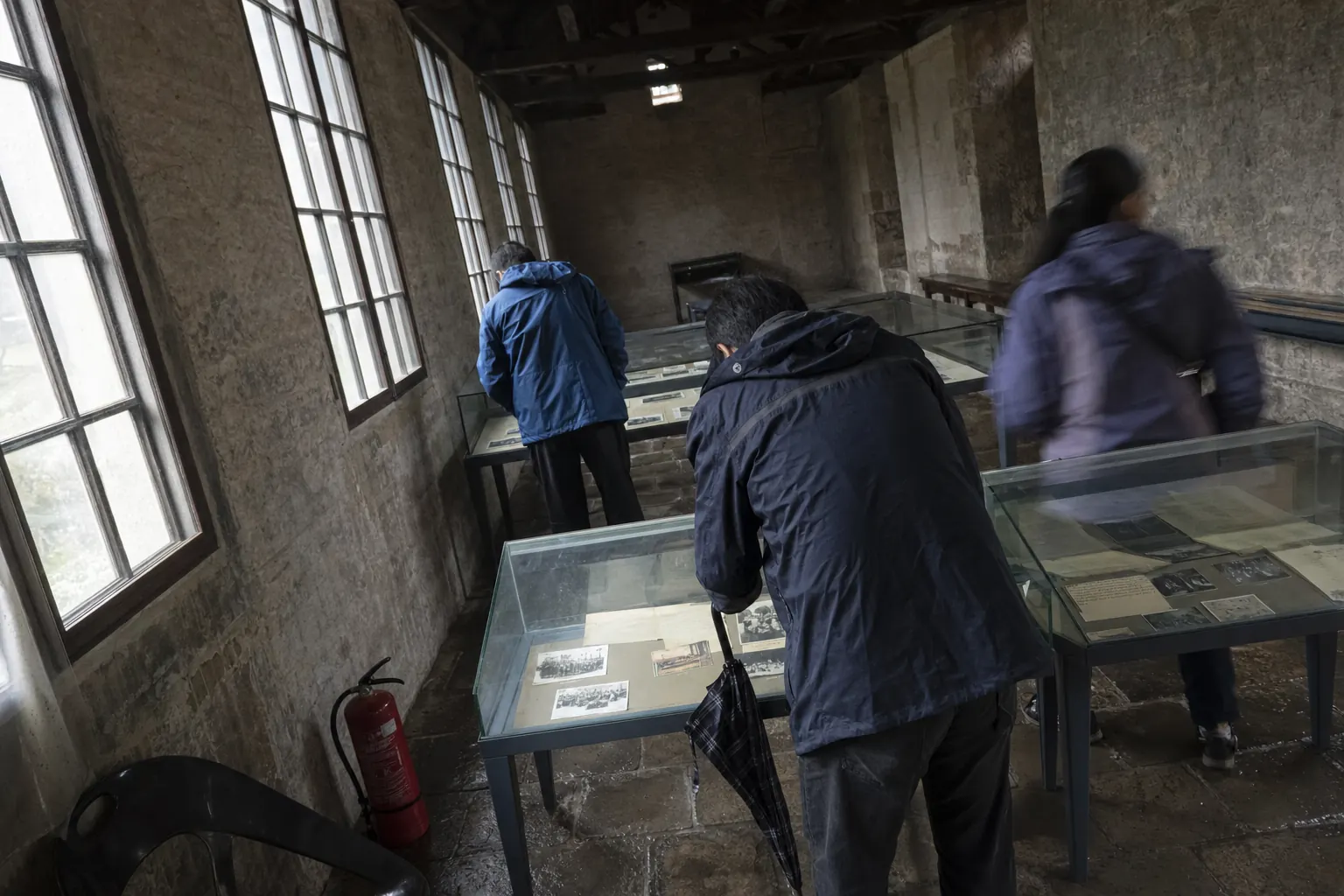
The Moganshan Administration Bureau (莫干山管理局) restored the hall over more than a year for close to RMB 5 million and opened it in 2018, for the 40th anniversary of reform, as an exhibition on the history of Chinese economic reform thought. Deqing News counted more than 200 visits a day that summer. The cases hold the seven reports, delegates’ papers, the call for papers, the group photograph, a State Council instruction and a postcard Zhu Jiaming sent his mother on 1 September 1984, which came back to him after she died.
Restoration cost, the 2018 opening, the visitor count and the exhibits, Deqing News (德清新闻网), 10 July 2018, tier 2. http://dqnews.zjol.com.cn/dqnews/system/2018/07/10/031001043.shtml
The provincial discipline commission put the hall on a heritage route in 2021, with Mao’s lodging and the old West Zhejiang party committee site, and said it is open to visitors. We could not read an official page giving opening hours, or saying whether the hall sits inside the ticketed zone. Nobody from this site has walked in or phoned. Check tickets and entry before you go, and find it on the villa walk, where it is the last stop.
The hall at 莫干山450号 as the conference site, open to visitors, on a 2021 heritage route, Zhejiang Commission for Discipline Inspection and Supervision (浙江省纪委监委), 8 July 2021, tier 1. https://www.zjsjw.gov.cn/zhuantizhuanlan/qinglianwenhua/qingfengzhilv/202106/t20210630_4310881.shtml
The name lives on, the meeting does not
Two later series have borrowed the name. Neither is the 1984 meeting resumed.
The first was a reform forum that the National Development and Reform Commission’s international cooperation centre and the newspaper China Business News (第一财经日报) announced for Moganshan in September 2012. Deqing News said in 2018 that it had met yearly since.
The second is the one now in the county’s news. Since 2018 the Revolutionary Committee of the Chinese Kuomintang (民革), one of China’s minor parties, has run a numbered Moganshan Conference on rural revitalisation with the Zhejiang political consultative conference and later its own Zhejiang committee. The eighth edition met from 22 to 24 September 2025. Deqing News reported on 15 September 2026 that the ninth was in its “sprint stage”, with no date given. Editions one to six signed 271 projects worth RMB 121.6 billion, by the county paper’s count.
The 2012 forum, China Business News (第一财经日报), 23 July 2012, tier 2. https://www.yicai.com/news/1921754.html
The first numbered edition in 2018, CPPCC News (人民政协网), 14 September 2018, tier 2. The eighth, Revolutionary Committee of the Chinese Kuomintang (民革中央), 24 September 2025, tier 1, and China Daily Zhejiang (中国日报网浙江), 23 September 2025, tier 2. https://www.rmzxw.com.cn/c/2018-09-14/2169428.shtml https://www.minge.gov.cn/n1/2025/0924/c415581-40571207.html https://zj.chinadaily.com.cn/a/202509/23/WS68d27a14a310f0725774a3b3.html
Projects and value for editions one to six, Deqing News (德清新闻网), 19 September 2024, tier 2. The ninth edition in preparation, Deqing News, 15 September 2026, tier 2. https://dqnews.zjol.com.cn/dqnews/system/2024/09/19/034746189.shtml https://dqnews.zjol.com.cn/dqnews/system/2026/09/15/035292416.shtml
For a visitor the practical point is the calendar, not the lineage. The modern series has met in September every year we found a date for, so if you plan a September trip, look for its date before you book a room.
Caixin’s Wang Mingyuan (王明远) climbed to the hall on 10 September 2024, forty years to the day after the last plenary. You can do the same any day it is open. Our short history of Moganshan puts the week in its place between the villas and the guesthouses.
A visit to the conference site on 10 September 2024, Caixin (财新网), 15 November 2024, tier 2. https://cnreform.caixin.com/2024-11-15/102257616.html
Last checked 27 October 2026 by Cyril Drouin. Prices, timetables and entry rules on this mountain move without notice, so confirm anything you are booking around.
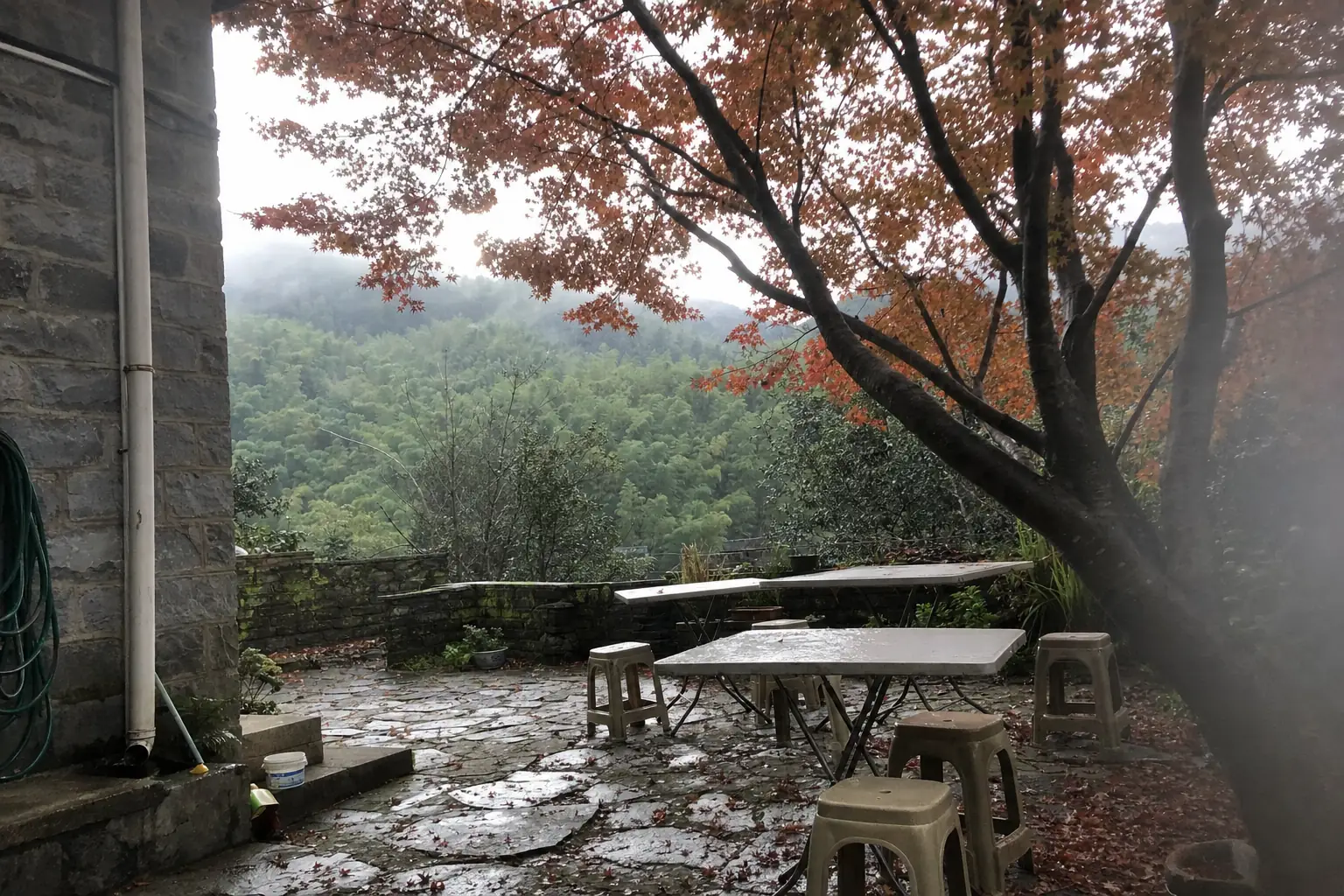
Photographs on this site are representative illustrations, not documentary images of the specific building, property or service described.